CM Shivakumar Directs Karnataka Tax Dept to Double Collections

Synopsis
CM DK Shivakumar chaired a Commercial Taxes Department review at Vidhana Soudha on June 26, ordering full documentation for all goods vehicles at check-posts, directing joint commissioners to meet revenue targets, and warning of strict action against dishonest officials while protecting honest taxpayers.
Key Takeaways
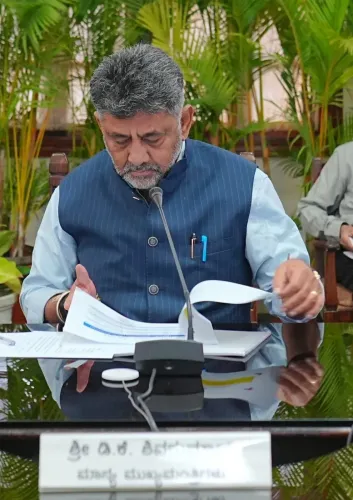
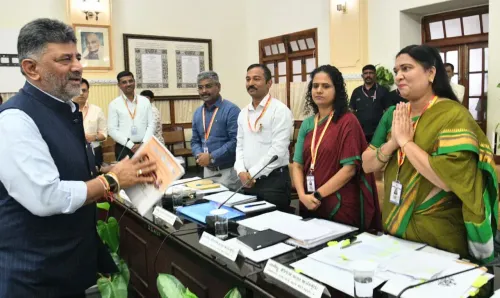
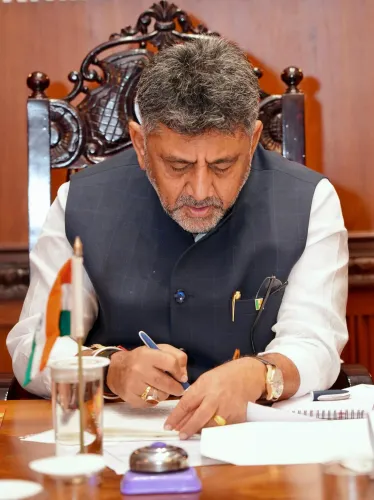
CM DK Shivakumar chaired a Commercial Taxes Department progress review at Vidhana Soudha on Friday, June 26, 2026 , held on a public holiday.
No goods transport vehicle may cross a Karnataka check-post or state border without proper accounts, documentation, and full accountability, per the new directive.
All joint commissioners have been directed to meet their division-wise tax collection targets; the CM said the department has the capacity to collect double current revenues within the law.
Timely filing of tax returns and strict follow-up on non-filers are now mandatory compliance requirements for department officials.
Honest and compliant taxpayers are explicitly protected — harassment or extortion will not be tolerated; dishonest officials face 'merciless action.' Officials must present a better performance report at the next review meeting, signalling a short-term accountability deadline.
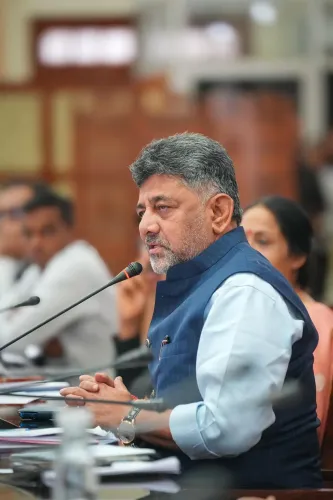
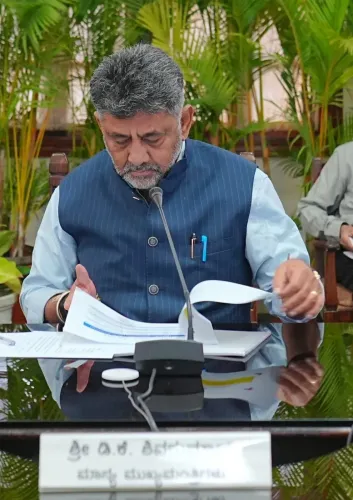
The Chief Minister's Office of Karnataka shared key directives issued by CM DK Shivakumar at a Commercial Taxes Department progress review meeting held at Vidhana Soudha, Bengaluru, on Friday, June 26, 2026. The Chief Minister laid out a strict compliance framework for goods movement at check-posts and issued clear revenue targets to all joint commissioners, while also pledging protection for honest taxpayers.
Context
Addressing officials at the review meeting — held on a holiday, underscoring the urgency — CM Shivakumar issued pointed directives in Kannada, later shared by the Chief Minister's Office of Karnataka on X. The core message: 'ಒಂದೇ ಒಂದು ಸರಕು ಸಾಗಣೆ ವಾಹನ ಕೂಡ ಸೂಕ್ತ ಲೆಕ್ಕಪತ್ರ, ದಾಖಲೆ ಮತ್ತು ಸಂಪೂರ್ಣ ಅಕೌಂಟೆಬಿಲಿಟಿ ಇಲ್ಲದೆ ಚೆಕ್ಪೋಸ್ಟ್ ಅಥವಾ ರಾಜ್ಯದ ಗಡಿಯನ್ನು ದಾಟಬಾರದು' ('Not a single goods transport vehicle should cross a check-post or the state border without proper accounts, documentation, and complete accountability').
The Chief Minister also told officials they have the capacity to collect double the current tax revenue — but stressed this must be achieved strictly within the law, without harassment or exploitation of taxpayers.
Policy Backdrop
Karnataka's Commercial Taxes Department administers GST, VAT, and other commercial levies through a network of check-posts and joint commissioners spread across the state. Since the rollout of the Goods and Services Tax (GST) in 2017, Karnataka and other states have faced sustained pressure to grow own-tax revenues as central GST compensation has tapered off.
The state government has, in successive budgets, set rising commercial tax collection targets to be met through tighter compliance rather than new levies. CM Shivakumar, who also holds the Finance portfolio, noted at the meeting that he has 38 years of public life experience and is actively deepening his understanding of the Finance and Commercial Taxes Department's functioning — describing continuous learning as the foundation of good governance.
Directives and Stakeholder Impact
The directives issued to all joint commissioners include meeting division-wise tax collection targets, enforcing timely filing of tax returns, and identifying and following up on non-filers within stipulated deadlines. Officials were told to resolve genuine grievances of taxpayers quickly at every level.
Honest taxpayers were explicitly protected under the directive: the Chief Minister stated that compliant assessees must not face any harassment or 'extortion' (ಸುಲಿಗೆ). He added that honesty, dedication, and hard work will always be valued, but warned that those lacking integrity will face 'merciless action' (ನಿರ್ದಾಕ್ಷಿಣ್ಯ ಕ್ರಮ). Goods transporters operating across Karnataka's borders are also directly affected, as the new accountability framework mandates full documentation for every vehicle crossing a check-post.
What's Next
The Chief Minister has set a clear benchmark: the next progress review meeting must show a better performance report than the one presented on June 26. Officials have been put on notice to demonstrate measurable improvement in revenue collection and compliance enforcement within the interim period.
Analysts will watch whether Karnataka revises its mid-year commercial tax targets ahead of the next state budget, and whether the stricter check-post documentation regime translates into a visible uptick in own-tax revenue — a critical fiscal indicator for the state's development spending plans.
Point of View
Not merely routine oversight. The dual message — double collections, but no harassment — reflects a broader pattern across Indian states scrambling to replace lapsed GST compensation with organic own-tax growth. Holding the meeting on a holiday and publicly posting the directives is itself a governance signal: officials are on notice that performance data will be scrutinised. Whether the check-post documentation crackdown yields measurable gains or simply shifts informal activity will be the real test of this initiative.
NationPress
25 Sept 2026
Frequently Asked Questions
What did CM DK Shivakumar say about Karnataka's Commercial Taxes Department?
CM DK Shivakumar directed all joint commissioners to meet their tax collection targets and said the department has the capacity to double its current collections, but only through lawful means and without harassing taxpayers.
What is the new rule for goods vehicles at Karnataka check-posts?
As per CM Shivakumar's directive, not a single goods transport vehicle is allowed to cross a Karnataka check-post or state border without proper accounts, documentation, and complete accountability.
What action will be taken against dishonest tax officials in Karnataka?
CM Shivakumar warned that officials who lack honesty and integrity will face 'merciless action,' while those who demonstrate hard work and dedication will be valued and supported.
Are honest taxpayers protected under Karnataka's new tax compliance drive?
Yes, CM Shivakumar explicitly stated that honest and compliant taxpayers must not face any harassment or extortion; protecting them is a stated priority of the directive.
Where and when was the Karnataka Commercial Taxes review meeting held?
The review meeting was held at Vidhana Soudha in Bengaluru on Friday, June 26, 2026, on a public holiday, chaired by Chief Minister DK Shivakumar.