CM Shivakumar pitches Bengaluru as India's AI capital

Synopsis
Chief Minister D.K. Shivakumar addressed the Times Now Summit Karnataka Chapter 2026, positioning Bengaluru as India's AI and robotics capital and proposing a dedicated AI University, while reaffirming the state's role in driving national economic and technological growth.
Key Takeaways
Shivakumar addressed the Times Now Summit – Karnataka Chapter 2026 on 21 November 2026 .
He positioned Bengaluru as a global hub for technology, talent, innovation and investment.
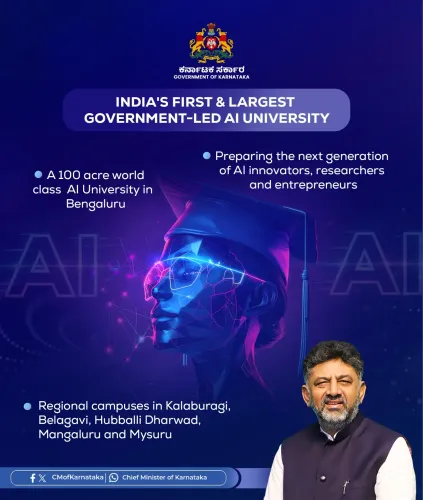
Shivakumar proposed a dedicated AI University focused on artificial intelligence and robotics education and research.
His central formulation: 'If Bengaluru grows, Karnataka grows, India grows.' Karnataka has been India's leading IT exporter since the 1990s , now extending into AI and semiconductors.
India's National Strategy for AI (#AIforAll) , released in 2018 , provides the national policy backdrop for the state's ambitions.
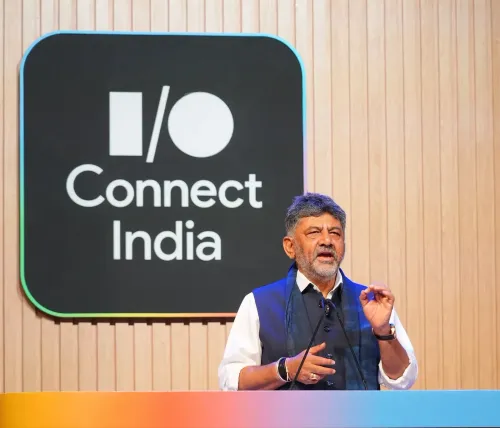
A city that already powers India's software exports is now being positioned as the country's nerve centre for artificial intelligence and robotics. Chief Minister D.K. Shivakumar made that case at the Times Now Summit – Karnataka Chapter 2026 on Saturday, 21 November 2026, laying out a vision that ties Bengaluru's technological ambitions directly to India's economic future.
The summit stage and the central argument
Speaking at the Karnataka edition of the summit, Shivakumar framed the state's growth not as a regional story but a national one. His headline line was unambiguous: 'If Bengaluru grows, Karnataka grows, India grows.' It is the kind of formulation designed to travel — equal parts political shorthand and investment pitch.
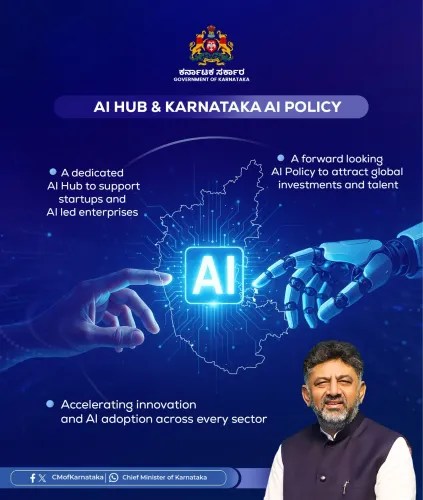
The Chief Minister highlighted Bengaluru's standing as a global hub for technology, talent, innovation and investment, while signalling that Karnataka intends to push beyond its established IT-services base into the next frontier of emerging technologies.
AI University: the centrepiece proposal
The most concrete new element in Shivakumar's address was the vision for a dedicated AI University — an institution built specifically around artificial intelligence and robotics education and research. No timeline, funding model or campus location was announced at the summit, but the proposal signals that the state government wants institutional infrastructure to match its ambitions in AI and Robotics.
The idea lands against a broader national backdrop: India published its National Strategy for AI (#AIforAll) back in 2018, setting a framework for research, adoption and skilling. A state-level university dedicated to the discipline would represent a significant step in translating that national strategy into brick-and-mortar reality.
Karnataka's three-decade technology arc
Karnataka has been India's leading IT exporter since the economic reforms of the 1990s, with Bengaluru as its engine. Successive governments have extended that base — from pure software services into semiconductors, deep-tech startups and now AI-first institutions. The logic is defensive as much as aspirational: to stay ahead, the state must own the next wave, not merely ride the last one.
Shivakumar's framing at the summit — Bengaluru as a driver of national progress — mirrors the policy narrative that has shaped Karnataka's technology pitch for years. What is new is the explicit institutional ambition behind it: an AI University would signal to global investors and researchers that the state is building capacity, not just announcing intent.
What investors and researchers will be watching
The summit typically produces follow-on conversations about investment commitments and memoranda of understanding. The more consequential questions in the weeks ahead: whether the AI University proposal moves from vision to a budget line in the next Karnataka state budget, and whether site selection, curriculum partnerships, or anchor institutional affiliations are formalised. Those details will determine whether the idea shapes the state's technology landscape or remains an aspirational talking point.
For now, the signal from Bengaluru is deliberate and clear — Karnataka is not content to be a passenger in India's AI story. It intends to write a large part of it.
Point of View
While signalling to global investors that institutional infrastructure, not just talent density, is now on the table. The AI University proposal, still without a budget or timeline, follows a familiar pattern: state governments globally announce flagship tech institutions to anchor investment narratives, with execution the perennial challenge. Karnataka's real test is whether the proposal survives from summit rhetoric into the next budget cycle. The 'Bengaluru grows, India grows' framing also quietly raises the political stakes — it makes Karnataka's technology story a matter of national interest, giving the state government leverage in future negotiations with the Centre over funding and policy support.
NationPress
21 Nov 2026
Frequently Asked Questions
What did CM Shivakumar announce at the Times Now Summit 2026?
Chief Minister D.K. Shivakumar addressed the Times Now Summit Karnataka Chapter 2026 on 21 November 2026, highlighting Bengaluru's position as a global technology hub and sharing a vision for a dedicated AI University focused on artificial intelligence and robotics.
What is the proposed AI University in Karnataka?
The AI University is a proposed dedicated institution focused on artificial intelligence and robotics education and research, announced as a vision by CM Shivakumar. Specific details such as timeline, location and funding have not yet been disclosed.
Why is Bengaluru called India's technology capital?
Bengaluru has been India's primary IT export hub since the economic reforms of the 1990s and is home to major technology firms, startups and research institutions, making it the country's leading centre for software services and emerging tech innovation.
What is India's National Strategy for AI?
India released its National Strategy for AI, branded #AIforAll, in 2018 to promote artificial intelligence research, adoption and skilling across sectors. A Karnataka-specific AI University would build on this national framework at the state level.
What is the significance of the Times Now Summit Karnataka Chapter?
The Times Now Summit Karnataka Chapter is a platform for discussions on state-level technology and investment strategies, bringing together policymakers, industry leaders and researchers to shape Karnataka's economic and technology agenda.