CM Shivakumar Reviews Karnataka Excise Dept, Orders Reforms
Synopsis
Chief Minister DK Shivakumar on June 26 chaired a Karnataka Excise Department review at Vidhana Soudha, ordering e-auction of 574 new licences, instalment-based renewal payments, and warning officials that misconduct bringing disrepute to the government will not be tolerated.
Key Takeaways
CM DK Shivakumar chaired an Excise Department progress review at Vidhana Soudha on June 26, 2026 .
The government will e-auction 574 new licences to boost department revenue.
Licence renewal fees will be allowed in two instalments , easing burden on existing holders.
The CM warned officials he will not tolerate any action that brings disrepute to the government, and indicated possible legal amendments to enable inter-departmental transfers of excise staff.
The AIB system introduced in the department has shown growth at expected levels, according to the CM.
The CM stated he has studied how excise departments operate in neighbouring states and directed all officials to work toward set revenue targets.
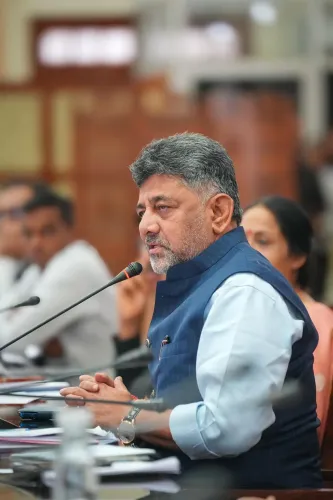
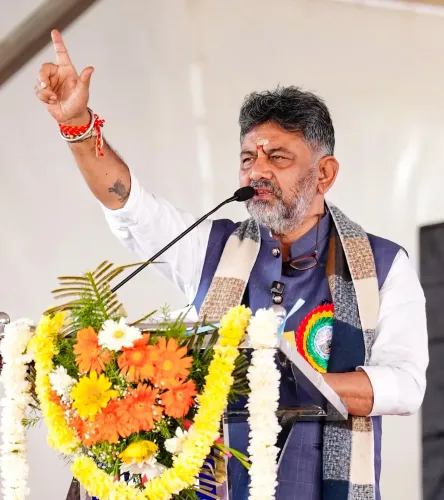
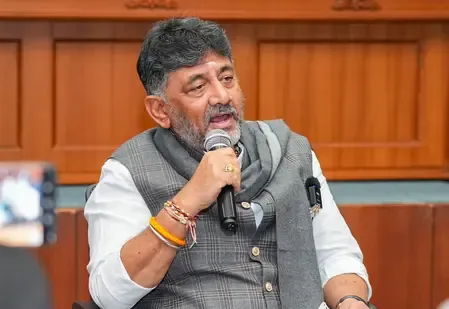
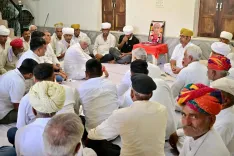
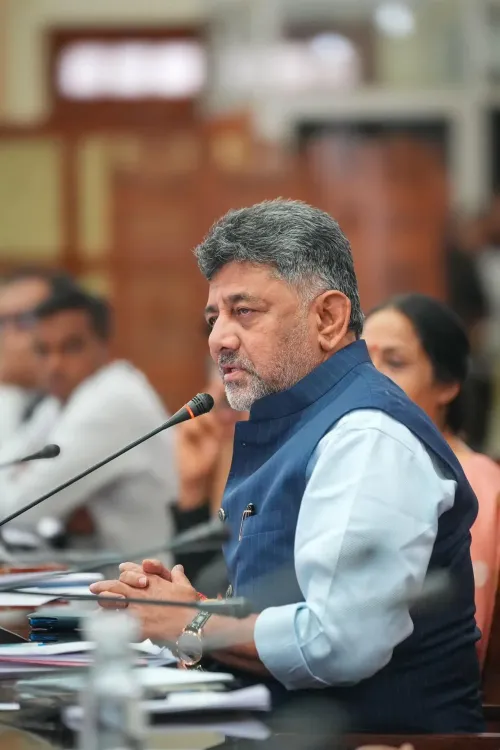
The Chief Minister's Office of Karnataka announced on Friday, June 26, 2026, that Chief Minister DK Shivakumar chaired a progress review meeting of the Excise Department at the Vidhana Soudha committee room in Bengaluru, issuing a set of firm directives to officials aimed at boosting liquor sales revenue and tax collection.
Context
Speaking at the review, CM Shivakumar delivered a pointed warning to excise officials: 'ಸರ್ಕಾರಕ್ಕೆ ಕೆಟ್ಟ ಹೆಸರು ತರುವ ಯಾರನ್ನೂ ನಾನು ಸಹಿಸುವುದಿಲ್ಲ' ('I will not tolerate anyone or any effort that brings disrepute to the government'). He instructed officers to work with both personal dignity and in a manner that upholds the dignity of the government, signalling zero tolerance for misconduct within the department.
The Chief Minister also indicated that if transfers of excise staff and officers to other departments become necessary, the government would consider bringing the required legal amendments to enable such transfers — a significant administrative signal that the current framework may be revised.
Policy Backdrop
A key announcement from the meeting was the decision to put 574 new licences up for e-auction under the department. The CM noted that since the introduction of the AIB (Auction-based Integrated Bidding) system in the department, growth has been recorded at expected levels, suggesting the digital auction framework is being credited with improving transparency and revenue realisation.
Additionally, the CM directed that licence renewal fees should be allowed to be paid in two instalments, easing the financial burden on existing licence holders while potentially encouraging timely renewals and reducing defaults. Karnataka has historically relied on excise revenue as one of its major non-tax revenue streams, making departmental efficiency a fiscal priority for the state government.
Stakeholder Impact
Liquor licence holders across Karnataka stand to benefit directly from the two-instalment payment provision, which reduces upfront financial pressure during the renewal cycle. Excise department officials, however, face heightened accountability, with the CM's warning about possible legal changes for inter-departmental transfers serving as a clear signal that underperformance or misconduct will carry consequences.
The CM stated that he has studied reports on how excise departments function in neighbouring states and urged all officials to strive toward the revenue targets set for the department. This benchmarking approach reflects a broader administrative trend in Indian states of using inter-state comparisons to set performance standards for revenue-generating departments.
What's Next
The immediate focus will be on the rollout of the e-auction process for the 574 new licences, which is expected to generate additional revenue for the state. Any legislative proposals related to enabling transfers of excise personnel to other departments will be watched closely, likely surfacing during the next Karnataka Legislative Assembly session or the upcoming budget cycle. The government's ability to meet its excise revenue targets for the fiscal year will now be a key metric to track.
Point of View
Paired with structural moves like e-auctions and instalment-based renewals, suggests a dual-track strategy: tighten enforcement while lowering barriers to compliance for licence holders. The benchmarking against neighbouring states adds a competitive administrative dimension that could pressure officials to deliver measurable results. Whether the announced e-auction of 574 licences translates into a significant revenue bump will be the clearest early test of whether these directives move beyond rhetoric.
NationPress
26 Jun 2026
Frequently Asked Questions
What did CM DK Shivakumar announce at the Karnataka Excise Department review?
CM DK Shivakumar announced the e-auction of 574 new licences , instalment-based licence renewal payments, and warned officials against misconduct, while noting the AIB system has delivered expected growth.
What is the AIB system in Karnataka's Excise Department?
The AIB system refers to an auction-based integrated bidding mechanism introduced in the Karnataka Excise Department to make licence allocation more transparent and to improve revenue collection.
Why did CM Shivakumar warn excise officials about transfers?
The CM indicated that if excise staff or officers need to be moved to other departments as a disciplinary or administrative measure, the government would consider bringing legal amendments to enable such transfers, signalling strict accountability.
How does the two-instalment licence renewal benefit liquor vendors in Karnataka?
Allowing licence renewal fees to be paid in two instalments reduces the upfront financial burden on liquor licence holders, making it easier for them to renew on time and potentially reducing defaults.
Where was the Karnataka Excise Department review meeting held?
The review meeting was held at the Vidhana Soudha committee room in Bengaluru on June 26, 2026 .