Karnataka CM Office Opens Public Consultation on Excise Reforms 2026
Synopsis
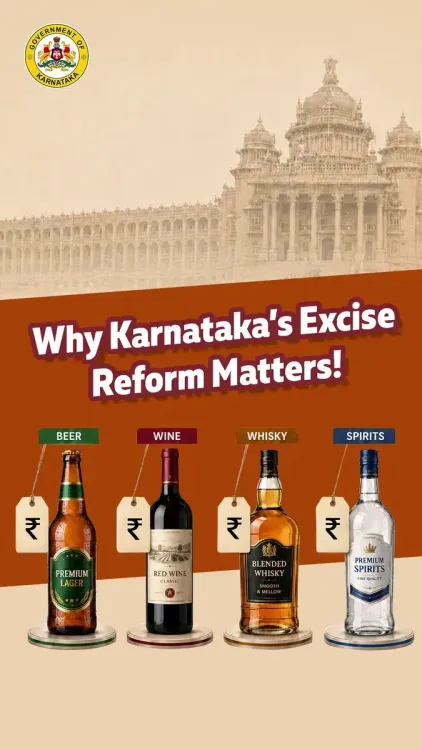
The Chief Minister's Office of Karnataka has launched a public consultation on the Karnataka State Excise Reforms 2026, proposing strength-linked alcohol taxation, simplified tax calculation, and expanded digital oversight. Citizens can submit feedback online or via WhatsApp before 22 May 2026.
Key Takeaways
The Chief Minister's Office of Karnataka announced a public consultation on the Karnataka State Excise Reforms 2026 on 25 May 2026 .
The reforms propose linking alcohol taxation to alcohol strength , simplifying tax calculation, and expanding digital monitoring .
The stated goals span public health, road safety, family welfare, business regulation, and revenue stability .
Feedback can be submitted at civis.vote/consultations/1524 or via WhatsApp by sending 'karnatakaexcise' to +91 8976926914 .
The consultation deadline is 22 May , after which the government will finalise the notification.
Karnataka's approach aligns with a broader national trend of states using excise policy as both a fiscal and public health instrument .
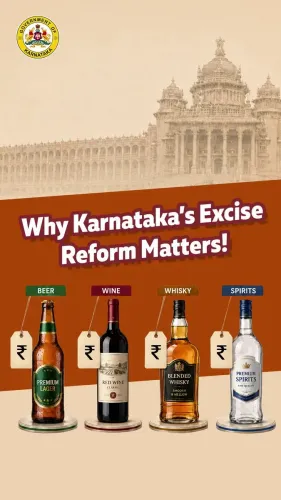
The Chief Minister's Office of Karnataka on Monday, 25 May 2026, invited citizens to participate in a public consultation on the Karnataka State Excise Reforms 2026, a proposed overhaul of the state's alcohol regulation framework. The consultation is open until 22 May and seeks feedback through an online portal as well as a dedicated WhatsApp channel.
The office stated that the reforms are driven by recognition that 'alcohol regulation affects more than revenue — it affects public health, road safety, families, businesses and the overall accountability of the system.' The proposed changes aim to link taxation more closely to alcohol strength, promote responsible consumption, simplify tax calculation, and strengthen oversight through digital monitoring systems, while keeping state revenue stable.
Context
Karnataka has historically revised its excise policies through annual notifications, with significant updates in the 2010s and early 2020s introducing online permit systems. Alcohol excise is a state subject under the Indian Constitution, giving state governments broad authority to set taxation, licensing conditions, and retail models. The 2026 proposal represents one of the more comprehensive reviews the state has announced in recent years, touching simultaneously on fiscal design, public health outcomes, and digital governance. Citizens can submit feedback at civis.vote/consultations/1524 or by sending the keyword 'karnatakaexcise' via WhatsApp to +91 8976926914. The dual-channel approach — online portal and WhatsApp — signals an attempt to reach both urban and semi-urban residents who may not routinely engage with government consultation websites.Policy Backdrop
Several Indian states have in recent years shifted alcohol taxation toward strength- and volume-based models, moving away from flat rates on declared retail prices. This approach is designed to discourage consumption of high-strength liquor while protecting revenue from moderate-strength products. Karnataka's proposed direction aligns with this broader national pattern, where states treat excise policy as a dual instrument — a fiscal tool and a public health lever — rather than purely a revenue mechanism. Digital monitoring has also become a focus across state excise departments, with track-and-trace systems and electronic permit management reducing leakage and improving compliance. The Karnataka State Excise Reforms 2026 reportedly include provisions to expand such digital infrastructure, though the precise draft provisions have not been made public through official channels verified at the time of this report.Stakeholders and Impact
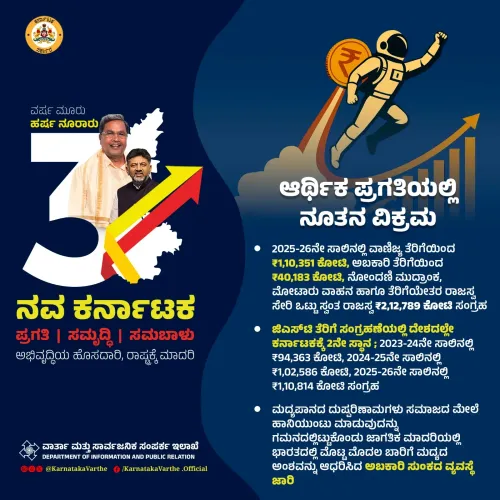
The reforms affect a wide range of groups. Liquor manufacturers and retailers — from large distilleries to licensed outlets — face potential changes in how their products are taxed and monitored. Public health advocates have long pushed for strength-based taxation as a deterrent to high-alcohol consumption, citing links between cheap strong liquor and road accidents, domestic violence, and liver disease. State revenue officials will be watching whether the new tax structure can maintain or grow the excise contribution to Karnataka's budget, which has historically been one of the state's significant non-tax revenue streams. The open consultation format, facilitated through Civis.vote — a platform that has supported several Indian government policy consultations — gives civil society organisations, industry bodies, and individual citizens a structured channel to place their concerns on record before the final notification is issued.What's Next
The immediate next step is the close of the public consultation, after which the state government is expected to review submissions and finalise the notification. Any changes of substance would likely require amendments to the Karnataka Excise Act or its subordinate rules. The government's handling of stakeholder feedback — particularly on the balance between revenue targets and public health restrictions — will determine how the final framework is received by industry and advocacy groups alike. The outcome will also serve as a reference point for other states evaluating similar strength-based excise transitions.Point of View
The CM's Office is positioning the reforms as a governance issue rather than a purely fiscal one, which broadens the political coalition that could support it. The dual-channel feedback mechanism, combining a web portal with WhatsApp, reflects awareness that excise policy affects populations well beyond the urban middle class. How faithfully the final notification reflects citizen input will be the true test of whether this consultation is substantive or ceremonial.
NationPress
9 Oct 2026
Frequently Asked Questions
What are the Karnataka State Excise Reforms 2026?
The Karnataka State Excise Reforms 2026 are a proposed overhaul of the state's alcohol regulation framework, aiming to link taxation to alcohol strength, simplify tax calculation, strengthen digital monitoring, and balance revenue with public health goals.
How can I submit feedback on Karnataka excise reforms?
You can submit feedback at civis.vote/consultations/1524 or by sending the word 'karnatakaexcise' via WhatsApp to +91 8976926914.
What is the last date to submit feedback on Karnataka excise reforms 2026?
The consultation deadline mentioned by the Chief Minister's Office of Karnataka is 22 May.
Why is Karnataka changing its alcohol excise policy?
The stated reasons include aligning taxation with alcohol strength to influence consumption, improving digital oversight to reduce leakage, simplifying the tax structure for businesses, and addressing public health and road safety concerns alongside revenue goals.
What is strength-based alcohol taxation and which states follow it?
Strength-based alcohol taxation ties the tax rate to the alcohol content of a beverage rather than its retail price, encouraging consumption of lower-strength products. Several Indian states have moved toward this model as a combined fiscal and public health measure, and Karnataka's proposed reforms align with this national trend.