CM Siddaramaiah Demands Distress Formula at Cauvery Meet
Synopsis
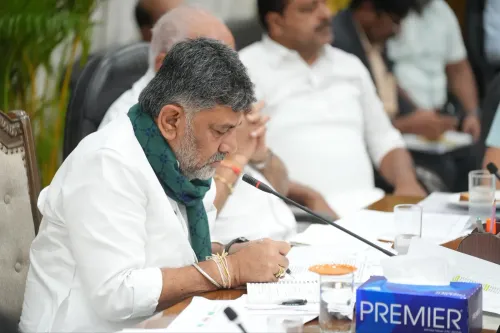
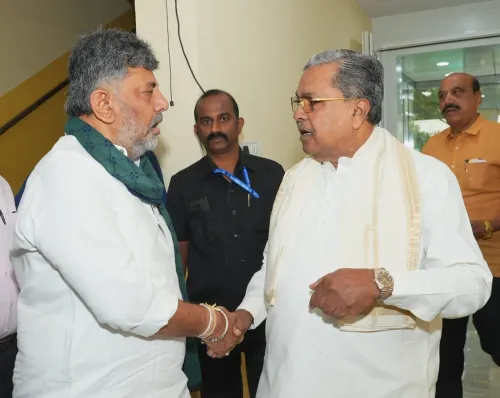
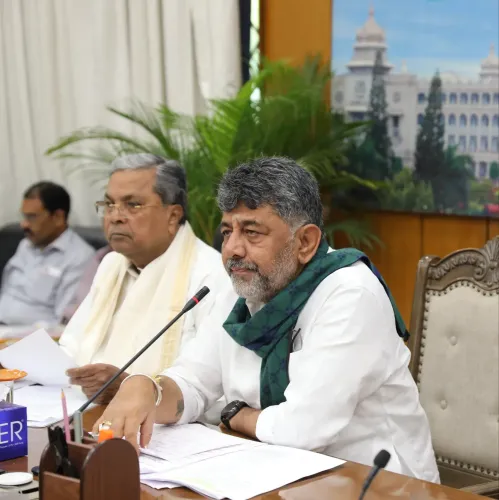
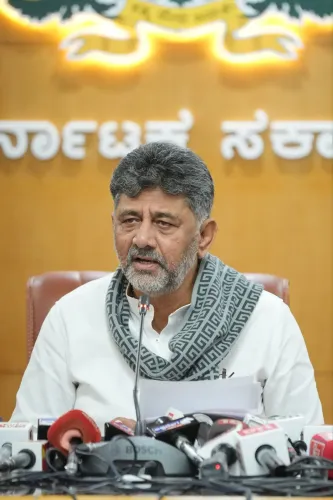
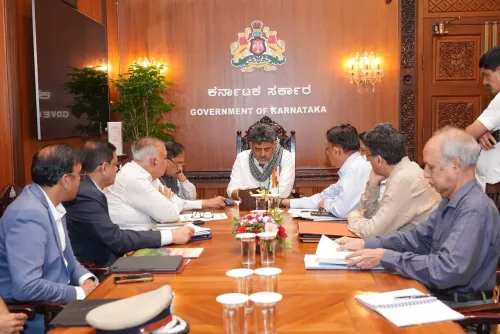
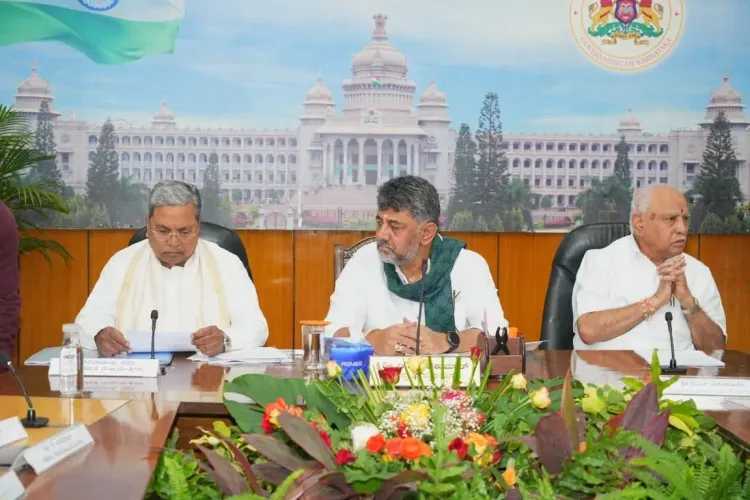
At an all-party meeting chaired by D.K. Shivakumar on 2 August 2026, CM Siddaramaiah called for a permanent Cauvery distress-sharing formula, citing El Niño drought conditions, a 40 TMC drinking-water reserve need, and the futility of repeat Supreme Court petitions.
Key Takeaways
Karnataka CM Siddaramaiah spoke at an all-party Cauvery water meeting chaired by Deputy CM D.K.
Shivakumar on 2 August 2026 .
He stated that all-party meetings on Cauvery have been convened 25 times in 76 years , including twice during his own 2013–2018 tenure.
El Niño-driven drought has created water scarcity; Siddaramaiah said Karnataka needs to reserve 40 TMC for drinking water before agricultural releases.
He rejected allegations of covert water releases to Tamil Nadu , saying releases happen only under Cauvery Water Management Authority orders and only when Karnataka has surplus water.
Siddaramaiah argued that approaching the Supreme Court again would not help, citing dismissed past petitions, and called on the Centre or the Court to frame a permanent, scientific distress-sharing formula for all four basin states.
He directed that farmers whose crops cannot be irrigated must receive compensation , and that water from full Kabini and Harangi reservoirs be released to crops immediately.
With Karnataka's reservoirs straining under an El Niño-driven drought and the perennial standoff over Cauvery releases flaring once again, Karnataka Chief Minister Siddaramaiah took the floor at an all-party meeting in Bengaluru on 2 August 2026 — and delivered a blunt, methodical case for why the state cannot keep firefighting the same crisis every monsoon season.
What Siddaramaiah said at the all-party meeting
The meeting, chaired by Deputy Chief Minister D.K. Shivakumar, was convened as rainfall deficits tightened pressure on the basin. Siddaramaiah noted that such all-party conclaves on Cauvery have been called 25 times in 76 years — twice during his own 2013–2018 tenure as Chief Minister. The ritual, he implied, is a sign of institutional failure, not statecraft.
He reported that while the Kabini and Harangi reservoirs are currently full and KRS Dam holds water in storage, the broader monsoon picture is grim. El Niño conditions have produced drought across Karnataka, and the state needs to reserve water for drinking purposes before any agricultural releases can be considered. He put the drinking-water reserve requirement at 40 TMC.
The allegation Siddaramaiah rejected — and why it matters
At the heart of the meeting was a charge circulating in political circles: that the Karnataka government has been releasing water to Tamil Nadu covertly, bypassing public accountability. Siddaramaiah dismissed this flatly. 'This is false,' he said. 'We can only give water to Tamil Nadu when we have it. But when the Cauvery Water Management Authority issues an order, we are legally bound to comply.'
That legal bind is the crux. The CWMA, constituted in June 2018 following the Supreme Court's modification of the 2007 Cauvery Disputes Tribunal award, holds statutory authority over seasonal releases. Karnataka cannot simply refuse — and Siddaramaiah acknowledged as much, while warning that approaching the Supreme Court for relief would likely prove futile, citing past petitions that were dismissed.
The distress formula Karnataka is pushing for
Siddaramaiah's sharpest demand was structural: a permanent, scientific distress-sharing formula that spells out exactly how the four basin states — Karnataka, Tamil Nadu, Kerala and Puducherry — divide Cauvery water during deficient monsoons. The current framework, he argued, was built for normal years. It has no durable mechanism for drought seasons, which is why the same crisis resurfaces year after year.
He called on either the Central Government or the Supreme Court to frame such a formula urgently. Until then, he said, the state must immediately provide water to standing crops where reservoir levels permit — particularly from the full Kabini and Harangi storages — and distribute crop compensation to farmers whose fields cannot be irrigated this season.
The Cauvery dispute has dogged Karnataka governments for decades, generating political heat that cuts across party lines every time the southwest monsoon underperforms. Siddaramaiah's call for a scientific resolution is not new — but the combination of an active drought year, full upstream reservoirs, and an all-party platform gives it unusual urgency. If the Centre and the court do not act, the next deficient monsoon will call the same meeting, with the same speeches, and the same farmers waiting.
Point of View
He insulates the Congress government against blame if water shortages worsen. The demand for a distress formula is strategically sound — it shifts responsibility to the Centre and the Supreme Court — but Karnataka governments have made the same demand for years without securing one, suggesting the political incentive to resolve the issue permanently may be weaker than the incentive to keep it alive as a grievance. The acknowledgement that Supreme Court petitions have failed is notable; it narrows Karnataka's legal options and implicitly pressures the CWMA to exercise greater flexibility. Whether the all-party format produces a unified state position — or fractures along party lines once the cameras leave — will determine how much leverage Karnataka actually carries into the next CWMA meeting.
NationPress
2 Aug 2026
Frequently Asked Questions
What is the Cauvery distress-sharing formula that Siddaramaiah is demanding?
It is a permanent, scientific mechanism to determine how Karnataka, Tamil Nadu, Kerala and Puducherry divide Cauvery river water during years of deficient rainfall, replacing the current ad-hoc annual process. Siddaramaiah has called on either the Central Government or the Supreme Court to frame this formula.
Why did Karnataka hold an all-party meeting on Cauvery water in August 2026?
El Niño conditions have caused a drought across Karnataka, reducing inflows into Cauvery basin reservoirs. The state government convened the meeting to build political consensus on managing limited water stocks for drinking needs and crops, and to respond to allegations of covert releases to Tamil Nadu.
Is Karnataka releasing Cauvery water to Tamil Nadu secretly?
CM Siddaramaiah called this allegation false. He stated that Karnataka releases water to Tamil Nadu only when it has surplus water and only under orders from the Cauvery Water Management Authority, a statutory body set up in 2018 under Supreme Court directions.
What is the Cauvery Water Management Authority?
The Cauvery Water Management Authority (CWMA) is a Central body constituted in June 2018 to implement the Supreme Court's 2018 judgment on sharing Cauvery waters among Karnataka, Tamil Nadu, Kerala and Puducherry. Its orders on seasonal water releases are legally binding on all states.
Will Karnataka go to the Supreme Court over Cauvery water releases?
Siddaramaiah said approaching the Supreme Court would not help, noting that past petitions from Karnataka on similar grounds have been dismissed. He instead urged the Centre or the Court to proactively frame a distress-sharing formula for drought years.