EU Interior Ministers to meet Tuesday over Ceuta migrant crisis
Synopsis
Twenty-two EU member states have forced an emergency ministerial meeting over the Ceuta migrant crisis — but France and Portugal, Spain's immediate neighbours, refused to sign on. With Italy already suspending Schengen with Spain and Pedro Sanchez calling the move 'illegitimate,' Tuesday's videoconference will test whether EU solidarity on migration is real or rhetorical.
Key Takeaways
An emergency EU Interior Ministers videoconference has been convened for Tuesday over the migrant crisis at Ceuta , Spain's North African enclave.
The meeting was requested in a letter signed by 22 EU member states , led by Italy and Denmark ; France and Portugal did not sign.
EU Commission President Ursula von der Leyen confirmed no recent arrivals reached mainland Spain or other EU countries, with the vast majority returned to Morocco .
Spanish Prime Minister Pedro Sanchez called proposals to exclude Spain from Schengen 'selfish' and 'illegitimate.' The European Commission has offered immediate support to Spain; Sanchez argues Madrid has repatriated 'practically all' irregular arrivals with limited EU backing.
European Union Interior Ministers are set to convene an emergency videoconference on Tuesday to address the escalating migrant crisis at Ceuta, Spain's enclave on the northern tip of Africa. The meeting was triggered by a joint letter signed by 22 EU member states, led by Italy and Denmark, urging collective action on what they describe as a shared border emergency.
How the Emergency Meeting Was Called
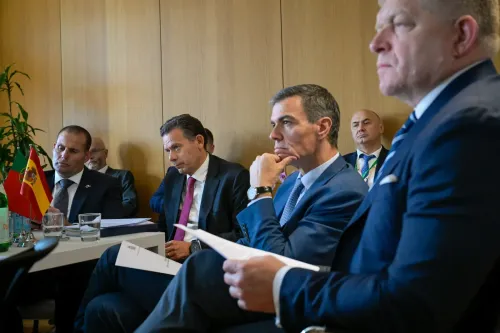
EU Commission President Ursula von der Leyen received the letter from the 22 signatory nations as well as from Spanish Prime Minister Pedro Sanchez, and accepted the request for an urgent videoconference. Notably, France and Portugal — the two EU member states that share land borders with Spain — did not sign the letter, according to reports.
Von der Leyen confirmed that no migrant who arrived at Ceuta in recent days managed to reach mainland Spain or any other EU country, and that the vast majority have already returned to Morocco. She underscored the need to strengthen border controls, maintain vigilance at all crossings, and ensure close coordination among national authorities. The European Commission has offered immediate support to Spain.
What Spain's Prime Minister Said
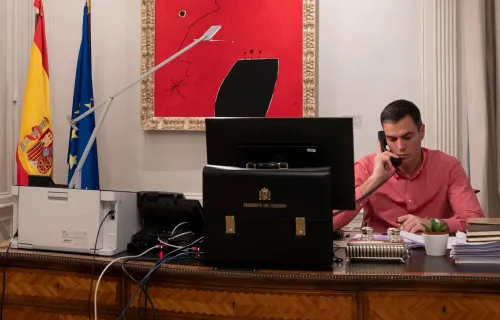
Prime Minister Sanchez separately wrote to the EU, requesting an extraordinary summit of Interior Ministers through the Irish Presidency. In his letter, he argued that the security of the EU's external borders is a shared European responsibility — not one Spain should bear largely alone.
Sanchez stated that Madrid has re-established border control, assisted arriving migrants, repatriated 'practically all' irregular arrivals, and prevented onward movement to other EU states — all with what he described as limited European support. He also defended Spain's broader migration policy, asserting it has reduced irregular entries and made Spain the 'second safest external border of the EU.'
The Schengen Row
The emergency meeting comes amid a sharp diplomatic dispute over Italy's suspension of Schengen arrangements with Spain. Sanchez called proposals to temporarily exclude Spain from the Schengen Area 'selfish' and 'illegitimate,' characterising them as the product of 'prejudices or political interests.'
He also pointed out that Ceuta itself is not part of the Schengen Area, and that Spain's overall border is among the least porous in the EU. This comes amid a broader European debate on migration governance, with several member states pushing for tighter external border enforcement and faster repatriation mechanisms.
Wider Context
The Ceuta crisis is not an isolated incident. The enclave has periodically seen large-scale irregular crossings, most notably in May 2021, when thousands entered in a single day amid a diplomatic dispute between Spain and Morocco. The current episode has again exposed fault lines within the EU over how migration responsibilities should be shared — and who bears the political cost when border pressure spikes.
With Interior Ministers now set to meet, the question is whether Tuesday's session produces concrete solidarity measures or remains a forum for competing national positions. The European Commission's offer of immediate support to Spain will be closely watched for specifics.
Point of View
Which tells you something about the limits of European cohesion on migration. Italy's Schengen suspension of Spain is a political escalation that could set a precedent: if member states can unilaterally suspend free movement over a border dispute, the Schengen architecture is more fragile than its architects intended. Tuesday's meeting will likely produce statements; whether it produces burden-sharing mechanisms is a different question entirely.
NationPress
2 Aug 2026
Frequently Asked Questions
Why are EU Interior Ministers holding an emergency meeting on Ceuta?
EU Interior Ministers are meeting on Tuesday following an escalating migrant crisis at Ceuta, Spain's enclave bordering Morocco. A letter signed by 22 EU member states, led by Italy and Denmark, requested the emergency session to coordinate a collective European response.
Which countries did not sign the letter requesting the emergency EU meeting?
France and Portugal — the two EU member states sharing land borders with Spain — did not sign the letter, according to reports. Their absence from the 22-country coalition has drawn attention given their geographic proximity to the crisis.
What has Spain's Prime Minister Pedro Sanchez said about the Ceuta crisis?
Sanchez has argued that Spain has repatriated 'practically all' irregular arrivals and re-established border control with minimal EU support. He called proposals to suspend Spain from the Schengen Area 'selfish' and 'illegitimate,' and defended Spain's record as the 'second safest external border of the EU.'
What did EU Commission President Ursula von der Leyen say about the situation?
Von der Leyen confirmed that no migrant who arrived at Ceuta in recent days reached mainland Spain or another EU country, with most returned to Morocco. She called for stronger border controls, closer coordination among authorities, and said the European Commission has offered immediate support to Spain.
How does the current Ceuta crisis compare to past incidents?
Ceuta has experienced periodic surges in irregular crossings, most notably in May 2021 when thousands entered in a single day during a Spain-Morocco diplomatic dispute. The current episode has again exposed divisions within the EU over migration responsibility-sharing and border enforcement.