CM Hemant Soren attends organ donation workshop in Ranchi
Synopsis
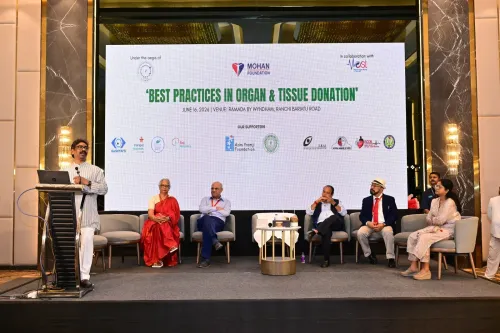
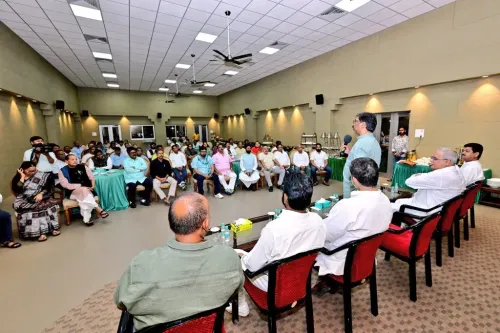
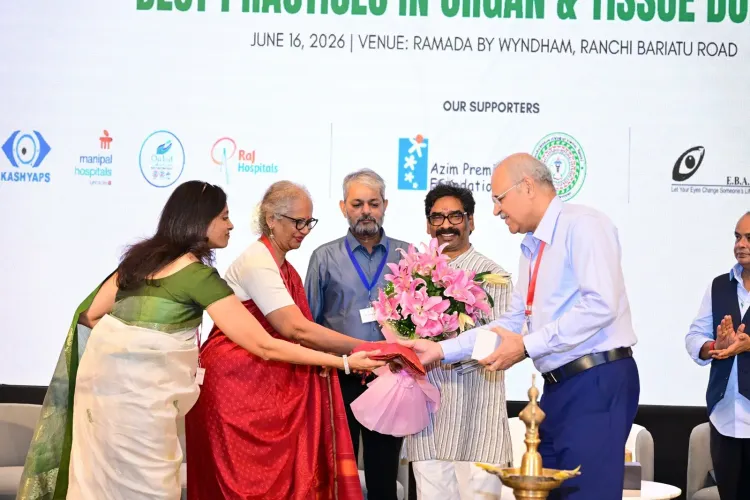
Chief Minister Hemant Soren attended the 'Best Practices in Organ and Tissue Donation' workshop at Hotel Ramada in Ranchi on June 16, 2026. The event brought together medical professionals to improve organ donation procedures in Jharkhand, aligning with national efforts under NOTTO and the Transplantation of Human Organs Act.
Key Takeaways
CM Hemant Soren attended the 'Best Practices in Organ and Tissue Donation' workshop on June 16, 2026 .
The event was held at Hotel Ramada, Bariatu Road, Ranchi .
India's organ donation framework is governed by the Transplantation of Human Organs Act, 1994 .
NOTTO , established in 2014 , coordinates organ procurement and allocation nationally and is the nodal body for state-level integration.
India's organ donation rates remain among the lowest globally relative to need, making state-level workshops a key awareness tool.
Follow-up policy moves — including new retrieval centres and 2026-27 budget allocations — will indicate Jharkhand's commitment to transplant infrastructure.
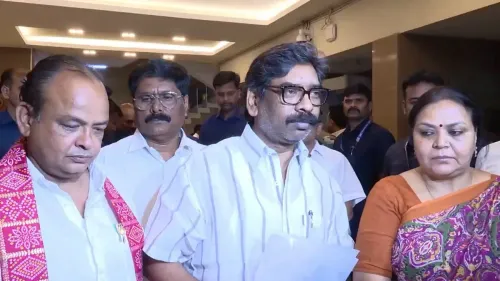
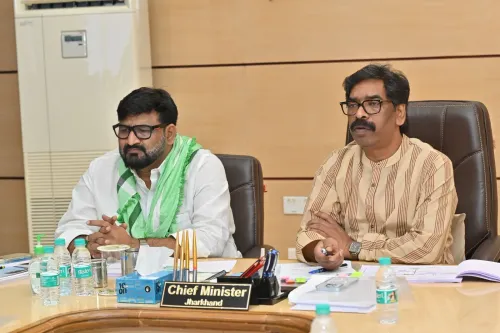
Chief Minister Hemant Soren of Jharkhand attended the 'Best Practices in Organ and Tissue Donation' workshop held at Hotel Ramada, Bariatu Road, Ranchi, on Tuesday, June 16, 2026. The Chief Minister's Office of Jharkhand announced his participation through an official post on X, underlining the state government's engagement with healthcare reform at the institutional level.
The CMO's post stated: 'मुख्यमंत्री श्री Hemant Soren बरियातु रोड स्थित होटल रमाडा में आयोजित Best Practices in Organ and Tissue Donation कार्यशाला में शामिल हुए' ['Chief Minister Hemant Soren participated in the Best Practices in Organ and Tissue Donation workshop held at Hotel Ramada, Bariatu Road']. The workshop brought together medical professionals and health administrators to examine improvements in organ donation procedures across the state.
Context
Jharkhand, an eastern Indian state with its capital at Ranchi, has been working to expand healthcare access across its predominantly tribal and rural population. Chief Minister Hemant Soren, who leads the Jharkhand Mukti Morcha and has served as Chief Minister since 2019 (with interruptions), has made health and welfare policy a stated priority of his administration. His presence at a specialised organ donation workshop signals direct executive attention to a sector that has historically received limited focus at the state level.
Policy Backdrop
India's organ donation framework is anchored in the Transplantation of Human Organs Act (THOA), enacted in 1994, which regulates the removal, storage, and transplantation of human organs. The National Organ and Tissue Transplant Organisation (NOTTO), established in 2014, coordinates organ procurement and allocation across states and serves as the nodal body for the National Organ Transplant Programme.
Despite this legislative and institutional architecture, India's organ donation rates remain among the lowest globally relative to the scale of need. State-level workshops of this kind are part of a broader push by both central and state governments to strengthen hospital-level networks, train medical personnel, and raise public awareness about voluntary donation.
Stakeholders and Impact
The workshop's direct stakeholders include transplant patients awaiting organs, surgeons and transplant coordinators practising in Jharkhand, and administrators of state-run hospitals. For a state like Jharkhand, where tertiary healthcare infrastructure is still developing, building institutional capacity in organ retrieval and allocation can have an outsized impact on patient outcomes.
Medical professionals who participate in such sessions are better equipped to identify potential donors, initiate consent processes, and coordinate with national registries such as NOTTO. Wider awareness among hospital staff can also reduce the time-critical delays that often result in viable organs being lost.
What's Next
Observers will watch for follow-up notifications from the Jharkhand health department regarding the designation of new organ retrieval centres or formal linkages with NOTTO's national grid. Budget allocations for transplant infrastructure in 2026-27 will be another indicator of whether the state converts workshop-level engagement into sustained policy investment. If Jharkhand moves to formalise its organ donation network, it could serve as a model for other states at a similar stage of healthcare development.
Point of View
Not merely an administrative function. In states where tertiary medical infrastructure is nascent, executive-level visibility at such events often precedes policy commitments — making this appearance worth tracking. The move also fits a broader national pattern of state governments being nudged by the Centre to integrate more actively with NOTTO's procurement network. Whether Jharkhand translates this engagement into concrete budget lines or new retrieval centre designations will be the real test of intent.
NationPress
16 Sept 2026
Frequently Asked Questions
What is the 'Best Practices in Organ and Tissue Donation' workshop in Jharkhand?
It is a state-level workshop held at Hotel Ramada, Bariatu Road, Ranchi, on June 16, 2026, aimed at improving organ and tissue donation procedures among medical professionals and health administrators in Jharkhand.
Why did CM Hemant Soren attend the organ donation workshop?
As Chief Minister, Hemant Soren's participation underlines the Jharkhand government's focus on healthcare reform and signals executive-level commitment to building organ donation capacity in the state.
What is NOTTO and how does it relate to Jharkhand?
NOTTO, the National Organ and Tissue Transplant Organisation established in 2014, coordinates organ procurement and allocation across Indian states. Jharkhand's participation in such workshops is part of aligning state health systems with NOTTO's national network.
What law governs organ donation in India?
The Transplantation of Human Organs Act (THOA), enacted in 1994, regulates the removal, storage, and transplantation of human organs in India and forms the legal backbone of the country's organ donation framework.
How does India's organ donation rate compare globally?
India's organ donation rates remain among the lowest globally relative to the scale of need, which is why state governments are increasingly hosting workshops and training programmes to raise awareness and build institutional capacity.