CM Sukhu announces ₹1.33 cr for HP's Asian Games kabaddi heroes
Synopsis
CM Sukhvinder Singh Sukhu announces ₹1.33 crore for captain Pushpa Rana, Ritu Negi, Jyoti Thakur, and Bhavna Thakur after their role in India's women's kabaddi gold at the Asian Games.
Key Takeaways
₹1.33 crore total prize announced by CM Sukhu for four Himachali women kabaddi players from India's Asian Games gold-medal team.
Each player — Pushpa Rana, Ritu Negi, Jyoti Thakur, and Bhavna Thakur — will receive ₹33.33 lakh as equal shares.
Captain Pushpa Rana leads the group of four Himachal Pradesh players on the national squad.
The announcement follows a long-established pattern of Indian state governments rewarding international medal winners with cash prizes.
CM Sukhu framed the award as part of a government commitment to developing sports talent and youth aspirations in Himachal Pradesh.
Disbursement of the prize money and any follow-up sports infrastructure investment will be the next indicator of policy intent.
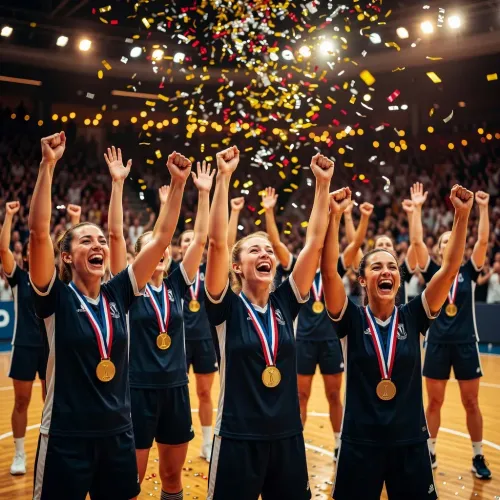
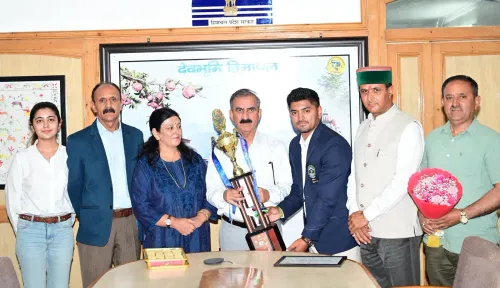
Four daughters of Himachal Pradesh helped India write gold-medal history at the Asian Games — and their state is making sure they know it. Himachal Pradesh Chief Minister Sukhvinder Singh Sukhu announced on Wednesday, 30 September 2026 that the state government will award a combined prize of approximately ₹1.33 crore to the four Himachali players on India's gold-winning women's kabaddi team.
The four players, the prize, and the announcement
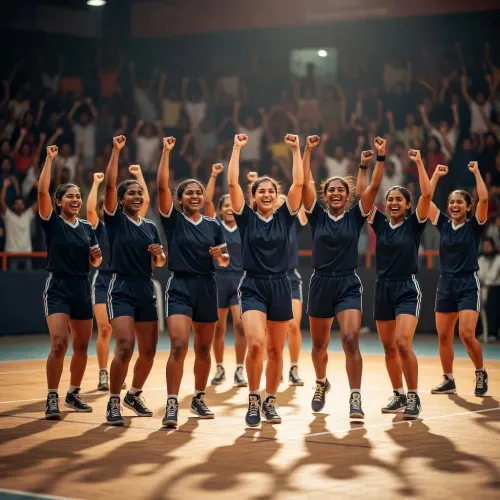
CM Sukhu named all four players individually in his post: captain Pushpa Rana, Ritu Negi, Jyoti Thakur, and Bhavna Thakur. Each will receive ₹33.33 lakh — equal shares of a total purse that recognises their role in the Indian team's Asian Games gold. The Chief Minister said their 'unparalleled contribution' (atulaneey yogdan) had 'filled the entire state with pride.'
Kabaddi is a sport deeply rooted in South Asian identity, and an Asian Games gold for the women's team carries particular weight. That four players in that squad hail from one northern hill state — Himachal Pradesh — is the kind of geographic concentration that makes state governments sit up fast.
Himachal's sports incentive tradition
This announcement follows a well-worn but genuinely important pattern in Indian sports governance. State governments across the country have long used cash awards tied to international medals as the most direct lever they have to signal to young athletes that success will be rewarded at home, not just on the podium. For a smaller state like Himachal Pradesh — where elite sports infrastructure is limited compared to larger states — that signal matters more than the rupee figure alone.
CM Sukhu framed the prize explicitly as part of a broader commitment: 'Hamari sarkar khel pratibhaon ko aage badhane aur yuvaon ke sapnon ko nayi udaan dene ke liye sankalpita hai' — 'Our government is resolved to advance sporting talent and give the dreams of youth a new flight.' That language positions the cash award not as a one-off gesture but as a policy stance.
What the ₹1.33 crore signal means for HP's young athletes
The arithmetic is deliberate: ₹33.33 lakh per player is a meaningful sum in a state where grassroots sports infrastructure is still developing. More than the money, the public, name-by-name recognition from the Chief Minister himself puts kabaddi — a sport that rarely gets prime-time glamour — squarely in the spotlight. For the next generation of girls training on Himachal's courts and fields, that visibility is the real prize.
The state now faces the sharper test: will the announced prize money reach the players swiftly, and will it be followed by the kind of structural investment — training academies, coaching pipelines, competition exposure — that turns a gold-medal moment into a generational shift?
Point of View
Visible, and name-specific — designed to attach the ruling government's identity to a high-pride national achievement. For CM Sukhu and the Congress government in Himachal Pradesh, publicly rewarding four local Asian Games gold medallists is a low-cost, high-return political and policy move. The broader arc worth watching is whether these individual cash prizes translate into institutional sports investment in the state, or remain one-off goodwill gestures that come alive only around medal cycles. The gender dimension is also notable: a government choosing to spotlight women athletes in a contact sport like kabaddi, by name and with substantial prize money, sends a deliberate signal about sporting aspiration in a conservative hill state.
NationPress
30 Sept 2026
Frequently Asked Questions
How much prize money did CM Sukhu announce for Himachal kabaddi players?
CM Sukhu announced a total prize of approximately ₹1.33 crore, with each of the four players — Pushpa Rana, Ritu Negi, Jyoti Thakur, and Bhavna Thakur — receiving ₹33.33 lakh.
Which Himachal Pradesh players won gold in women's kabaddi at the Asian Games?
Four Himachali players were part of India's gold-winning women's kabaddi team at the Asian Games: captain Pushpa Rana, Ritu Negi, Jyoti Thakur, and Bhavna Thakur.
Who is Sukhvinder Singh Sukhu?
Sukhvinder Singh Sukhu is the Chief Minister of Himachal Pradesh and a leader of the Indian National Congress, who assumed office in 2022.
Why do state governments give prize money to athletes after the Asian Games?
Indian state governments routinely announce cash awards for medal-winning athletes to encourage sports participation, recognize local talent, and signal that international success will be rewarded at the state level.
What did CM Sukhu say about Himachal Pradesh's sports policy?
CM Sukhu stated that his government is 'resolved to advance sporting talent and give the dreams of youth a new flight,' framing the prize money as part of a broader commitment to promoting sports in the state.