CM Sukhu: HP reservoir decision to aid 6,500 fisher families
Synopsis
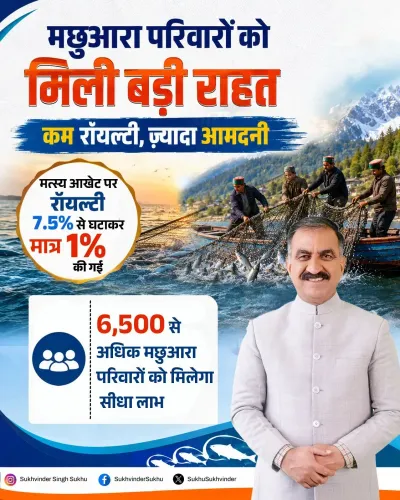
Chief Minister Sukhvinder Singh Sukhu announced on June 9, 2026 that a state government decision will benefit approximately 6,500 fishermen families dependent on five Himachal Pradesh reservoirs—Gobind Sagar, Pong Dam, Chamera, Ranjit Sagar, and Kol Dam—strengthening their livelihoods.
Key Takeaways
6,500 fishermen families across five Himachal Pradesh reservoirs are set to benefit from the state government's decision.
The five reservoirs named are Gobind Sagar , Pong Dam , Chamera , Ranjit Sagar , and Kol Dam .
The announcement was made by Chief Minister Thakur Sukhvinder Singh Sukhu via the official CMO Himachal Pradesh account on June 9, 2026 .
The decision is framed as a livelihood-strengthening measure for reservoir-dependent fishing communities.
Specific implementation details—lease terms, subsidies, or cooperative structures—have not yet been publicly disclosed.
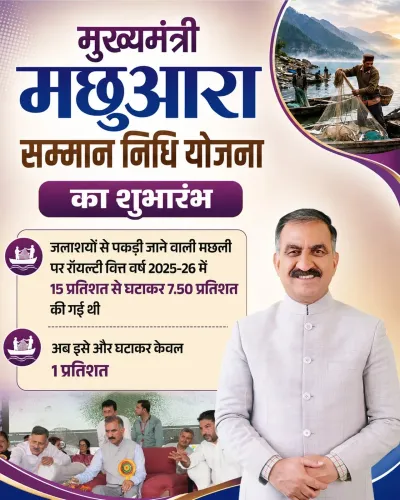
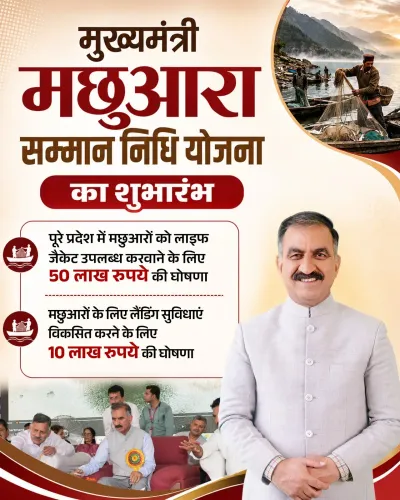
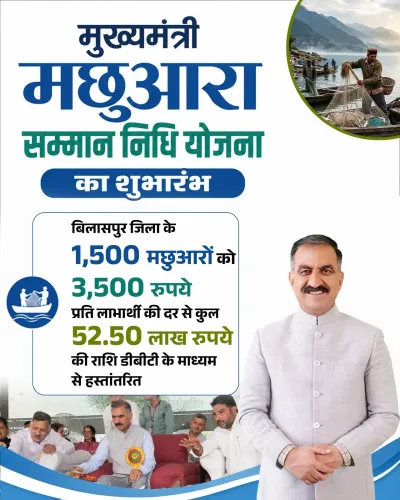
The Chief Minister's Office of Himachal Pradesh, quoting Chief Minister Thakur Sukhvinder Singh Sukhu, announced on Tuesday, June 9, 2026 that a government decision will benefit approximately 6,500 fishermen families dependent on five major reservoirs across the state, strengthening their livelihoods.
In the post, CM Sukhu stated: 'This decision will benefit approximately 6,500 fishermen families dependent on the reservoirs of Gobind Sagar, Pong Dam, Chamera, Ranjit Sagar, and Kol Dam, thereby strengthening their livelihoods.' (इस निर्णय से गोबिंद सागर, पोंग बांध, चमेरा, रंजीत सागर और कोल बांध के जलाशयों पर निर्भर लगभग 6,500 मछुआरा परिवारों को लाभ मिलेगा, जिससे उनकी आजीविका को मजबूती मिलेगी।)
Context
The five reservoirs cited span the breadth of Himachal Pradesh. Gobind Sagar, formed by the Bhakra Dam on the Sutlej river, is among the state's largest water bodies. Pong Dam—formally known as Maharana Pratap Sagar—sits on the Beas river in Kangra district and is a designated Ramsar wetland site. Chamera Dam on the Ravi river in Chamba district and Ranjit Sagar Dam further downstream both support fishing communities along the Ravi corridor. Kol Dam, a run-of-river project on the Sutlej, rounds out the five sites.
Together, these reservoirs represent the primary inland fisheries resource of the state, and communities settled on their banks have historically depended on fishing leases for seasonal income.
Policy Backdrop
Himachal Pradesh has managed inland fisheries alongside its hydroelectric infrastructure since the 1960s, when large dam construction displaced and resettled thousands of families. State governments across administrations have periodically issued fishing lease allotments, cooperative formation orders, and subsidy packages to these reservoir communities as a form of livelihood compensation and welfare support.
The Congress government led by CM Sukhu, in power since December 2022, has framed several targeted welfare measures for marginal and occupational communities. The current announcement continues that policy lineage, directing the state's fisheries infrastructure toward direct household benefit.
Stakeholders and Impact
The 6,500 fishermen families referenced by CM Sukhu represent a concentrated occupational group whose income is tied directly to seasonal fishing rights, lease renewals, and state-supported marketing infrastructure. Disruptions to any of these—whether through lease disputes, reservoir-level fluctuations driven by hydropower operations, or delayed subsidy disbursements—can push households into acute distress.
Beyond the primary beneficiaries, ancillary workers in fish processing, transport, and local markets around Gobind Sagar and Pong Dam—two of the busiest inland fisheries zones—stand to gain from improved liquidity and formalised access among fishing households.
What's Next
The specific mechanism of the decision—whether it involves revised lease terms, direct cash transfers, cooperative registration drives, or fisheries department orders—has not been detailed in the announcement. Observers will watch for formal notifications from the Himachal Pradesh Fisheries Department and any corresponding provisions in the state's upcoming budget cycle.
Implementation timelines, coverage verification across all five reservoir zones, and grievance redress channels for excluded families will determine whether the stated benefit of livelihood strengthening translates into measurable income gains for the 6,500 families cited by the Chief Minister.
Point of View
Using the state's hydroelectric reservoir network as a welfare delivery platform rather than purely an energy asset. Framing a fisheries decision around five geographically dispersed reservoirs—spanning Kangra, Chamba, and Bilaspur districts—suggests a deliberate effort to project statewide reach. The move fits a broader pattern in hill-state politics where dam-affected communities remain a persistent pressure group, and governments that formalise their access to reservoir resources gain durable grassroots support. The real test will be whether implementation follows the announcement with the speed and specificity that fishing households, whose income is highly seasonal, actually require.
NationPress
26 Sept 2026
Frequently Asked Questions
Who are the 6,500 fishermen families in Himachal Pradesh?
They are households whose primary livelihood depends on fishing in the reservoirs of Gobind Sagar, Pong Dam, Chamera, Ranjit Sagar, and Kol Dam in Himachal Pradesh, as cited by Chief Minister Sukhvinder Singh Sukhu.
Which reservoirs are covered under CM Sukhu's fishermen welfare decision?
The five reservoirs are Gobind Sagar on the Sutlej river, Pong Dam on the Beas river in Kangra district, Chamera Dam on the Ravi river in Chamba district, Ranjit Sagar Dam on the Ravi river, and Kol Dam on the Sutlej river.
What is the Gobind Sagar reservoir?
Gobind Sagar is the large reservoir formed by the Bhakra Dam on the Sutlej river in Himachal Pradesh, and is one of the state's most significant inland fisheries zones.
What is Pong Dam known for in Himachal Pradesh?
Pong Dam, formally called Maharana Pratap Sagar, is a major reservoir on the Beas river in Kangra district. It is a designated Ramsar wetland site and a key hub for inland fisheries and migratory birds.
When did Sukhvinder Singh Sukhu become Chief Minister of Himachal Pradesh?
Sukhvinder Singh Sukhu became Chief Minister of Himachal Pradesh in December 2022, heading the state's Congress government.