CM Sukhu Greets Journalists on National Press Day
Synopsis
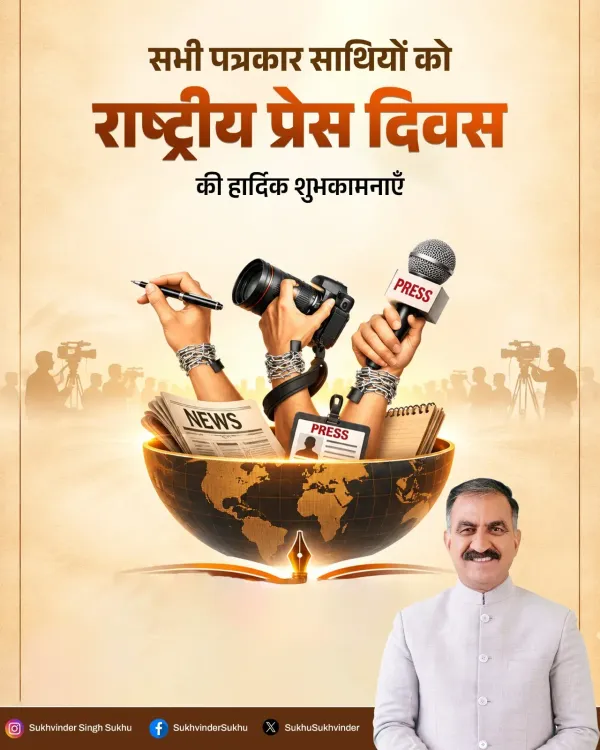
Himachal Pradesh Chief Minister Sukhvinder Singh Sukhu marked National Press Day on 16 November 2026 by honouring Indian journalism's historical role as society's voice and extending greetings to journalists across the country.
Key Takeaways
National Press Day is observed on 16 November every year to mark the founding of the Press Council of India in 1966 .
CM Sukhvinder Singh Sukhu extended greetings to all journalist colleagues on the occasion.
His message described Indian journalism as a witness to the country's struggles, transformations, and people's movements.
The Press Council of India was established under the Press Council Act, 1965 to protect press freedom and improve journalistic standards.
The tribute reflects a broader annual pattern of political leaders across parties recognising journalism's democratic role on this date.
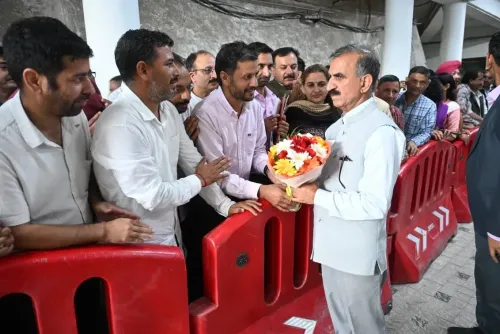
Sixty years after the Press Council of India was established, journalism in the country remains the loudest voice ordinary citizens have — and Himachal Pradesh Chief Minister Sukhvinder Singh Sukhu marked that legacy on National Press Day, 16 November 2026, with a salute to the profession's enduring role in India's democratic life.
In his message, CM Sukhu wrote: 'The history of Indian journalism has been witness to the country's struggles, transformations, and people's movements. Journalism has always played a vital role in becoming the voice of society, bringing out the truth, and raising issues of public interest. On the occasion of National Press Day, my heartfelt greetings to all journalist colleagues.'
Why November 16 carries real weight for Indian journalism
National Press Day is observed every year on 16 November to commemorate the founding of the Press Council of India in 1966, the statutory autonomous body created under the Press Council Act, 1965. The Council's dual mandate — defending press freedom and raising journalistic standards — made its birth date the natural anchor for annual reflection on what a free press means in a democracy.
The Council was conceived in an era when independent India was still shaping its institutions, and its creation reflected a parliamentary consensus that a self-regulating press watchdog was preferable to state-controlled oversight. That founding tension between freedom and accountability has defined Indian journalism ever since.
Journalism as a witness to India's upheavals
Sukhu's tribute pointedly frames journalism not as a profession but as a historical participant — a witness to sangharshon, badlaavon aur jan aandolnon (struggles, transformations, and people's movements). That framing connects the press to India's independence movement, the Emergency of 1975, and every civic upheaval in between, reminding journalists that their lineage carries moral weight beyond today's news cycle.
For reporters covering Himachal Pradesh's mountain communities — from disaster response in flood-hit valleys to rural health access in remote districts — the reminder that journalism exists to surface public-interest issues carries daily operational meaning, not just ceremonial resonance.Point of View
But Sukhu's framing — positioning journalism as an active participant in India's historical struggles rather than a neutral observer — aligns with Congress's traditional emphasis on the press as a democratic safeguard. At a time when debates over media independence remain live across Indian states, even routine tributes carry a subtle signal about where a government positions itself on the freedom-versus-accountability spectrum. For Himachal Pradesh, a hill state where local reporters often serve as the only link between remote communities and state accountability, the acknowledgement lands with practical resonance. The consistent annual articulation of this sentiment by state leaders, regardless of party, reinforces the institutional legitimacy of the Press Council model.
NationPress
16 Nov 2026
Frequently Asked Questions
Why is National Press Day celebrated on 16 November in India?
National Press Day is observed on 16 November each year to mark the day the Press Council of India became operational in 1966 , following the enactment of the Press Council Act, 1965 .
What is the Press Council of India and what does it do?
The Press Council of India is a statutory autonomous body that works to preserve press freedom and maintain and improve the standards of newspapers and news agencies in India.
What did CM Sukhu say on National Press Day 2026?
CM Sukhvinder Singh Sukhu said Indian journalism has been a witness to the country's struggles and transformations, praised journalists for raising public-interest issues, and extended heartfelt greetings to all journalist colleagues.
Who is Sukhvinder Singh Sukhu?
Sukhvinder Singh Sukhu is the Chief Minister of Himachal Pradesh and a leader of the Indian National Congress .
When was the Press Council of India established?
The Press Council of India was established in 1966 under the Press Council Act, 1965 , with a mandate to protect press freedom and regulate journalistic standards.