CM Sukhu: HP Govt Reclaimed Public Assets from Powerful Vested Interests
Synopsis
Himachal Pradesh CM Sukhvinder Singh Sukhu declared on August 8, 2026 that his government has reclaimed public assets from powerful elites no prior administration dared to challenge, pledging the recovered wealth for state self-reliance and youth development.
Key Takeaways
CM Sukhvinder Singh Sukhu announced on August 8, 2026 that the Himachal Pradesh government has recovered public assets from entrenched private interests.
Sukhu described the targets as 'dhanna seths' — powerful elites against whom, he claimed, no previous government had the courage to act.
The recovered assets are to be used for state self-reliance ( aatmanirbhar ), accelerated development, and youth-focused programmes.
The post directly addresses Himachal Pradesh's youth , framing enforcement action as a generational investment.
The Congress government has held power in Himachal Pradesh since December 2022 and has consistently positioned itself as acting against entrenched privilege.
Specific assets recovered and their allocation in state budgets remain to be publicly detailed.
For years, certain powerful figures in Himachal Pradesh operated with near-total impunity — untouched by enforcement, shielded by influence. Himachal Pradesh Chief Minister Sukhvinder Singh Sukhu says that era is over, declaring on Saturday, August 8, 2026 that his government has clawed back public assets from entrenched interests that no previous administration dared to confront.
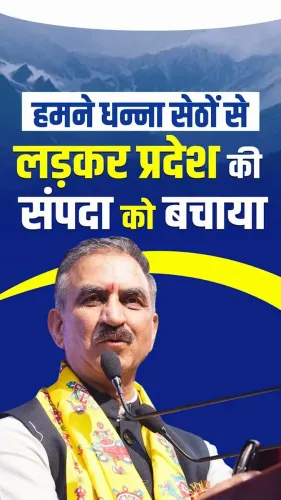
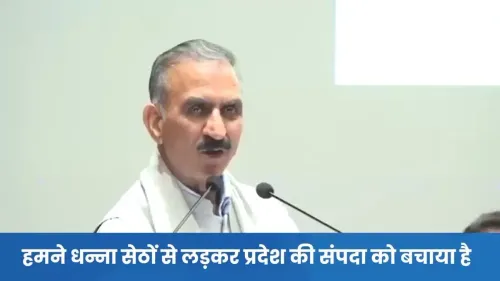
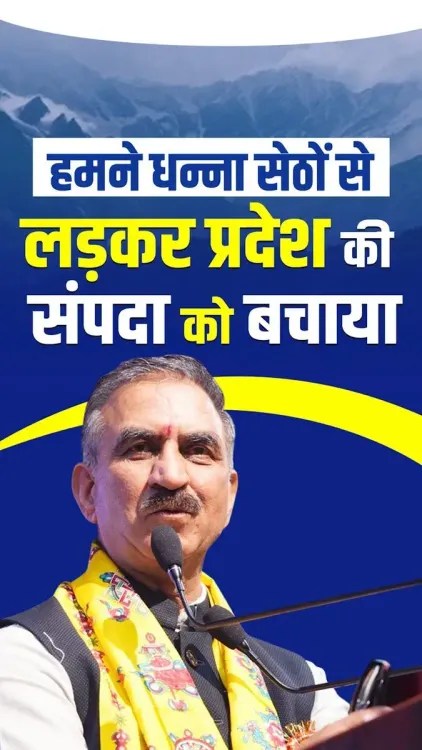
Posting in Hindi on X, CM Sukhu said: 'Our government has reclaimed the wealth of the people of the state from those powerful elites against whom no one even had the courage to act. Our young friends will understand this better. This wealth belongs to the people of Himachal and will be used to make the state self-reliant, accelerate development, and build a better future for our youth.'
Taking On the 'Dhanna Seths' — Who Was Being Protected?
The Hindi phrase 'dhanna seth' — literally 'wealthy lord' — is a pointed colloquial term for entrenched moneyed elites who use their clout to evade accountability. By invoking it, Sukhu was not speaking in bureaucratic abstractions. He was making a political charge: that the state's public assets had, until his government's intervention, been effectively held by private interests powerful enough to deter any official action.
The Congress government, which came to power in Himachal Pradesh in December 2022, has consistently framed its governance posture as a break from what it describes as a culture of protection for the well-connected. This post sharpens that narrative — casting asset recovery not as routine enforcement but as an act of political courage.
Self-Reliance and Youth: Where the Recovered Assets Are Headed
CM Sukhu was explicit about intent: the reclaimed wealth is earmarked for state self-reliance (aatmanirbhar), faster development, and a better future for Himachal Pradesh's youth. The direct address to 'young friends' is deliberate — it positions the government's enforcement actions as generational investment, not just administrative tidying.
Himachal Pradesh has faced persistent fiscal stress, with the state carrying a significant debt burden. In that context, recovering assets from private capture carries real budgetary stakes — funds that could flow into youth employment schemes, infrastructure, or social programmes. The specifics of what has been recovered and how it will be allocated remain to be detailed in future budget disclosures.
The message is clear enough on its own terms: a government that moves against the powerful, and redirects what it recovers toward the next generation, is staking a claim to a particular kind of legitimacy. Whether the numbers ultimately match the rhetoric is the question Himachal Pradesh's voters — and its youth — will be watching.
Point of View
Framing governance as a contest between the people and entrenched money power — a familiar but durable frame in Indian state politics. Against the backdrop of Himachal Pradesh's well-documented fiscal stress, the promise to redirect recovered assets toward self-reliance and youth investment ties enforcement action to a development narrative the government needs heading into its mid-term phase. The absence of specifics — named individuals, verified asset values, or scheme allocations — means the claim remains in the political register for now, and scrutiny of the follow-through will define how much traction this narrative ultimately gets.
NationPress
8 Aug 2026
Frequently Asked Questions
What assets has the Himachal Pradesh government recovered?
CM Sukhu has stated that his government reclaimed public assets from powerful vested interests, but no specific properties, individuals, or monetary values have been disclosed in the post or verified through public records as of August 2026.
Who are the 'dhanna seths' CM Sukhu is referring to?
'Dhanna seth' is a Hindi colloquial term for wealthy, influential elites. CM Sukhu used it to refer to powerful private interests who allegedly held state public assets and were previously shielded from enforcement action.
What will the recovered assets be used for in Himachal Pradesh?
CM Sukhu said the reclaimed wealth will be used to make Himachal Pradesh self-reliant, accelerate development, and build a better future for the state's youth, though specific schemes or budget allocations have not yet been announced.
When did the Congress government come to power in Himachal Pradesh?
The Indian National Congress government, led by Sukhvinder Singh Sukhu, came to power in Himachal Pradesh in December 2022 .
Why is CM Sukhu addressing Himachal Pradesh's youth specifically?
Sukhu directly addressed 'young friends' to frame the asset recovery as a generational act — signalling that the reclaimed public wealth will be channelled into youth development and employment, a key political constituency in the state.