Chirag Paswan Hails India's Rise as Global Clean Energy Power
Synopsis
Union Food Processing Minister Chirag Paswan on August 8, 2026 celebrated India's rise to third globally in renewable and solar installed capacity and fourth in wind energy, crediting PM Modi's leadership and signalling progress toward India's 500 GW non-fossil fuel target by 2030.
Key Takeaways
Minister Chirag Paswan posted on August 8, 2026 celebrating India's clean energy rankings.
India ranks third globally in total renewable energy installed capacity and in solar energy.
India ranks fourth globally in wind energy installed capacity.
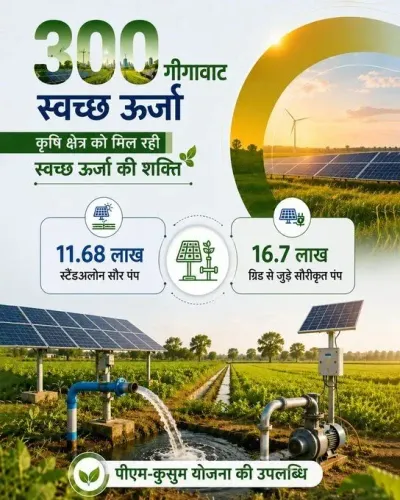
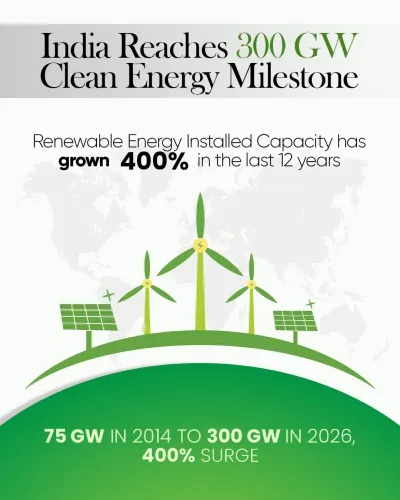
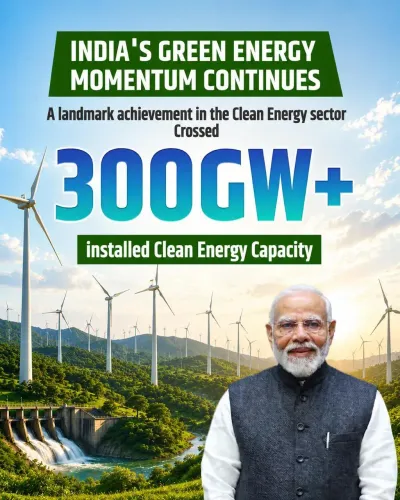
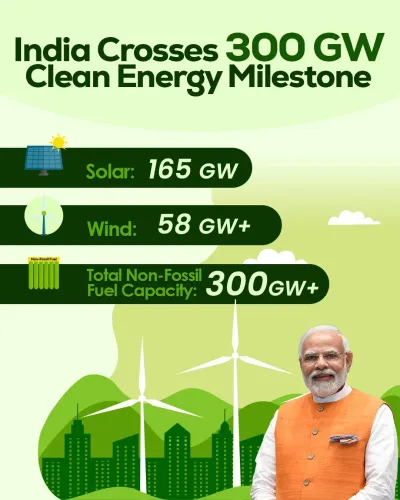
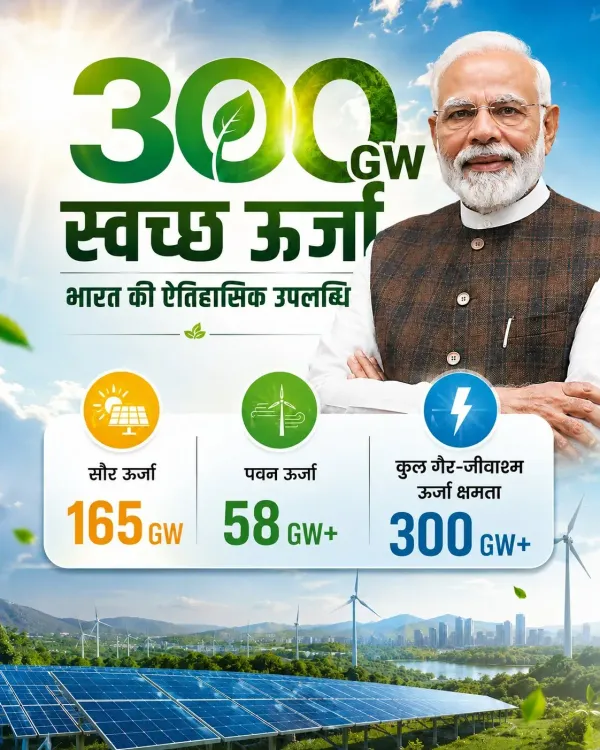
The post was anchored by the hashtag #300GWCleanEnergy , marking a major capacity milestone.
India committed at COP26 (2021) to reach 500 GW non-fossil fuel capacity by 2030 and net-zero by 2070 .
India's renewable push is driven by both climate commitments under the Paris Agreement and energy-security goals.
India is writing its name into the global clean energy record books — and Union Food Processing Minister Chirag Paswan wants the world to take note. On Saturday, August 8, 2026, Paswan took to X to celebrate India's climb to third place globally in total renewable energy installed capacity, third in solar energy, and fourth in wind energy, framing the milestone as proof of a nation in the middle of a decisive green transformation.
Posting under the hashtag #300GWCleanEnergy, Paswan credited the trajectory directly to Prime Minister Narendra Modi, writing — 'माननीय प्रधानमंत्री श्री @narendramodi जी के नेतृत्व में भारत स्वच्छ ऊर्जा के क्षेत्र में नई वैश्विक पहचान बना रहा है' — 'Under the leadership of honourable Prime Minister Shri Narendra Modi, India is building a new global identity in the field of clean energy.'
From Solar Mission to Global Podium
The arc of India's renewable push stretches back to 2010, when the Jawaharlal Nehru National Solar Mission first set the country on a course to scale up solar deployment systematically. What began as a domestic capacity-building exercise has since evolved into one of the world's most ambitious energy transitions, backed by manufacturing incentives, international partnerships through the International Solar Alliance, and a Paris Agreement commitment that placed India's targets among the most watched on the global stage.
The strategic logic has always been dual: advance climate goals while reducing dangerous dependence on fossil fuel imports. As power demand surges alongside India's economic growth, renewables have emerged not just as an environmental choice but as an energy-security imperative.
The 500 GW Clock Is Ticking
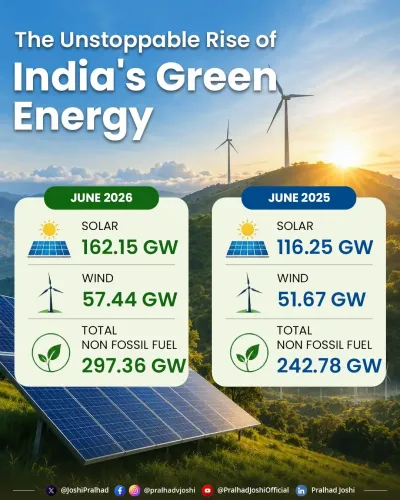
At COP26 in 2021, India pledged to reach 500 GW of non-fossil fuel capacity by 2030 and achieve net-zero emissions by 2070 — commitments that placed enormous pressure on the pace of deployment. The #300GWCleanEnergy hashtag anchoring Paswan's post signals that India is now treating the 300 GW threshold as a landmark on that road, a visible waypoint that the government is keen to plant a flag on ahead of future climate negotiations.
With the 2030 deadline drawing closer, progress reports on the 500 GW target will be scrutinised at every subsequent COP meeting. Each ranking improvement — each podium finish in solar, wind, or overall renewables — becomes both a domestic political asset and a piece of India's international climate credibility.
For a country that was once seen primarily as a developing-world holdout in climate talks, standing third on the global renewable capacity leaderboard is a statement of a fundamentally different kind — one that no communiqué can match.
Point of View
Turning a capacity milestone into a narrative anchor. For the NDA coalition, clean energy podium finishes offer rare cross-partisan ground — hard to dispute, easy to amplify.
NationPress
22 Sept 2026
Frequently Asked Questions
What is India's current global ranking in renewable energy?
According to Minister Chirag Paswan's post on August 8, 2026, India ranks third in the world in total renewable energy installed capacity and in solar energy, and fourth in wind energy.
What is the #300GWCleanEnergy hashtag about?
The hashtag #300GWCleanEnergy marks India crossing or approaching the 300 gigawatt threshold in clean energy installed capacity, which the government is highlighting as a major milestone on the road to its 500 GW non-fossil fuel target by 2030.
What is India's 2030 renewable energy target?
India pledged at COP26 in 2021 to achieve 500 GW of non-fossil fuel electricity capacity by 2030 and to reach net-zero emissions by 2070.
What is the International Solar Alliance and India's role in it?
The International Solar Alliance is a treaty-based intergovernmental organisation co-founded by India to promote solar energy adoption globally, and it has been a key pillar of India's international renewable energy diplomacy.
When did India's major solar energy push begin?
India's large-scale solar push began with the launch of the Jawaharlal Nehru National Solar Mission in 2010, which set the foundation for the country's subsequent rise up global renewable energy rankings.