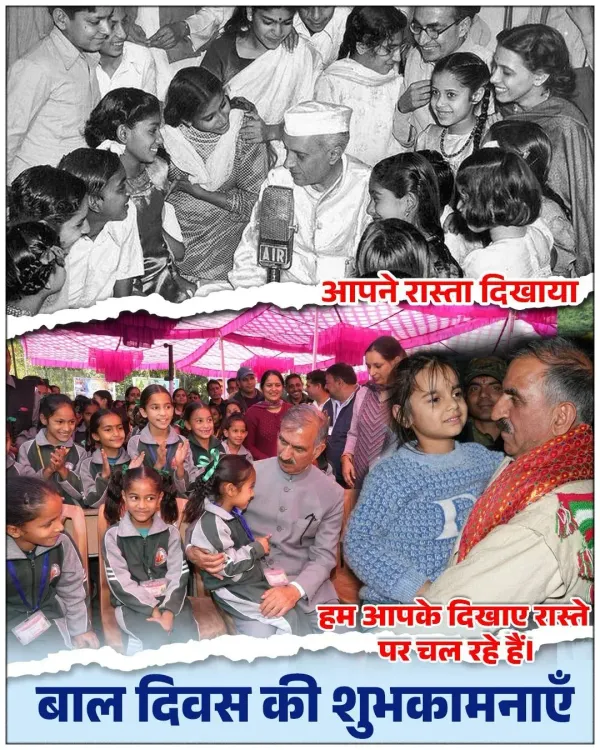
CM Sukhu Invokes Nehru on Children's Day, Spotlights Sukh Aashray Yojana
Synopsis
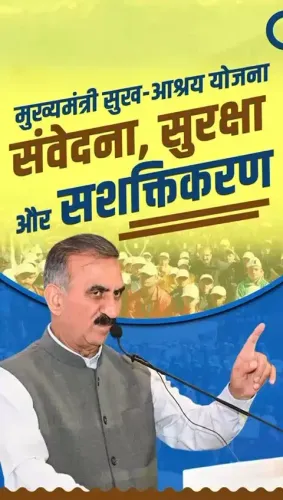
On Children's Day 2026, Himachal Pradesh CM Sukhvinder Singh Sukhu quoted Nehru and spotlighted the Mukhya Mantri Sukh Aashray Yojana, which formally designates orphaned children as 'Children of the State' and places their upbringing and education on the state government.
Key Takeaways
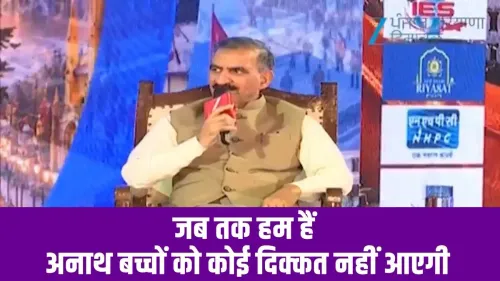
Children's Day, 14 November 2026 : CM Sukhvinder Singh Sukhu posted a message reaffirming state responsibility for orphaned children in Himachal Pradesh.
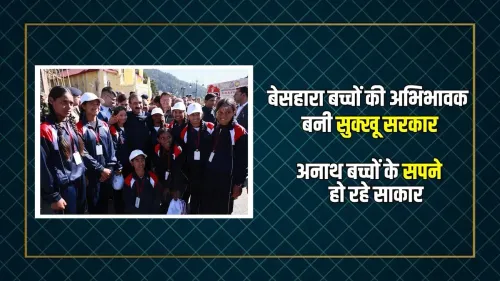
The Mukhya Mantri Sukh Aashray Yojana confers official 'Children of the State' status on orphans, placing their education and upbringing on the state government.
The scheme builds on the Juvenile Justice (Care and Protection of Children) Act, 2015 , the national legal framework for state guardianship of vulnerable children.
CM Sukhu quoted Jawaharlal Nehru — whose birth anniversary is observed as Children's Day — to frame the scheme's ethos of nurturing every child with care and equal opportunity.
The initiative reflects a broader Indian trend of shifting orphan welfare from institutional charity to rights-based state guardianship.
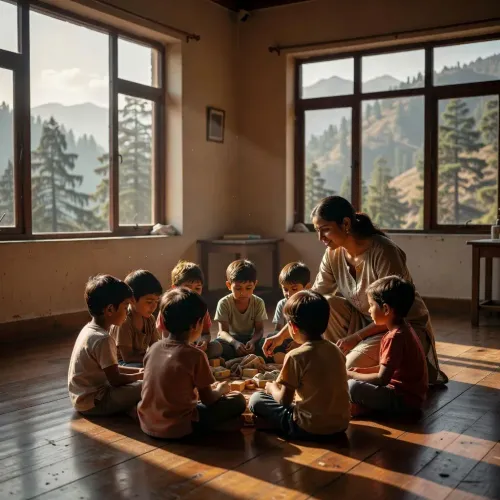
On Children's Day, 14 November 2026 — the birth anniversary of India's first Prime Minister — Himachal Pradesh Chief Minister Sukhvinder Singh Sukhu used the occasion to spotlight his government's signature welfare pledge: treating every orphaned child in the state not as a ward of an institution, but as a child of the state itself.
Quoting Jawaharlal Nehru — 'Bachche baag ki naazuk kali hain, jinhe pyaar aur komalata se sanwaarna chahiye' ('Children are the tender buds of a garden; they must be nurtured with love and gentleness') — CM Sukhu anchored his message in a tradition that has defined November 14 as Children's Day across India for decades. The choice of quote was deliberate: Nehru's words about delicate blossoms map directly onto the scheme's premise that the most vulnerable children deserve the most careful cultivation.
What 'Children of the State' Actually Means
The centrepiece of Sukhu's post is the Mukhya Mantri Sukh Aashray Yojana, which confers the formal designation of 'Children of the State' on orphaned children in Himachal Pradesh. That designation is more than symbolic — it places the responsibility for a child's upbringing, education, and future directly on the state government's shoulders, cutting through the patchwork of institutional care that has historically defined orphan welfare in India.
The legal scaffolding for such an intervention exists in the Juvenile Justice (Care and Protection of Children) Act, 2015, which empowered state governments to assume formal responsibility for children in need of care and protection. The Sukh Aashray Yojana builds on that framework, translating a national legislative intent into a state-level guarantee of better education, a secure childhood, and equal opportunity — the three specific commitments CM Sukhu reiterated in his post.
Children's Day as a Policy Stage, Not Just a Greeting
Across India, Children's Day has long been a moment for governments to announce or reaffirm commitments to child welfare, drawing symbolic weight from Nehru's legacy as a champion of young India. What sets Sukhu's message apart this year is its pivot from celebration to accountability — the acknowledgement that well-meaning wishes mean little without a concrete scheme absorbing the cost and responsibility of a child's entire upbringing.
Himachal Pradesh under the current Indian National Congress government has positioned the Sukh Aashray Yojana as one of its headline social-sector initiatives. Several other Indian states have launched analogous programmes in recent years, reflecting a broader national pattern of moving orphan welfare from charity-driven institutional care toward rights-based state guardianship. Himachal's framing — 'the state as parent' — is among the more assertive versions of that shift.
The road for every child tagged as a 'Child of the State' still runs through budget allocations, district-level implementation, and the sustained political will to keep the scheme funded beyond an election cycle. Children's Day is the promise; the annual state budget is the proof.
Point of View
CM Sukhu is doing double political work: associating the Congress government with Nehruvian child-welfare idealism while staking a concrete legacy claim on a headline social scheme. The 'Children of the State' designation is a rhetorically powerful reframe — it moves orphan welfare from the language of charity to the language of rights and state duty. Whether the scheme's implementation sustains that ambition will depend on budget consistency and district-level delivery, the perennial gap between welfare announcements and lived outcomes in hill-state governance.
NationPress
14 Nov 2026
Frequently Asked Questions
What is the Mukhya Mantri Sukh Aashray Yojana?
The Mukhya Mantri Sukh Aashray Yojana is a Himachal Pradesh welfare scheme that confers 'Children of the State' status on orphaned children, making the state government formally responsible for their upbringing, education, and equal opportunities in life.
Why is 14 November celebrated as Children's Day in India?
14 November is the birth anniversary of India's first Prime Minister Jawaharlal Nehru , who was widely known for his affection for children. The day is observed as Children's Day nationwide in his memory.
What did CM Sukhu say on Children's Day 2026?
CM Sukhvinder Singh Sukhu quoted Nehru's saying that children are the tender buds of a garden and highlighted the Mukhya Mantri Sukh Aashray Yojana, pledging that every child will receive better education, a secure childhood, and equal opportunity.
What law enables states to take guardianship of orphaned children in India?
The Juvenile Justice (Care and Protection of Children) Act, 2015 provides the national legal framework empowering state governments to assume care and responsibility for orphans and children in need of protection.
Which state government runs the Sukh Aashray Yojana?
The Himachal Pradesh government, led by the Indian National Congress under Chief Minister Sukhvinder Singh Sukhu, runs the Mukhya Mantri Sukh Aashray Yojana.