CM Sukhu Launches Book on Jakhu Temple's Sanjeevani Mystery
Synopsis
Himachal Pradesh CM Sukhvinder Singh Sukhu released 'Jakhu Mandir — Sanjeevani Buti ka Rahasya' by Trilok Suryavanshi on 30 July 2026. The book explores the ancient Jakhu Temple's Ramayana-linked mythology, the Sanjeevani herb legend, and Shimla's broader cultural heritage in a research-based format.
Key Takeaways
CM Sukhvinder Singh Sukhu released the book 'Jakhu Mandir — Sanjeevani Buti ka Rahasya' in Shimla on 30 July 2026 .
Author Trilok Suryavanshi is a former Assistant Director in HP's Language and Culture Department and chief spokesperson of HP Kisan Congress .
The book covers the mythological history of Jakhu Temple , the Sanjeevani herb legend from the Ramayana , and Shimla's historical and cultural heritage.
Jakhu Temple atop Jakhu Hill is linked to the legend of Hanuman searching for the Sanjeevani herb to revive Lakshmana.
Attendees included the author's wife Maya Suryavanshi , Jagmohan Sharma , Purna Chand , and Ajay Bhardwaj .
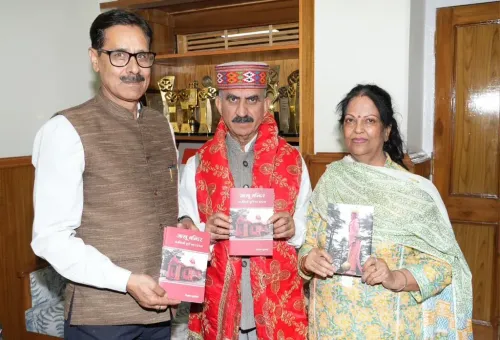
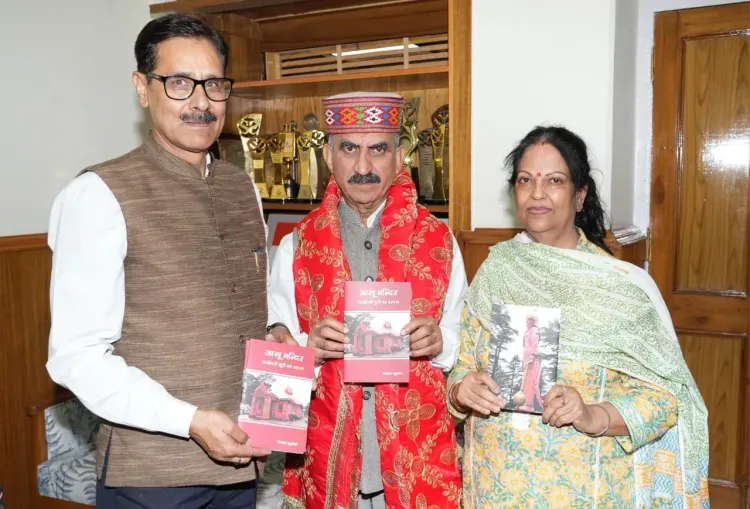
A book rooted in Ramayana legend and Shimla's living heritage found a prominent patron on Thursday, 30 July 2026, when Himachal Pradesh Chief Minister Sukhvinder Singh Sukhu released 'Jakhu Mandir — Sanjeevani Buti ka Rahasya' ('Jakhu Temple — The Mystery of the Sanjeevani Herb'), authored by Trilok Suryavanshi, former Assistant Director in the state's Language and Culture Department and chief spokesperson of Himachal Pradesh Kisan Congress.
The volume centres on one of Shimla's most iconic landmarks — the ancient Jakhu Temple, perched atop Jakhu Hill and tied by tradition to the Ramayana. According to the epic, it was on this very hill that Hanuman paused in his search for the life-restoring Sanjeevani herb, sent to revive Lakshmana on the battlefield of Lanka. The temple, which draws pilgrims and tourists year-round, carries that mythological weight in every stone — yet the full arc of its history and the lore surrounding the Sanjeevani has rarely been assembled in a single, accessible work. Suryavanshi's book attempts exactly that.
CM Sukhu, releasing the book, described it as presenting the temple's 'mythological history, the mystery of the Sanjeevani herb, and Shimla's historical and cultural heritage in a simple, engaging and research-based manner' for readers. He extended warm congratulations and good wishes to the author for what he called a 'meaningful creation.'
Maya Suryavanshi, the author's wife, was present at the launch alongside Jagmohan Sharma, Purna Chand, and Ajay Bhardwaj.
Jakhu Hill: Where Mythology Meets Shimla's Skyline
At roughly 2,455 metres above sea level, Jakhu Hill is the highest point overlooking Shimla and home to a Hanuman idol that has become one of the hill station's most recognisable silhouettes. The temple's origins are considered ancient, predating the colonial-era hill station that grew around it. For heritage scholars and devotees alike, the site sits at the intersection of living faith and documented history — precisely the terrain Suryavanshi's book navigates.A Cultural Department Veteran Turns Author
Suryavanshi's years inside the Language and Culture Department — the Himachal Pradesh government body charged with preserving and promoting the state's languages, arts, and heritage — give the work an institutional depth that distinguishes it from popular mythology retellings. His dual role as a government heritage professional and a political figure within the Kisan Congress adds a rare cross-domain perspective to what is, at its core, a work of cultural documentation. For a state whose identity is woven tightly around its temples, folklore, and mountain landscape, a research-grounded account of Jakhu Temple's legends is more than a literary event — it is an act of heritage preservation in print.Point of View
Particularly ahead of local political cycles. The choice of a Kisan Congress functionary as the honoured author also signals an effort to reward party-aligned cultural workers with institutional visibility. Longer term, such state-endorsed publications contribute to the slow but steady documentation of Himachal's intangible heritage — a task the Language and Culture Department has historically under-resourced.
NationPress
30 Jul 2026
Frequently Asked Questions
What is the book 'Jakhu Mandir — Sanjeevani Buti ka Rahasya' about?
The book explores the mythological history of Jakhu Temple in Shimla, the legend of the Sanjeevani herb from the Ramayana, and Shimla's broader historical and cultural heritage in a research-based, accessible style.
Who wrote the Jakhu Temple book released by CM Sukhu?
Trilok Suryavanshi, former Assistant Director in Himachal Pradesh's Language and Culture Department and chief spokesperson of HP Kisan Congress, authored the book.
Where is Jakhu Temple located and why is it significant?
Jakhu Temple sits atop Jakhu Hill, the highest point overlooking Shimla at roughly 2,455 metres. It is an ancient Hanuman temple linked to the Ramayana legend of Hanuman searching for the Sanjeevani herb on this hill.
When did CM Sukhu release the Jakhu Temple book?
CM Sukhvinder Singh Sukhu released the book on 30 July 2026 in Shimla.
What is the Himachal Pradesh Language and Culture Department?
It is a Himachal Pradesh government body responsible for preserving and promoting the state's languages, arts, and cultural heritage. Author Trilok Suryavanshi served as its Assistant Director before retirement.