Dr. Jitendra Singh moves exam anti-cheating bill in Rajya Sabha
Synopsis
Rajya Sabha on 30 July 2026 took up the Public Examinations (Prevention of Unfair Means) Amendment Bill, 2026, a day after Lok Sabha passed it. Union Minister Dr. Jitendra Singh delivered opening remarks, advancing India's central legislative effort to criminalise exam fraud and restore credibility in high-stakes public tests.
Key Takeaways
Rajya Sabha began debate on the Public Examinations (Prevention of Unfair Means) Amendment Bill, 2026 on 30 July 2026 .
Lok Sabha passed the bill on 29 July 2026 , the day before the Rajya Sabha took it up.
Jitendra Singh delivered the opening remarks in the upper house debate.
The bill amends the Public Examinations (Prevention of Unfair Means) Act, 2024 , India's foundational law against exam fraud.
The legislation targets malpractices including paper leaks and impersonation in exams such as NEET and JEE .
Presidential assent and rule notification are the remaining steps before the strengthened law takes effect.
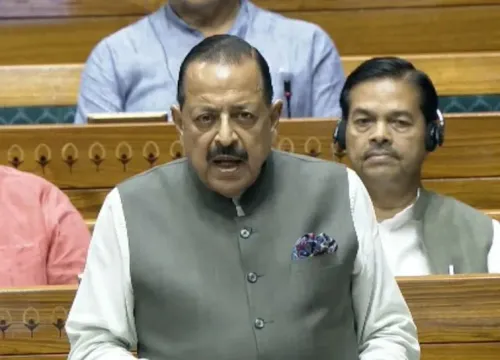
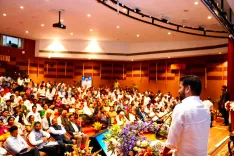
India's war on exam fraud moved to the upper house on Thursday, 30 July 2026, as Rajya Sabha took up the Public Examinations (Prevention of Unfair Means) Amendment Bill, 2026 — a day after it cleared Lok Sabha. Union Science and Technology Minister Dr. Jitendra Singh opened the debate with his remarks, signalling the government's intent to push the legislation through both chambers in quick succession.
From paper leaks to criminal law: the 2024 foundation
The bill builds on the Public Examinations (Prevention of Unfair Means) Act, 2024 — India's first dedicated central law to criminalise paper leaks, impersonation, and organised malpractice in recruitment and entrance tests. That legislation was itself a direct response to a string of high-profile irregularities that shook public confidence in examinations such as NEET, JEE, and several state-level recruitment drives. The 2026 amendment is the next legislative step in that arc — tightening provisions and, by implication, closing gaps that emerged after the parent law came into force.
Why aspirants and testing agencies are watching the Rajya Sabha floor
For the millions of students who sit competitive examinations every year, the stakes are intensely personal. A single leaked paper can erase years of preparation and distort merit-based selection at scale. The bill's passage through Lok Sabha yesterday placed the legislative spotlight squarely on the upper house, where the debate will test whether the amendments command cross-party support. Testing agencies — already under pressure to modernise their security protocols — will be watching for any new compliance obligations the final text imposes.
Dr. Singh's opening remarks, shared on X, framed the Rajya Sabha discussion as a continuation of a legislative mission rather than a fresh start. The government's move to fast-track both chambers in consecutive days suggests it wants the bill on the President's desk before the session ends.
If the upper house passes the bill without amendments, it goes straight for presidential assent. If changes are introduced, a joint resolution mechanism or a return to Lok Sabha follows — adding steps but not necessarily derailing the timeline. Either way, the notification of rules after assent will determine how quickly the strengthened penalties reach the ground.
Point of View
Rajya Sabha on Thursday — reflects the Modi government's calculation that exam integrity is both a governance imperative and a politically resonant issue with crores of aspirant families. The 2024 Act established the criminal framework; the 2026 amendment signals that the government views that framework as a work in progress, not a settled matter. How robustly the Rajya Sabha debates specific provisions — and whether opposition members push for stronger safeguards or challenge implementation gaps — will reveal whether this is a consensus reform or a contested one. The bill's downstream impact hinges almost entirely on rule-making and enforcement capacity, two areas where India's track record on exam regulation has been historically uneven.
NationPress
30 Jul 2026
Frequently Asked Questions
What is the Public Examinations (Prevention of Unfair Means) Amendment Bill, 2026?
It is a legislative amendment to the Public Examinations (Prevention of Unfair Means) Act, 2024, India's central law that criminalises paper leaks, impersonation, and other malpractices in public recruitment and entrance examinations. The 2026 bill seeks to strengthen the existing provisions.
When did Lok Sabha pass the Public Examinations Amendment Bill 2026?
Lok Sabha passed the bill on 29 July 2026 , the day before Rajya Sabha took it up for debate.
What is the original Public Examinations Act, 2024?
The Public Examinations (Prevention of Unfair Means) Act, 2024 was India's first dedicated central law to criminalise exam fraud, enacted in response to repeated paper leaks and irregularities in high-stakes tests such as NEET, JEE, and state-level recruitment examinations.
What happens after Rajya Sabha passes the bill?
If Rajya Sabha passes the bill without amendments, it proceeds directly for presidential assent. Once signed into law, the government must notify the rules before the strengthened penalties become operational on the ground.
What is Dr. Jitendra Singh's role in this bill?
Dr. Jitendra Singh, Union Minister of State (Independent Charge) for Science and Technology and Earth Sciences, delivered the opening remarks when Rajya Sabha took up the bill on 30 July 2026, steering the government's case in the upper house.