Giriraj Singh Spotlights Manipur Weaver Sanatombi Chanu
Synopsis
Union Textiles Minister Giriraj Singh spotlighted Manipuri weaver Sanatombi Chanu on July 30, 2026, praising her role in reviving handloom traditions and linking individual artisan success to the Atmanirbhar Bharat and Vocal for Local policy agenda.
Key Takeaways
Giriraj Singh highlighted Sanatombi Chanu , a weaver from Manipur , as a symbol of handloom tradition and self-reliance on July 30, 2026 .
The Minister linked her work to the Atmanirbhar Bharat Abhiyan , launched in May 2020 , and the #VocalForLocal campaign.
The National Handloom Development Programme (launched 2015 ) provides infrastructure, marketing, and skill support to weavers like those in Manipur.
Northeast India is a designated priority zone for handloom support due to its dense weaving clusters and cultural heritage.
The post fits a broader ministerial pattern of using individual weaver stories to humanise large-scale craft and self-reliance policy goals.
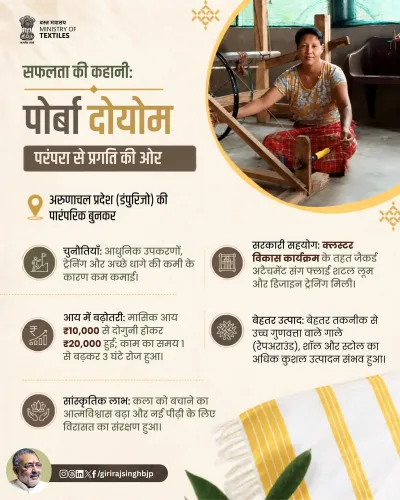
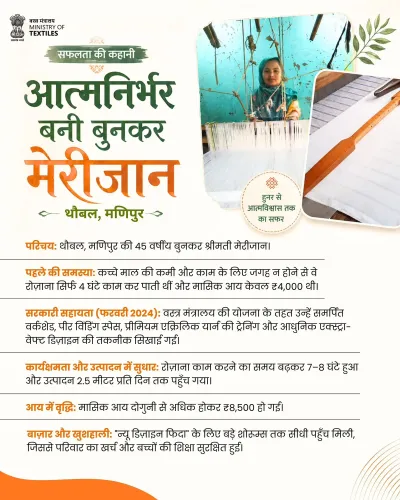
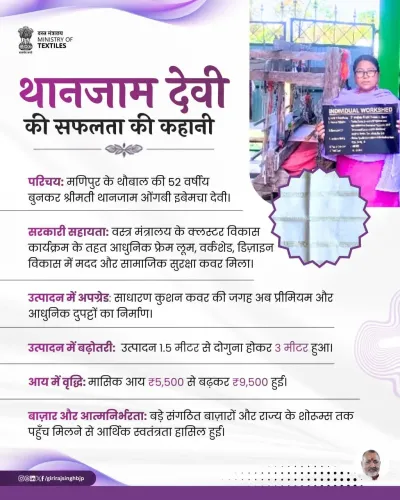
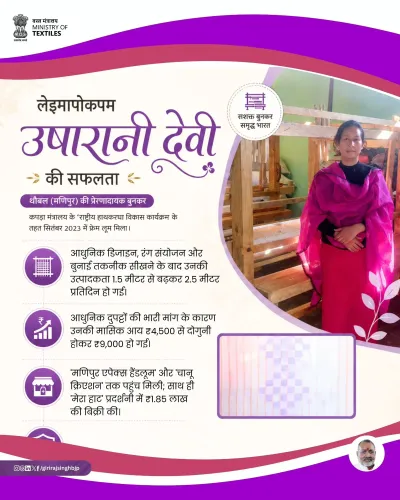
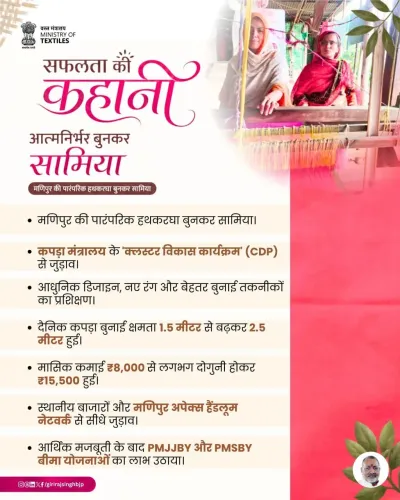
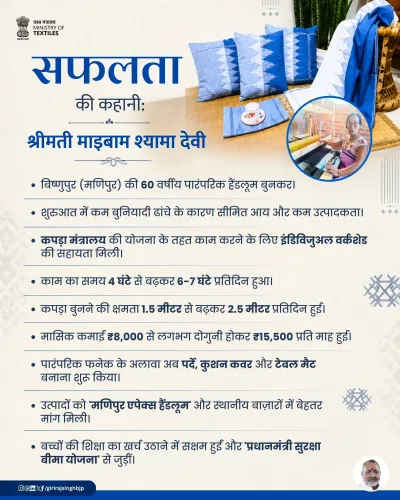
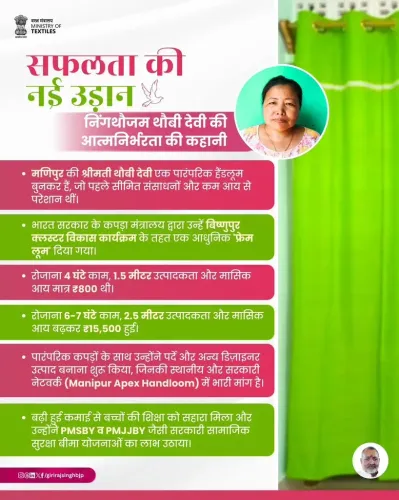
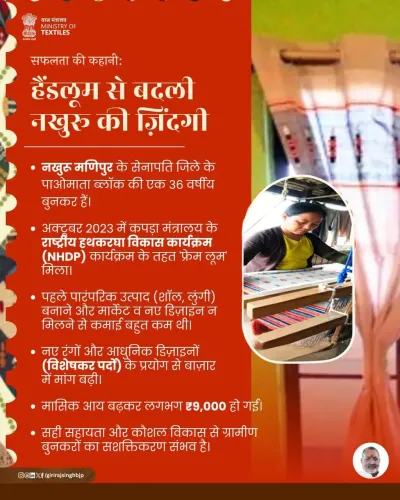
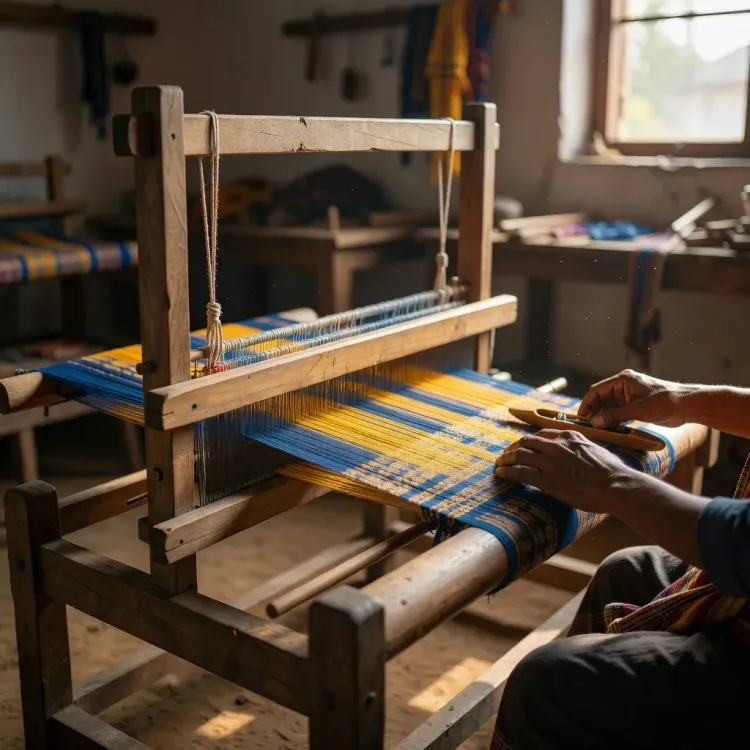
From the looms of Manipur to the national stage — a single weaver's story is carrying the weight of an entire tradition. Union Textiles Minister Giriraj Singh on Thursday, July 30, 2026, turned his spotlight on Sanatombi Chanu, a Manipuri handloom weaver he says is giving the ancient craft a new identity through sheer skill and the right institutional support.
Posting in Hindi, the Minister wrote: 'मणिपुर की बुनकर सनातोम्बी चानू जी अपने हुनर से हथकरघा परंपरा को नई पहचान दे रही हैं' — 'Manipur's weaver Sanatombi Chanu Ji is giving a new identity to the handloom tradition through her skill.' He added that with the right support and better facilities, her work is reaching new heights, and that such weavers are not only carrying forward India's rich heritage but also strengthening Atmanirbhar Bharat.
Manipur's Weaving Clusters and Why They Matter
Manipur sits at the heart of India's northeastern handloom belt — a region defined by its distinctive fabrics, intricate motifs, and multi-generational weaving knowledge passed down through families. The state's weavers produce everything from the iconic Moirang Phee to fine silk wraps, each piece a living document of cultural identity. The Ministry of Textiles has long identified the Northeast as a priority zone for handloom support, precisely because the craft there is not a hobby — it is livelihood, heritage, and identity fused into a single thread.The Policy Architecture Behind the Spotlight
The ministerial post lands within a well-established policy framework. The National Handloom Development Programme, launched in 2015, channels infrastructure investment, marketing support, and skill upgradation directly to weavers. Layered on top of that is the Atmanirbhar Bharat Abhiyan, announced in May 2020, which recast domestic craft production — including handloom textiles — as a pillar of economic self-reliance rather than a cultural footnote. The #VocalForLocal and #IndianHandloom tags Singh deployed are the messaging shorthand for that broader ambition: buy Indian, celebrate Indian, sustain Indian. Highlighting individual weavers by name is a deliberate communications strategy — it puts a human face on what could otherwise be abstract scheme targets, and it signals to artisan communities that their work registers at the Cabinet level. Sanatombi Chanu becomes, in this framing, both a beneficiary and a symbol. The Minister closed with a slogan that doubles as a policy thesis: 'सशक्त बुनकर, समृद्ध भारत' — 'Empowered weavers, prosperous India.' Seven words. The whole argument in one line.Point of View
This pattern of ministerial shout-outs to individual artisans builds a constituency among weaver communities, reinforcing BJP's outreach in states like Manipur where cultural identity and economic anxiety intersect. Whether scheme benefits are reaching weavers at scale remains the harder question behind the softer story.
NationPress
30 Jul 2026
Frequently Asked Questions
Who is Sanatombi Chanu?
Sanatombi Chanu is a handloom weaver from Manipur whom Union Textiles Minister Giriraj Singh highlighted on July 30, 2026, as an example of artisans reviving India's handloom tradition through skill and government support.
What is the National Handloom Development Programme?
The National Handloom Development Programme, launched in 2015, is a central government scheme that provides infrastructure, marketing assistance, and skill upgradation to handloom weavers across India, with special focus on clusters in the Northeast.
What is Atmanirbhar Bharat and how does it relate to handloom?
Atmanirbhar Bharat, launched in May 2020, is a self-reliance campaign that includes promoting domestic textile and handloom production as an alternative to imports, linking traditional crafts to modern economic goals.
Why does the government focus on Manipur for handloom support?
Manipur is part of India's northeastern handloom belt, known for distinctive fabrics and multi-generational weaving traditions. The Ministry of Textiles treats the Northeast as a priority zone because weaving there is both a primary livelihood and a cultural identity.
What does Vocal for Local mean in the context of textiles?
Vocal for Local is a campaign encouraging Indians to buy and promote domestically produced goods, including handloom textiles. In the textiles sector it is used to drive consumer demand for traditional Indian fabrics over imported alternatives.