CM Sukhu Launches HIBISCUS Biodiversity Scheme in HP
Synopsis
Himachal Pradesh CM Sukhvinder Singh Sukhu launched HIBISCUS on 23 July 2026, a stakeholder-led biodiversity conservation scheme backed by Rs 2 crore from the State Biodiversity Board. It targets 2 lakh farmers and 10,000 community groups, with digital monitoring via geo-tagged photos and an online dashboard.
Key Takeaways
HIBISCUS (Himachal Biodiversity Stakeholder-Led Conservation Unified Scheme) was launched by CM Sukhvinder Singh Sukhu on 23 July 2026 .
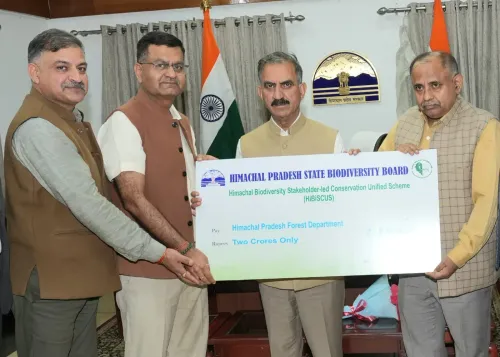
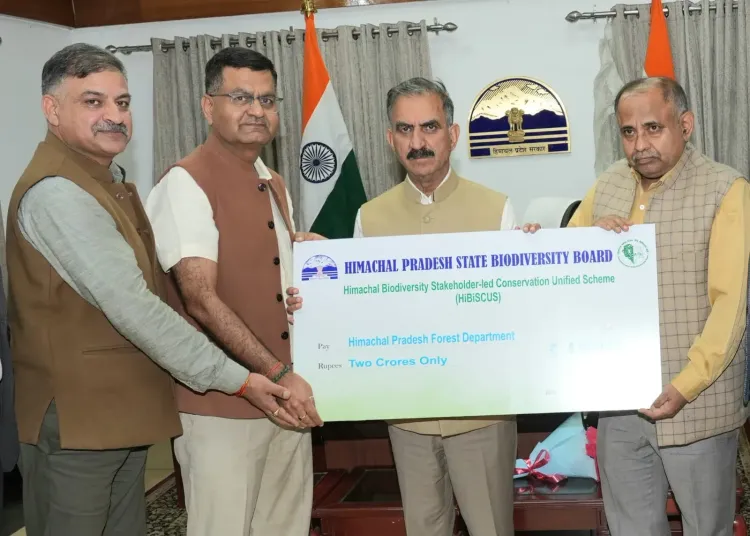
The Himachal Pradesh State Biodiversity Board has released Rs 2 crore to the Forest Department for statewide implementation.
Approximately 2 lakh farmers and 10,000 community groups are expected to benefit directly from the scheme.
The scheme will generate sustainable livelihood opportunities for rural communities alongside biodiversity conservation goals.
Implementation will be monitored digitally through geo-tagged photographs , field inspections, and a real-time online dashboard .
The scheme is grounded in the Biological Diversity Act, 2002 and positions local communities as active conservation partners.
Himachal Pradesh Chief Minister Sukhvinder Singh Sukhu on Thursday, 23 July 2026 launched the Himachal Biodiversity Stakeholder-Led Conservation Unified Scheme (HIBISCUS), a state-level initiative aimed at conserving the state's rich biological heritage through active community participation and digital oversight.
Context
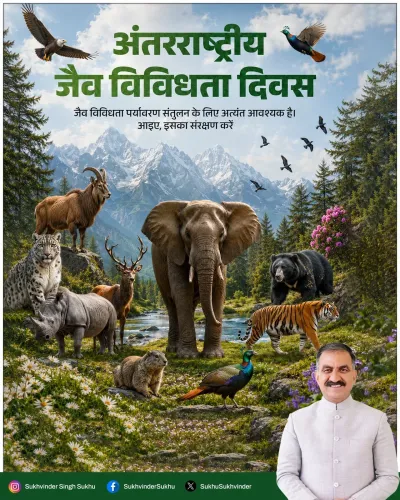
Announcing the scheme on social media, CM Sukhu described HIBISCUS as a programme designed to promote conservation of Himachal Pradesh's biodiversity, ecosystem restoration, and sustainable use of biological resources. In his post, he wrote: 'स्थानीय समुदायों की सक्रिय भागीदारी के माध्यम से हिमाचल प्रदेश की समृद्ध जैव विविधता के संरक्षण' ('conservation of Himachal Pradesh's rich biodiversity through active participation of local communities'). The scheme positions local communities not as passive beneficiaries but as active partners in conservation efforts.
Policy Backdrop
HIBISCUS draws its legal and institutional foundation from the Biological Diversity Act, 2002, India's central legislation enacted to implement the Convention on Biological Diversity, which India ratified in 1994. The Act mandated the creation of State Biodiversity Boards and local Biodiversity Management Committees to decentralise conservation governance. The Himachal Pradesh State Biodiversity Board has released Rs 2 crore to the state's Forest Department for statewide implementation of the scheme. This funding structure places the Forest Department at the centre of on-ground rollout, leveraging its existing district-level infrastructure.
India's broader push for participatory biodiversity conservation has gathered pace in recent years, with states increasingly aligning local schemes with national frameworks such as the National Biodiversity Action Plan. Himachal Pradesh's approach is notable for layering digital accountability tools onto a community-participation model.
Stakeholders and Impact
According to the scheme's announcement, approximately 2 lakh farmers and 10,000 community groups across the state are expected to benefit directly. Rural communities stand to gain not only through conservation outcomes but also through new sustainable livelihood opportunities linked to the management of local biological resources. The scheme explicitly aims to strengthen a 'people's participation-based development model' alongside ecological goals.
A key feature of HIBISCUS is its digital monitoring architecture: geo-tagged photographs, field inspections, and an online dashboard will be used to track implementation in real time. This is designed to ensure transparency and accountability across all districts of the state.
What's Next
Attention will now turn to how swiftly the Forest Department deploys the Rs 2 crore corpus across Himachal's diverse ecological zones, from the Shivalik foothills to the trans-Himalayan cold desert. The online dashboard will serve as a public accountability tool, and its data could also inform potential linkages with centrally sponsored programmes. If HIBISCUS succeeds in integrating livelihood generation with measurable conservation outcomes, it could offer a replicable template for other ecologically sensitive Himalayan states.
Point of View
A politically useful narrative in a state where forest-dependent rural communities form a significant voter base. By channelling Rs 2 crore through the existing Forest Department network and attaching a digital dashboard, the scheme attempts to pre-empt accountability concerns that have dogged similar state-level conservation initiatives. The explicit linkage of biodiversity conservation with rural livelihoods reflects a broader national trend of reframing ecological policy as an economic opportunity for marginal communities. How effectively the scheme bridges the gap between the 10,000 community groups on paper and measurable conservation outcomes on the ground will determine its lasting policy significance.
NationPress
23 Jul 2026
Frequently Asked Questions
What is the HIBISCUS scheme in Himachal Pradesh?
HIBISCUS stands for Himachal Biodiversity Stakeholder-Led Conservation Unified Scheme, launched by CM Sukhvinder Singh Sukhu on 23 July 2026 to conserve the state's biodiversity through active local community participation, ecosystem restoration, and sustainable use of biological resources.
How much funding has been released for the HIBISCUS scheme?
The Himachal Pradesh State Biodiversity Board has released Rs 2 crore to the state's Forest Department for the statewide implementation of the HIBISCUS scheme.
Who will benefit from the HIBISCUS scheme in Himachal Pradesh?
Approximately 2 lakh farmers and 10,000 community groups across Himachal Pradesh are expected to benefit directly, with additional livelihood opportunities to be created for rural communities.
How will the HIBISCUS scheme be monitored?
The scheme will use geo-tagged photographs, field inspections, and a real-time online dashboard to ensure transparent and accountable implementation across all districts of Himachal Pradesh.
What is the legal basis for the HIBISCUS scheme?
The scheme is grounded in the Biological Diversity Act, 2002, India's central law implementing the Convention on Biological Diversity, which mandates State Biodiversity Boards and community-level conservation committees.