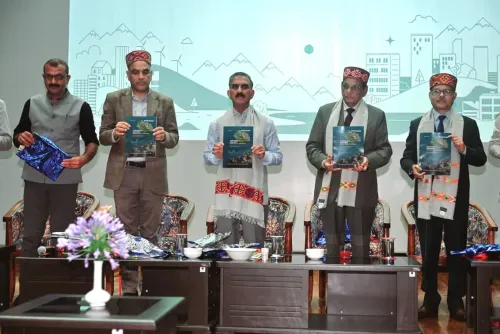
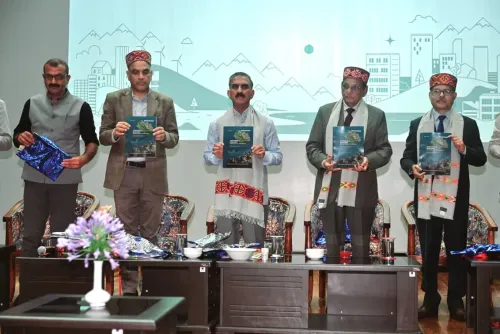
CM Sukhu launches urban crisis book at Shimla's Gaiety Theatre
Synopsis
Himachal Pradesh CM Sukhvinder Singh Sukhu launched 'City Limits: The Crisis of Urbanization' at Shimla's Gaiety Theatre, linking the book's themes to ongoing Smart Cities infrastructure work and warning Home Minister Amit Shah that Himalayan cloudburst risks are spreading to Uttarakhand and the Northeast.
Key Takeaways
CM Sukhu launched 'City Limits: The Crisis of Urbanization' , edited by former Shimla Deputy Mayor Tikender Panwar , at Gaiety Theatre, Shimla on 27 May 2026 .
The book addresses the challenges of unplanned urbanisation and the need for sustainable development in hill cities.
Shimla has active projects under the Smart Cities Mission including underground ducting, underpasses and 24-hour water supply .
CM Sukhu disclosed he has alerted Union Home Minister Amit Shah that Himalayan cloudburst and disaster risks are expanding to Uttarakhand and northeastern states .
The state government has framed environmental balance and public interest as the twin pillars of Himachal Pradesh's development policy.
Himachal Pradesh's State Action Plan on Climate Change, first notified in 2012 , underpins the state's disaster-resilience framework.
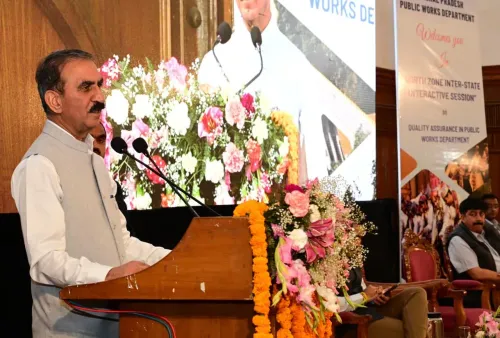
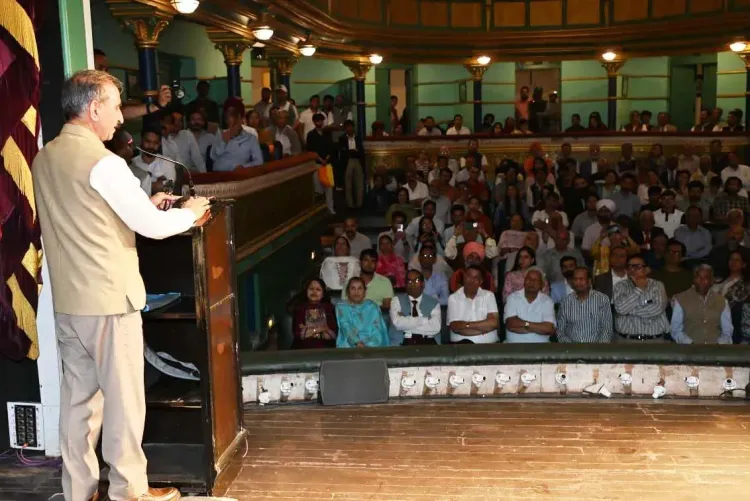
Himachal Pradesh Chief Minister Sukhvinder Singh Sukhu on Wednesday, 27 May 2026, launched the book 'City Limits: The Crisis of Urbanization' at the historic Gaiety Theatre in Shimla, edited by former Deputy Mayor Tikender Panwar. The event served as a platform for Sukhu to outline the state government's urban infrastructure agenda and sound an alarm on escalating Himalayan climate disasters.
Context
Addressing the gathering, CM Sukhu described the book as 'serious reflection on the challenges of unplanned urbanisation and the necessity of sustainable development' — a theme he said resonates directly with Shimla's own pressures. The chief minister noted that nature has gifted Himachal Pradesh with 'clean air, pure water and extraordinary natural beauty,' calling their protection 'a collective responsibility of all of us.'
The choice of Gaiety Theatre — a colonial-era heritage venue at the heart of Shimla — underscored the symbolic weight of the occasion, connecting the city's architectural legacy with contemporary anxieties about its future.
Policy Backdrop
Shimla was included in the national Smart Cities Mission in 2015, which provided the framework for underground ducting, modern civic complexes, underpasses and 24-hour water supply projects now under active implementation. CM Sukhu cited these projects as evidence of the state's commitment to planned, resilient urban growth.
Himachal Pradesh first notified its State Action Plan on Climate Change in 2012, a document later updated to specifically address cloudburst and landslide risks — hazards that have grown markedly more frequent across the western Himalayas over the past decade. The book launch arrives as that policy framework faces its most severe real-world stress test.
Stakeholders and Impact
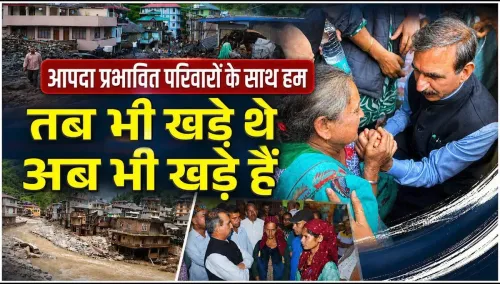
CM Sukhu warned that the rising frequency of cloudbursts and natural disasters is no longer a problem confined to Himachal Pradesh. He disclosed that he has communicated to Union Home Minister Amit Shah that such events 'will not remain limited to Himachal in the future, but can also increase in Uttarakhand and the northeastern states.' The remark signals a push for a coordinated, multi-state Himalayan disaster-management response.
For Shimla's residents — already living with water scarcity, landslide-prone slopes and an ageing colonial-era infrastructure — the ongoing Smart Cities projects represent the most tangible near-term relief. Himalayan communities across the region, however, are watching whether the centre responds to the state's call for broader inter-governmental action.
What's Next
Progress on Shimla's underground ducting and 24-hour water supply projects is expected to feature in the next state budget cycle, with the government under pressure to show measurable delivery. Tikender Panwar's book, meanwhile, is likely to fuel policy debate on urban land-use regulation and green-corridor protection in hill towns.
The broader question is whether CM Sukhu's appeal to Home Minister Shah catalyses a formal coordination mechanism among Himalayan chief ministers — a step that climate scientists and urban planners have advocated for years as the only durable answer to trans-boundary disaster risk.
Point of View
CM Sukhu is doing more than attending a cultural event — he is constructing a political narrative that positions Himachal Pradesh as a proactive voice on Himalayan climate governance. The move signals an attempt to shift disaster management from a state-level reactive posture to a coordinated federal agenda. At the same time, highlighting Smart Cities infrastructure in the same breath as climate risk lets the Congress government claim both developmental competence and environmental credibility ahead of future electoral cycles. Whether New Delhi responds with institutional mechanisms or treats the appeal as routine state correspondence will determine how far this narrative travels.
NationPress
23 Sept 2026
Frequently Asked Questions
What is the book 'City Limits: The Crisis of Urbanization' about?
The book, edited by former Shimla Deputy Mayor Tikender Panwar , examines the challenges posed by unplanned urbanisation and argues for sustainable development as the path forward for Indian cities, with particular relevance to hill towns like Shimla .
What infrastructure projects is the Himachal Pradesh government building in Shimla?
Under the Smart Cities Mission , Shimla is seeing work on underground ducting, modern civic complexes, underpasses and a 24-hour water supply system, all aimed at making the hill capital more liveable and resilient.
What did CM Sukhu tell Home Minister Amit Shah about Himalayan disasters?
CM Sukhu communicated to Union Home Minister Amit Shah that the rising frequency of cloudbursts and natural disasters will not remain confined to Himachal Pradesh and could intensify in Uttarakhand and the northeastern states as well.
Why is Shimla vulnerable to urban and climate risks?
Shimla faces acute pressure from decades of unplanned construction on steep slopes, chronic water scarcity, ageing colonial-era infrastructure and increasingly frequent cloudbursts and landslides driven by climate change.
What is the Smart Cities Mission and how does it apply to Shimla?
The Smart Cities Mission , launched nationally in 2015 , funds urban infrastructure upgrades in selected Indian cities. Shimla was included in the mission, enabling projects such as underground utility ducting and improved water supply that are currently under implementation.