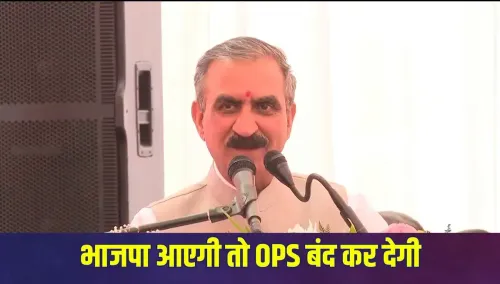
CM Sukhu: OPS Is About Dignity, Not Vote Counts
Synopsis
HP CM Sukhvinder Singh Sukhu on Oct 24, 2026 defended the state's Old Pension Scheme restoration, saying guaranteeing retirement security for government employees matters more than the Congress party's failure to win any of Himachal Pradesh's four Lok Sabha seats.
Key Takeaways
CM Sukhu publicly reaffirmed the Old Pension Scheme (OPS) on October 24, 2026 , dismissing electoral losses as a reason to reverse the policy.
The Himachal Pradesh Congress government lost all four Lok Sabha seats — Shimla, Mandi, Hamirpur, and Kangra — despite the OPS rollout.
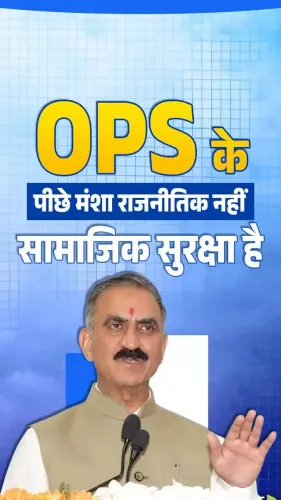
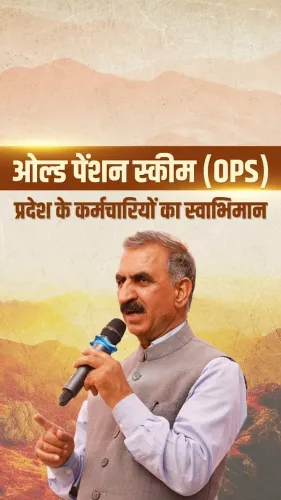
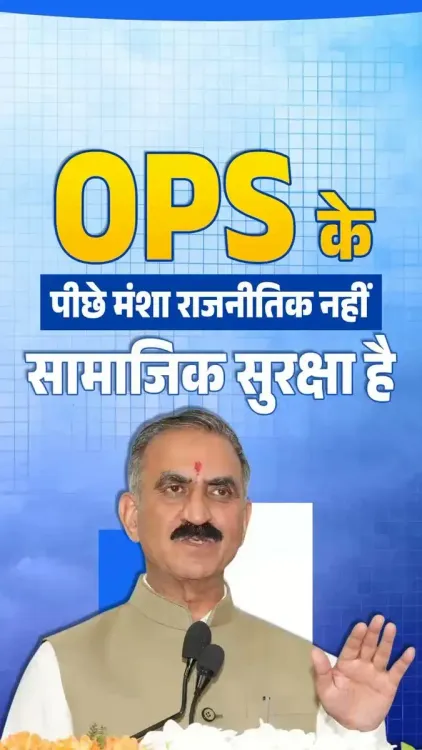
Sukhu framed OPS as a social-security obligation to employees who gave their careers to government service, not a vote-bank calculation.
Himachal Pradesh restored OPS after December 2022 , shifting state employees back from the market-linked National Pension System (NPS) .
The move is part of a wider opposition-state trend of OPS restoration, which the central government and fiscal bodies have flagged as a long-term budgetary liability.
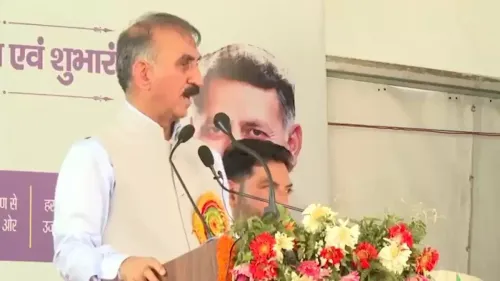
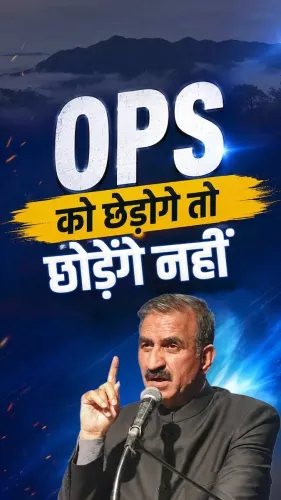
Four Lok Sabha seats slipped away, but Himachal Pradesh Chief Minister Sukhvinder Singh Sukhu is not walking back the decision that defined his government's identity. In a pointed post on Saturday, October 24, 2026, Sukhu reaffirmed the state's commitment to the Old Pension Scheme (OPS), drawing a deliberate line between electoral arithmetic and what he called a moral obligation to the workforce.
Posting in Hindi, Sukhu wrote: 'हमने OPS अपने कर्मयोगी कर्मचारी भाइयों-बहनों के बुढ़ापे को आर्थिक रूप से सुरक्षित बनाने के उद्देश्य से लागू की है।' ('We have implemented OPS with the purpose of financially securing the old age of our hardworking employee brothers and sisters.') He acknowledged the Congress government did not win the four Lok Sabha seats in Himachal Pradesh, but insisted: 'Giving social security to employees who have given the most valuable years of their lives to government service is far more important to us than election results.'The OPS Gamble That Himachal Took First
Himachal Pradesh became one of the earliest Congress-governed states to restore the Old Pension Scheme after the party returned to power in December 2022. The move was a flagship promise of the Sukhu government, aimed at reverting state employees from the National Pension System (NPS) — a market-linked contributory scheme introduced by the central government in 2004 — back to a defined-benefit model that guarantees a fixed monthly pension regardless of market performance. For lakhs of state government employees, the difference is existential: OPS means a predictable income in retirement; NPS means retirement income tied to fund returns.Why Sukhu Is Speaking Now
The 2024 Lok Sabha elections were bruising for the Congress in Himachal Pradesh. The Bharatiya Janata Party swept all four parliamentary constituencies — Shimla, Mandi, Hamirpur, and Kangra — a clean shutout that intensified pressure on the state government and sparked debate about whether flagship welfare decisions had translated into votes. Critics argued the OPS decision burdened state finances without delivering electoral dividends. Sukhu's post is a direct answer to that critique: the policy, he is saying, was never contingent on winning.The Broader Pension Politics Playing Out Across India
Himachal's OPS restoration sits inside a much larger national argument. Several opposition-governed states — including Rajasthan (before its government changed), Chhattisgarh, and Jharkhand — moved toward restoring OPS, framing it as a social-security imperative. The central government and fiscal watchdogs have consistently flagged OPS as a long-term liability, arguing defined-benefit pensions create unfunded obligations that crowd out capital expenditure. That tension — employee welfare now versus fiscal headroom later — is exactly what Sukhu is wading back into with this statement. By anchoring his defence in the language of dignity ('karmayogi employee brothers and sisters', 'most valuable years of their lives') rather than fiscal modelling, Sukhu is choosing a values argument over a numbers argument. Whether that framing holds under the next budget scrutiny will be the real test of this conviction.Point of View
He insulates the OPS from future rollback pressure while projecting Congress in Himachal Pradesh as a conviction-driven government rather than a transactional one. The timing matters — reaffirming OPS after a clean Lok Sabha shutout pre-empts any internal Congress pressure to moderate the policy ahead of the next state assembly cycle. It also keeps Himachal Pradesh at the centre of a national debate about pension reform, giving the state government disproportionate visibility in the broader opposition narrative against NPS. The risk, however, is real: if the fiscal costs of OPS tighten the state budget, critics will use the same post as evidence that ideology overrode governance prudence.
NationPress
24 Oct 2026
Frequently Asked Questions
What is the Old Pension Scheme (OPS) in Himachal Pradesh?
The Old Pension Scheme guarantees state government employees a fixed monthly pension after retirement, calculated as a percentage of their last drawn salary. Himachal Pradesh restored it after the Congress government came to power in December 2022, replacing the market-linked National Pension System (NPS) that had been in place since 2004.
Why did CM Sukhu defend OPS in October 2026?
Sukhu defended OPS following criticism that the policy failed to deliver votes — the Congress lost all four Lok Sabha seats in Himachal Pradesh. He argued that securing the retirement of government employees is more important than electoral outcomes.
Which four Lok Sabha seats did Congress lose in Himachal Pradesh?
The Congress lost all four Himachal Pradesh Lok Sabha constituencies: Shimla, Mandi, Hamirpur, and Kangra, all of which were won by the Bharatiya Janata Party.
What is the difference between OPS and NPS for government employees?
Under OPS, retired employees receive a defined, guaranteed pension regardless of market conditions. Under NPS, retirement income depends on contributions invested in market-linked funds, making it variable and less predictable — which is why employee unions have long campaigned for OPS restoration.
Which other states have restored the Old Pension Scheme?
Several opposition-governed states, including Rajasthan (before its government changed), Chhattisgarh, and Jharkhand, moved toward OPS restoration. The central government has cautioned against the move, citing long-term fiscal liabilities.