CM Sukhu Pays Tribute to Revolutionary Batukeshwar Dutt
Synopsis
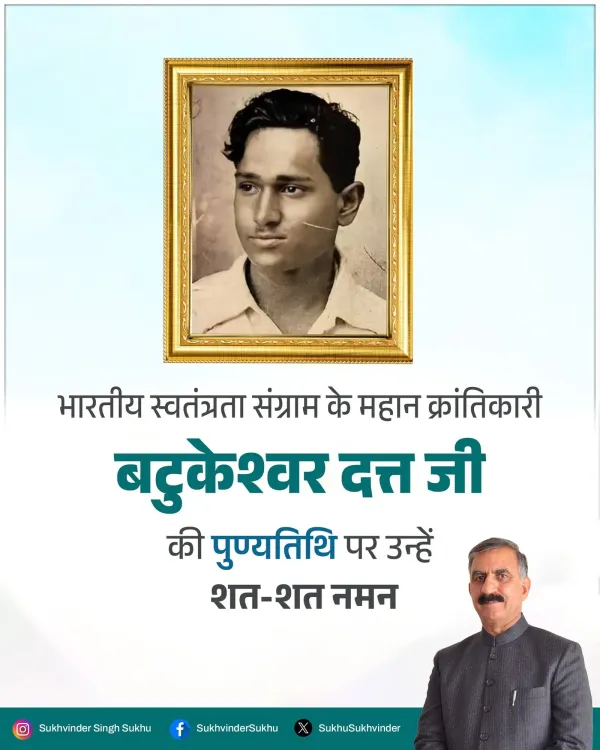
Himachal Pradesh Chief Minister Sukhvinder Singh Sukhu on 20 July 2026 paid tribute to revolutionary Batukeshwar Dutt on his death anniversary, honouring his fearless struggle against British colonial rule and his landmark 1929 protest inside the Central Legislative Assembly alongside Bhagat Singh.
Key Takeaways
CM Sukhvinder Singh Sukhu paid tribute to revolutionary Batukeshwar Dutt on his death anniversary on 20 July 2026 .
Batukeshwar Dutt and Bhagat Singh threw smoke bombs in the Central Legislative Assembly on 8 April 1929 to protest colonial legislation.
Dutt was sentenced to transportation for life and imprisoned in the Cellular Jail, Andaman Islands , before being released in 1938 .
CM Sukhu described Dutt's courage and sacrifice as a 'perpetual inspiration for the countrymen.' The tribute comes ahead of Independence Day on 15 August 2026 , when state-level commemorations of freedom fighters are expected to intensify.
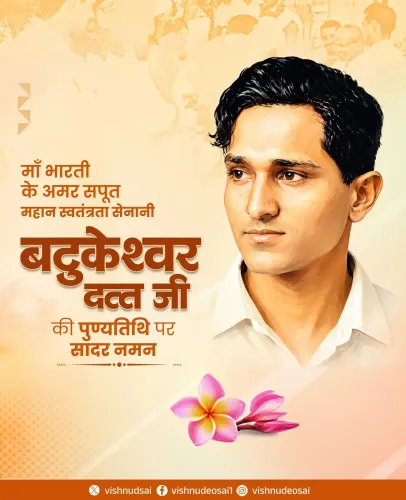
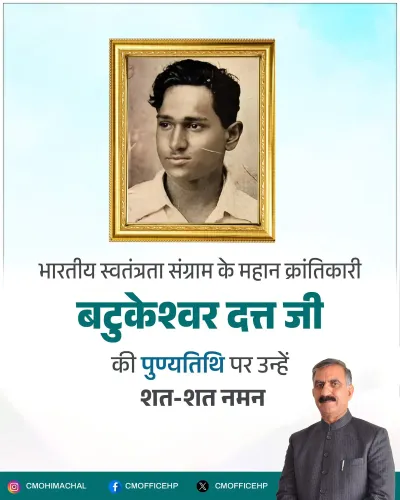
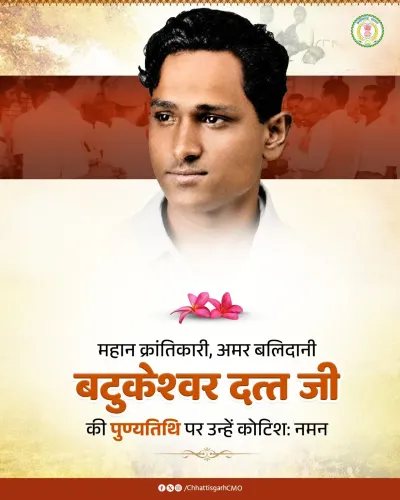
Himachal Pradesh Chief Minister Sukhvinder Singh Sukhu on Monday, 20 July 2026 paid homage to Indian revolutionary Batukeshwar Dutt on his death anniversary, honouring the freedom fighter's courage and sacrifice in the struggle against British colonial rule.
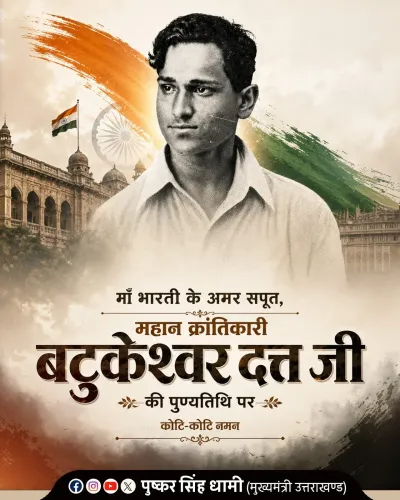
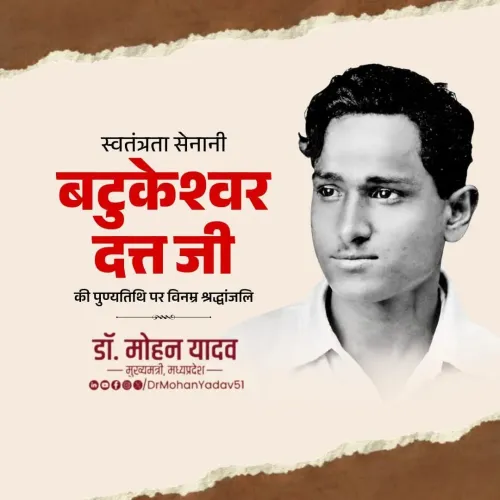
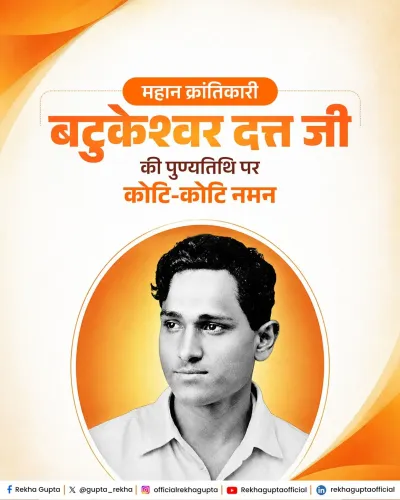
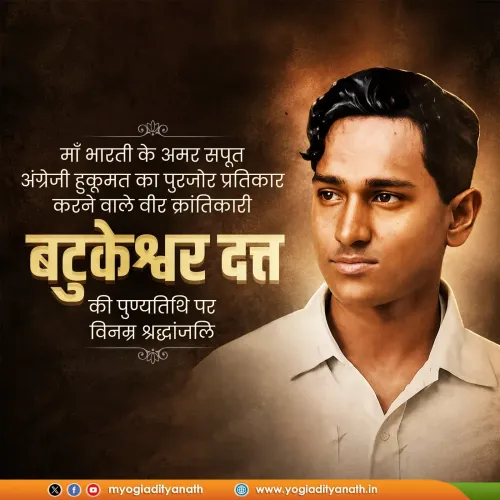
Posting in Hindi on X, CM Sukhu wrote: 'महान क्रांतिकारी बटुकेश्वर दत्त जी की पुण्यतिथि पर उन्हें सादर नमन' — 'Respectful salutations to the great revolutionary Batukeshwar Dutt on his death anniversary.' He added that Dutt's 'indomitable courage, sacrifice, and struggle for India's independence will continue to inspire the countrymen forever,' and that his 'fearless fight against the atrocities of British rule and his dedication to the nation will remain immortal in history.'
Context
Batukeshwar Dutt was a pivotal figure in India's revolutionary independence movement. On 8 April 1929, he and fellow revolutionary Bhagat Singh threw smoke bombs inside the Central Legislative Assembly in Delhi to protest the Public Safety Bill and the Trade Disputes Bill — colonial-era legislation that activists argued curtailed workers' rights and civil liberties. The act was a deliberate, non-lethal protest designed to 'make the deaf hear,' as the revolutionaries themselves declared.
Both were arrested at the scene. Dutt was sentenced to transportation for life and spent years in the Cellular Jail in the Andaman Islands. He was released in 1938 after prolonged imprisonment and continued to live a largely modest life until his death.
Policy Backdrop
Indian elected representatives across the political spectrum routinely mark death anniversaries of revolutionary freedom fighters on social media, particularly in the weeks leading up to Independence Day on 15 August. These commemorations serve to invoke the armed revolutionary tradition alongside the better-known satyagraha movement led by Mahatma Gandhi.
CM Sukhu and other Himachal Pradesh chief ministers have issued similar tributes on dates linked to the 1920s–1940s revolutionary movement. The practice reflects a long-standing national consensus that figures such as Dutt, Bhagat Singh, and their contemporaries occupy an equal place in the freedom struggle's pantheon alongside non-violent leaders.
Stakeholders and Impact
Tributes of this nature are directed primarily at the general public and students, reinforcing civic memory of lesser-celebrated revolutionary figures. Dutt, despite his role in one of the most dramatic acts of colonial-era protest, has historically received less mainstream attention than some of his contemporaries.
Social media commemorations by sitting chief ministers amplify awareness of such figures to younger audiences who may encounter them primarily through school curricula. With Independence Day 2026 approaching, state governments are expected to organise school programmes and cultural events marking freedom fighter anniversaries.
What's Next
Ahead of 15 August 2026, Himachal Pradesh is likely to see state-level events and school programmes commemorating freedom fighters from the revolutionary tradition. CM Sukhu's tribute signals the state administration's intent to keep this historical memory alive in public discourse. As India approaches the anniversary of independence, such commemorations are expected to intensify across all states, with Dutt's story serving as a reminder of the diverse and often overlooked paths that led to 1947.
Point of View
Honouring figures associated with the armed revolutionary tradition also serves to counter any perception that the party is solely identified with satyagraha politics. With Independence Day approaching, such commemorations carry added resonance and help shape the civic memory of younger generations. The tribute also subtly elevates Dutt, a figure who remains less celebrated than his 1929 co-conspirator Bhagat Singh, into broader public consciousness.
NationPress
21 Jul 2026
Frequently Asked Questions
Who was Batukeshwar Dutt and why is he famous?
Batukeshwar Dutt was an Indian revolutionary who, alongside Bhagat Singh, threw smoke bombs inside the Central Legislative Assembly in Delhi on 8 April 1929 to protest the Public Safety Bill and Trade Disputes Bill. He was sentenced to transportation for life and imprisoned in the Cellular Jail in the Andaman Islands, becoming a symbol of fearless resistance against British colonial rule.
What did CM Sukhu say about Batukeshwar Dutt?
CM Sukhvinder Singh Sukhu paid respectful tribute to Batukeshwar Dutt on his death anniversary, stating that Dutt's indomitable courage, sacrifice, and struggle for India's independence would continue to inspire the countrymen forever, and that his dedication to the nation would remain immortal in history.
When did Batukeshwar Dutt and Bhagat Singh carry out the Central Legislative Assembly protest?
Batukeshwar Dutt and Bhagat Singh carried out the Central Legislative Assembly bomb protest on 8 April 1929 in Delhi, targeting colonial legislation they believed suppressed workers' rights and civil liberties.
Why do Indian politicians pay tribute to freedom fighters on social media?
Indian elected representatives regularly mark death anniversaries of freedom fighters on social media to invoke national memory of the independence struggle, honour diverse revolutionary traditions, and connect with citizens — particularly students — ahead of key dates such as Independence Day on 15 August.
When was Batukeshwar Dutt released from prison?
Batukeshwar Dutt was released in 1938 after serving years of his life transportation sentence in the Cellular Jail in the Andaman Islands.