CM Sukhu Vows to Strengthen Golden Hour Emergency Care in HP
Synopsis
Chief Minister Sukhvinder Singh Sukhu has reaffirmed Himachal Pradesh's commitment to strengthening life-saving intervention during the golden hour and making the hospital-transport chain safer, addressing the state's persistent challenge of emergency care across mountainous terrain.
Key Takeaways
CM Thakur Sukhvinder Singh Sukhu on June 8, 2026 pledged to strengthen golden-hour emergency response across Himachal Pradesh .
The 'golden hour' — the first 60 minutes after traumatic injury — is the critical window in which rapid intervention most improves survival chances.
Himachal Pradesh's mountainous terrain makes timely emergency transport to hospitals a persistent logistical challenge.
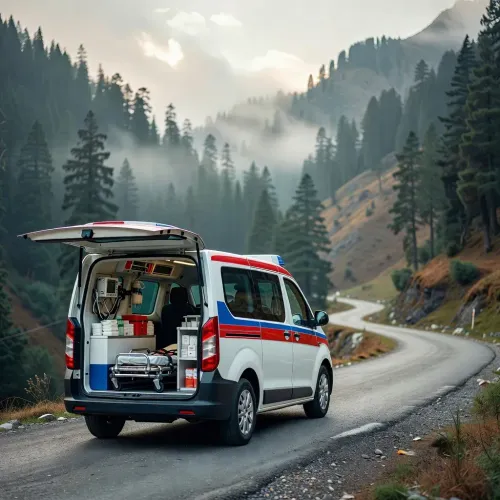
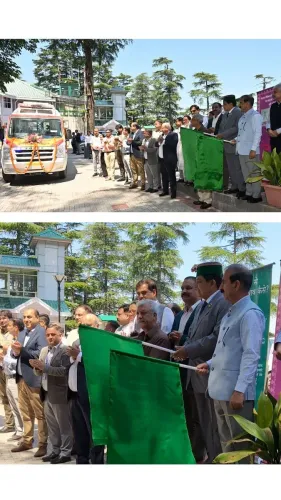
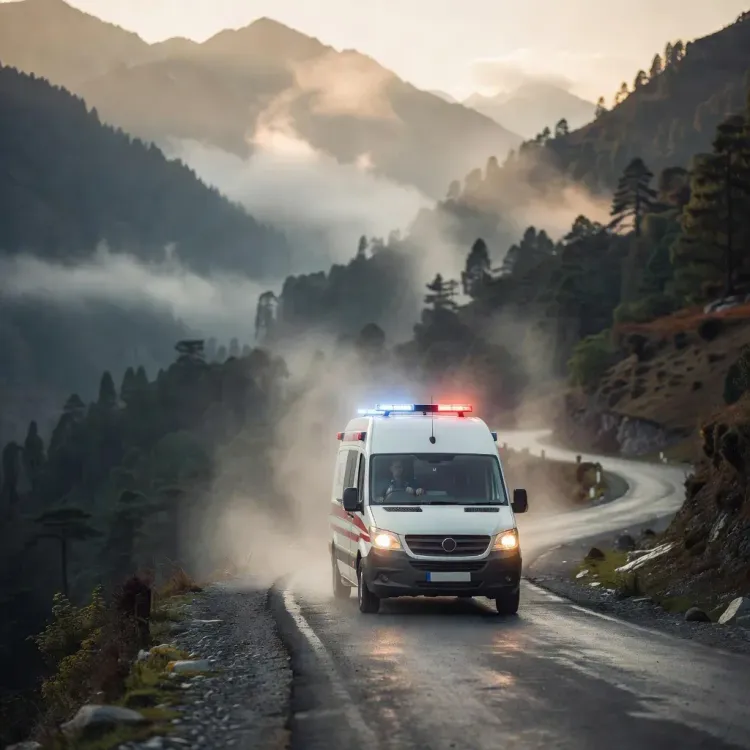
The state-run 108 Ambulance Service is the primary vehicle for pre-hospital emergency care and would be central to any upgraded protocols.
The statement aligns with a broader national pattern of hill states strengthening ambulance-to-hospital linkages under the National Health Mission framework.
Specific new measures and rollout timelines are yet to be officially detailed by the government.
The Chief Minister's Office of Himachal Pradesh on Monday, June 8, 2026, shared a statement from Chief Minister Thakur Sukhvinder Singh Sukhu reaffirming the state government's commitment to improving emergency medical response and ensuring that life-saving intervention during the critical 'golden hour' is strengthened across the hill state.
In the post, CM Sukhu stated: 'Hamara prayas hai ki Golden Hour ke dauran jeevan raksha ki sambhavnaen aur adhik sudridh hon tatha aspatal tak pahunchne ki poori prakriya adhik surakshit evam suvyavasthit banen.' ['Our effort is that the possibilities of saving lives during the Golden Hour are further strengthened and the entire process of reaching the hospital becomes safer and more organised.']
Context
The 'golden hour' refers to the first 60 minutes following a traumatic injury, during which rapid medical intervention most significantly improves a patient's chances of survival. For a state like Himachal Pradesh, whose mountainous terrain stretches across remote valleys and high-altitude passes, this window is both medically critical and logistically difficult to honour.
Road accidents on hill highways and remote tracks remain a persistent challenge, with victims often located far from the nearest trauma facility. The gap between incident and hospital admission has long been a key concern for health administrators in the state.
Policy Backdrop
Himachal Pradesh has progressively built out its pre-hospital emergency care infrastructure under the National Health Mission (NHM) framework, which has guided state-level investments in ambulance networks and trauma linkages since the mid-2010s. The state-run 108 Ambulance Service forms the backbone of this system, providing free emergency response and pre-hospital care across districts.
CM Sukhu, who took office in December 2022, has publicly emphasised health infrastructure as a priority, with particular attention to emergency services suited to the state's geography. His statement signals a continued policy thrust toward making the ambulance-to-hospital chain faster and more reliable, though specific new measures announced under this initiative remain to be detailed officially.
Stakeholders and Impact
The communities most directly affected by improvements — or gaps — in golden-hour care are road accident victims and rural hill residents living at a distance from district hospitals or trauma centres. In a state where a single winding road may be the only route to a facility, delays in emergency transport translate directly into preventable deaths.
Strengthening this chain also has implications for the state's broader public health metrics, including trauma mortality rates and out-of-pocket medical costs borne by families who must arrange private transport in emergencies. Any upgrade to the 108 Ambulance Service protocols or expansion of trauma-centre linkages would benefit these populations most acutely.
What's Next
Observers will watch for concrete rollout details: upgraded ambulance response protocols, new trauma-centre tie-ups, and any pilots involving air-ambulance services in high-accident districts of Himachal Pradesh. The government's ability to translate this stated commitment into measurable improvements in response times will be the key test.
As Indian states with difficult geography progressively operationalise the golden-hour principle, Himachal Pradesh's next steps could serve as a model — or a cautionary lesson — for other hill and remote-terrain states seeking to cut preventable trauma deaths.
Point of View
The administration frames emergency transport not as an administrative gap but as a solvable medical challenge, raising public expectations for concrete action. The statement fits a wider pattern of Indian hill-state governments using pre-hospital care upgrades as visible, voter-friendly health investments. The real test will come when response-time data and new infrastructure commitments are placed on record.
NationPress
21 Sept 2026
Frequently Asked Questions
What is the golden hour in medical emergencies?
The golden hour refers to the first 60 minutes after a traumatic injury, during which rapid medical treatment most significantly improves the patient's chances of survival. CM Sukhu's statement specifically targets strengthening life-saving response within this window in Himachal Pradesh.
What is the 108 Ambulance Service in Himachal Pradesh?
The 108 Ambulance Service is a state-run, free emergency response network that provides pre-hospital care and transport across Himachal Pradesh. It is the primary mechanism through which the government aims to operationalise faster golden-hour response.
Why is emergency medical care difficult in Himachal Pradesh?
Himachal Pradesh's mountainous terrain means accident sites and patients are often located far from hospitals, with narrow winding roads as the only access routes. This geography makes timely ambulance response and hospital transport especially challenging.
What has CM Sukhu said about health infrastructure in Himachal Pradesh?
CM Thakur Sukhvinder Singh Sukhu, who has been Chief Minister since December 2022, has consistently emphasised health infrastructure as a priority. His June 2026 statement reaffirms the government's goal of making emergency transport safer and more organised.
What should we watch for next on Himachal Pradesh emergency health policy?
Key developments to watch include official announcements of upgraded ambulance protocols, new trauma-centre linkages, and any air-ambulance pilots in high-accident districts of Himachal Pradesh.