CM Sukhu Chairs Labour Dept Review, Pushes Jobs & E-Vehicle Subsidies
Synopsis
CM Sukhvinder Singh Sukhu chaired a Labour and Employment Department review in Shimla on June 10, 2026, announcing 50% subsidies on e-taxis and e-rickshaws for youth, a Rs 50 crore provision for 2026-27, full digitisation of licence services, and 24-hour shop operations under an amended 1969 state law.
Key Takeaways
CM Sukhu chaired a Labour and Employment Department review meeting in Shimla on June 10, 2026 .
A 50% subsidy on e-taxis is being provided under the Rajiv Gandhi Swarozgar Start-up Yojana-2023 to promote youth self-employment.
500 youth will receive a 50% subsidy on e-rickshaws via Direct Benefit Transfer (DBT) .
A provision of Rs 50 crore has been made for 2026-27 to benefit 500 additional youth .
Certificate and licence services are to be made fully online for simpler, more transparent administration.
The HP Shops and Commercial Establishments Act, 1969 has been amended to allow 24-hour business operations .
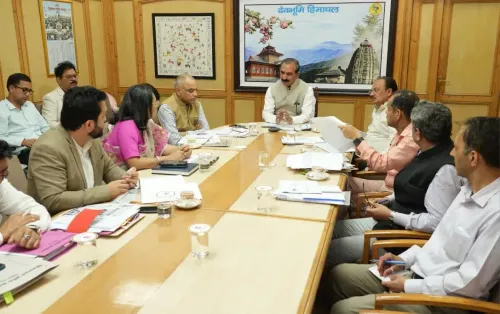
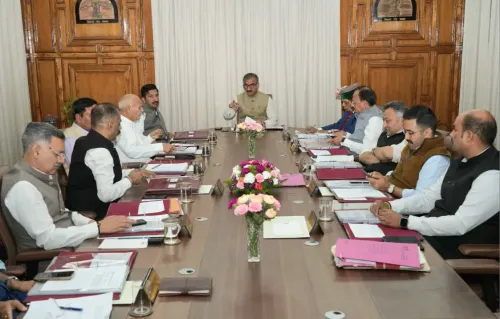
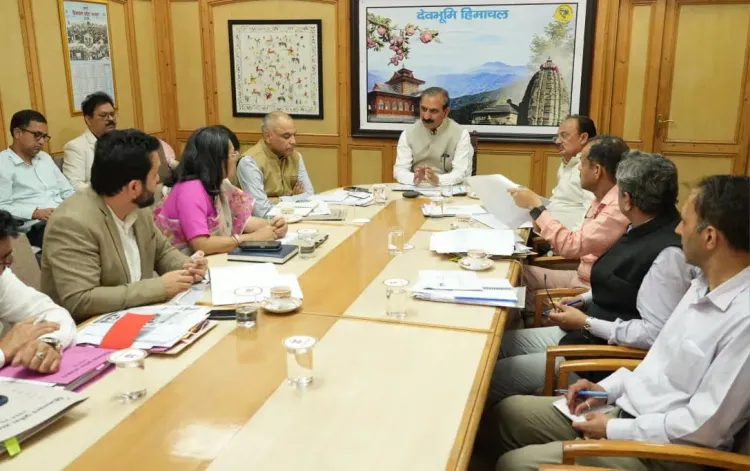
Himachal Pradesh Chief Minister Sukhvinder Singh Sukhu chaired a review meeting of the state's Labour and Employment Department in Shimla on Wednesday, June 10, 2026, directing officials to ensure effective and time-bound delivery of all welfare schemes to eligible beneficiaries.
Context
Posting on X, CM Sukhu outlined five key decisions from the meeting. He directed that certificate and licence services be moved fully online to make administrative processes 'simple, transparent, and citizen-friendly' (सरल, पारदर्शी एवं नागरिक-अनुकूल). Industry Minister Harshvardhan Chauhan and senior officials were also present at the meeting.
The review signals a renewed push by the Congress-led Himachal Pradesh government — in office since December 2022 — to consolidate employment-generation and governance-reform measures ahead of the next budget cycle.
Policy Backdrop
A central announcement from the meeting concerns the Rajiv Gandhi Swarozgar Start-up Yojana-2023, under which a 50% subsidy is being provided on e-taxis to create self-employment opportunities for youth. The scheme, launched in 2023, is part of the state's broader effort to promote green mobility while addressing seasonal unemployment in the hill state.
The government has also announced a 50% subsidy on e-rickshaws for 500 youth, to be disbursed through Direct Benefit Transfer (DBT). For the financial year 2026-27, a provision of Rs 50 crore has been earmarked to extend these opportunities to 500 additional youth.
On the business-environment front, the state has amended the Himachal Pradesh Shops and Commercial Establishments Act, 1969 to permit 24-hour operations, a move aimed at improving ease of doing business. This continues a series of amendments to the six-decade-old law that began around 2018-19 when the state sought to improve its ranking in national ease-of-doing-business surveys.
Stakeholders and Impact
The primary beneficiaries are youth entrepreneurs seeking self-employment through green mobility — e-taxis and e-rickshaws — and small business owners who will benefit from relaxed operating-hour restrictions. The digitisation of certificate and licence services is expected to reduce friction for the broader working population and labour department beneficiaries across the state.
The DBT mechanism for subsidy disbursement is intended to reduce leakage and ensure direct transfer to verified beneficiaries, aligning with the national Digital India framework that Himachal Pradesh began integrating into its e-governance architecture after 2015.
What's Next
Attention will now turn to the rollout of the online certificate and licence portal and the actual disbursement of the Rs 50 crore earmarked for 2026-27. The amendment to the 1969 Shops Act may face scrutiny in the next assembly session, where opposition parties are likely to question implementation safeguards for workers in establishments permitted to operate round the clock.
If the e-vehicle subsidy pipeline scales as announced, Himachal Pradesh could position itself as a model for green self-employment schemes among hill states — a template other Congress-governed states may look to replicate.
Point of View
DBT-linked delivery, and business-hour liberalisation — into a single policy signal ahead of the 2026-27 budget rollout. The Rs 50 crore earmark for 500 youth is modest in absolute terms but carries political weight in a state where seasonal unemployment and youth outmigration remain persistent concerns. Digitising labour certificates and amending the 1969 Shops Act simultaneously suggests the government is trying to satisfy two distinct constituencies: welfare beneficiaries and small-business owners frustrated by legacy red tape. Whether the e-vehicle subsidy pipeline translates into measurable employment numbers will be the real test of this announcement's credibility.
NationPress
19 Sept 2026
Frequently Asked Questions
What is the Rajiv Gandhi Swarozgar Start-up Yojana 2023?
It is a Himachal Pradesh state scheme launched in 2023 that offers subsidies — including a 50% subsidy on e-taxis — to help youth start self-employment ventures, particularly in green mobility.
How much subsidy will youth get on e-rickshaws in Himachal Pradesh?
The Himachal Pradesh government has announced a 50% subsidy on e-rickshaws for 500 youth , to be disbursed directly through Direct Benefit Transfer (DBT) .
How much money has HP budgeted for youth employment in 2026-27?
The state has provisioned Rs 50 crore in 2026-27 to provide employment opportunities to 500 additional youth under its self-employment schemes.
What change has Himachal Pradesh made to its Shops Act?
The Himachal Pradesh Shops and Commercial Establishments Act, 1969 has been amended to allow commercial establishments to operate for 24 hours , as part of ease-of-doing-business reforms.
Will Himachal Pradesh labour certificates be available online?
CM Sukhu has directed that all certificate and licence services under the Labour and Employment Department be made fully online to simplify and digitise the process for citizens.