CM Vijay launches 73,000 e-family cards across Tamil Nadu
Synopsis
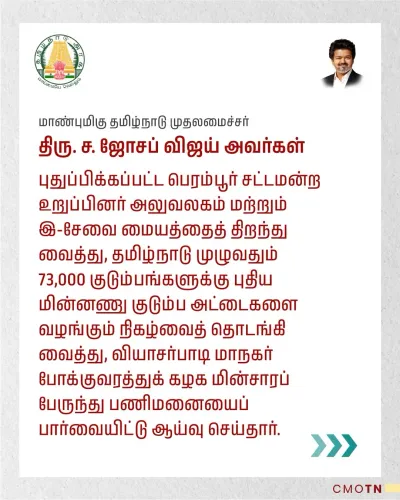
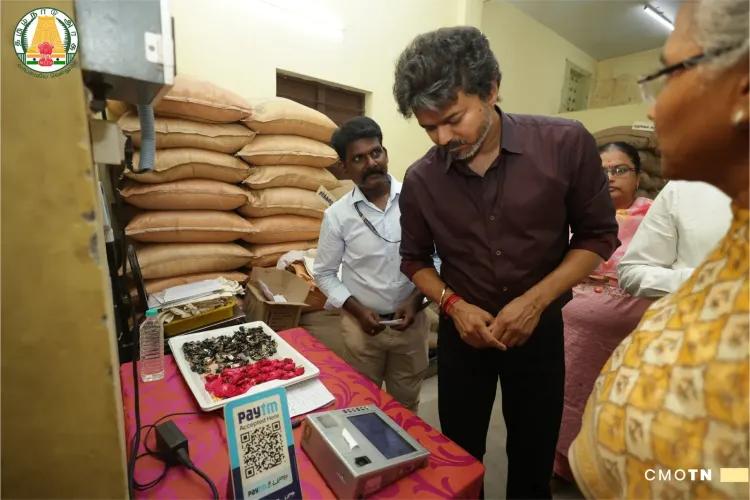
Chief Minister Joseph Vijay launched the distribution of 73,000 new electronic family cards across Tamil Nadu on 13 July 2026, inaugurating the drive at the M.K.B. Nagar Sinthamani Cooperative Fair Price Shop in Perambur and personally distributing rice and essential food items to beneficiaries.
Key Takeaways
73,000 new electronic family cards are being distributed across Tamil Nadu in a statewide rollout launched on 13 July 2026 .
Chief Minister Joseph Vijay inaugurated the event at the M.K.B.
Nagar Sinthamani Cooperative Fair Price Shop in Perambur Assembly Constituency , north Chennai.
The CM personally handed over rice and other essential food items to family cardholders at the launch venue.
Electronic family cards use Aadhaar-linked biometric authentication to reduce leakages and maintain updated beneficiary lists under the NFSA framework.
Tamil Nadu's PDS is one of India's most extensive, offering state-specific entitlements beyond the central NFSA quota.
The rollout is expected to be phased , with further integration with the central NFSA portal anticipated.
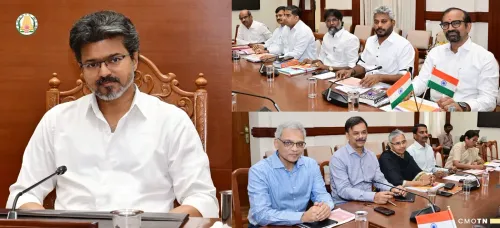
The Chief Minister's Office of Tamil Nadu announced on Monday, 13 July 2026 that Chief Minister Joseph Vijay launched the distribution of 73,000 new electronic family cards across the state, inaugurating the event at the M.K.B. Nagar Sinthamani Cooperative Fair Price Shop in the Perambur Assembly Constituency, north Chennai. The Chief Minister personally handed over rice and other essential food commodities to cardholders at the event.
Context
The post from the official Chief Minister's Office account states that CM Vijay 'launched the programme to distribute 73,000 new electronic family cards across all of Tamil Nadu' and 'provided rice and other food items to family cardholders' at the Perambur cooperative fair price shop. The event marks a significant single-day rollout under the state's ongoing Public Distribution System (PDS) modernisation drive.
Perambur, a densely populated urban constituency in north Chennai, has historically served as a venue for high-visibility PDS outreach. The choice of the Sinthamani Cooperative Fair Price Shop at M.K.B. Nagar as the launch point underscores the government's focus on cooperative retail infrastructure as the delivery backbone of its welfare network.
Policy Backdrop
Tamil Nadu operates one of India's most extensive state-run PDS networks, supplying subsidised rice, wheat, and essential commodities to eligible households through a chain of fair price shops. The shift to electronic family cards — digitised ration cards seeded with Aadhaar and biometric authentication — is designed to curb leakages, remove ghost beneficiaries, and maintain an updated beneficiary database.
These digitisation drives are conducted periodically under the framework of the National Food Security Act (NFSA), which mandates states to maintain accurate and current beneficiary lists. Tamil Nadu has consistently maintained near-universal PDS coverage, combining free rice entitlements with successive rounds of technology upgrades to improve last-mile delivery and reduce diversion of subsidised commodities.
The broader national push for Aadhaar-seeded databases and the central government's One Nation One Ration Card portability initiative have added impetus to state-level digitisation, even as Tamil Nadu retains its own state-specific entitlements beyond the central NFSA quota.
Stakeholders and Impact
The primary beneficiaries of the rollout are 73,000 households across Tamil Nadu who will receive new electronic family cards, replacing older physical or outdated records. For these families, the card is the gateway to subsidised rice and other essential food items distributed through the state's fair price shop network.
Fair price shop operators — many of them cooperative societies — are the other key stakeholder group. Electronic cards enable biometric verification at the point of sale, reducing the scope for impersonation and ensuring that entitlements reach the intended recipient. The Sinthamani Cooperative Fair Price Shop, chosen as the symbolic launch venue, represents the thousands of such outlets that will process the new cards statewide.
What's Next
The launch of 73,000 electronic family cards is expected to be the beginning of a phased statewide rollout, with the government likely to announce timelines for completing distribution to remaining eligible households. Observers will watch for any announcements on integration with the central NFSA portal and whether new commodity entitlements — beyond the existing rice and food items — will be bundled with the updated cards.
The event also signals CM Vijay's administration's intent to use high-visibility welfare delivery moments as a platform for direct public engagement, a pattern consistent with how successive Tamil Nadu governments have approached PDS-related milestones.
Point of View
000 electronic family cards by CM Joseph Vijay is a textbook welfare-delivery moment — combining tangible benefit distribution with a high-visibility public event in a densely populated urban constituency. It fits squarely within Tamil Nadu's long tradition of using PDS milestones as political signalling, where the ruling party demonstrates direct custodianship of food security. The shift to electronic cards also reflects a broader national convergence on Aadhaar-seeded databases, but Tamil Nadu's insistence on state-specific entitlements suggests the government is keen to retain local political ownership of the welfare architecture. The scale of 73,000 cards in a single launch sets a benchmark that will be watched to see whether the phased rollout maintains momentum or stalls at the administrative level.
NationPress
12 Oct 2026
Frequently Asked Questions
What are electronic family cards in Tamil Nadu?
Electronic family cards are digitised ration cards linked to Aadhaar and biometric authentication, replacing older physical cards to curb leakages and ensure subsidised food items reach genuine beneficiaries through the state's Public Distribution System.
How many electronic family cards did CM Vijay launch?
CM Joseph Vijay launched the distribution of 73,000 new electronic family cards across Tamil Nadu at an event in Perambur on 13 July 2026.
Where was the electronic family card launch event held?
The launch was held at the M.K.B. Nagar Sinthamani Cooperative Fair Price Shop in the Perambur Assembly Constituency in north Chennai.
What benefits do Tamil Nadu electronic family card holders receive?
Electronic family card holders in Tamil Nadu are entitled to subsidised rice and other essential food commodities distributed through the state's network of fair price shops under the Public Distribution System.
What is the significance of digitising ration cards in Tamil Nadu?
Digitisation through electronic family cards helps the government remove ghost beneficiaries, prevent diversion of subsidised goods, and align with the National Food Security Act's requirement for updated beneficiary databases, while preserving Tamil Nadu's own state-specific food entitlements.