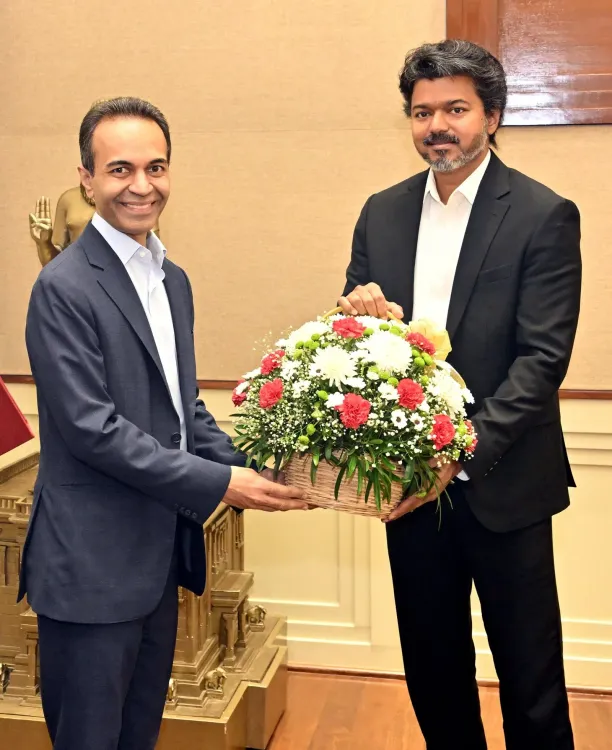
CM Vijay meets Ashok Leyland chairman at Secretariat
Synopsis
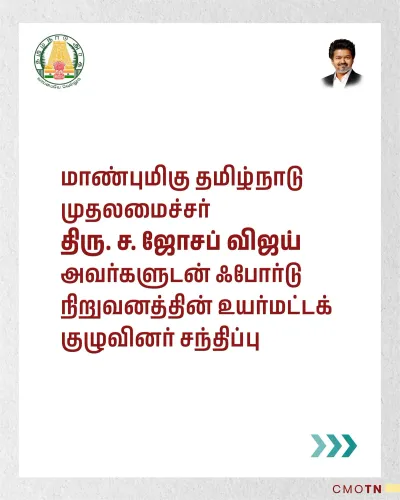
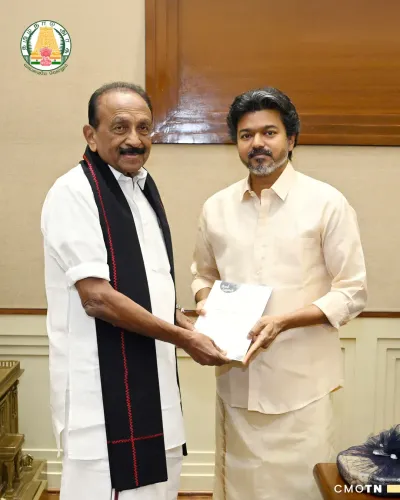
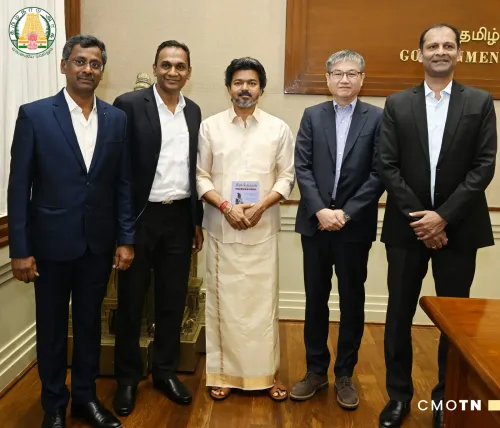
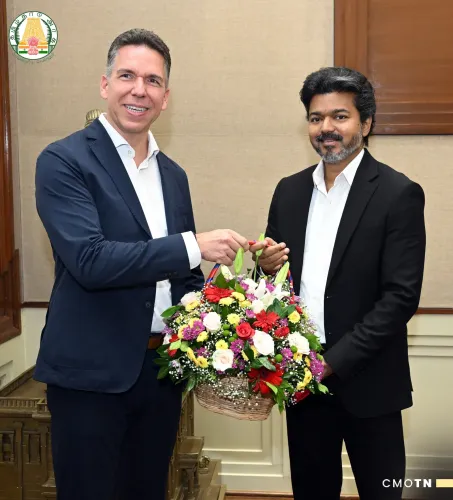
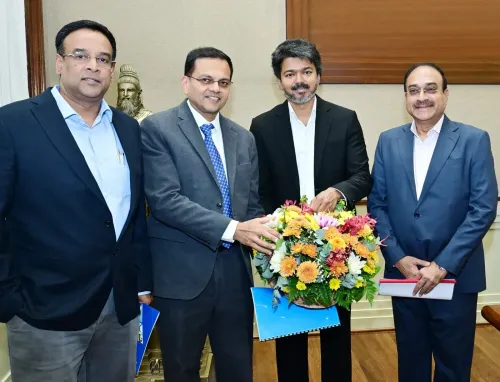
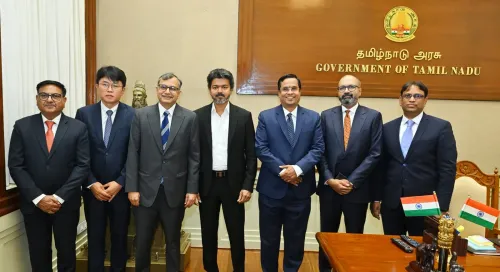
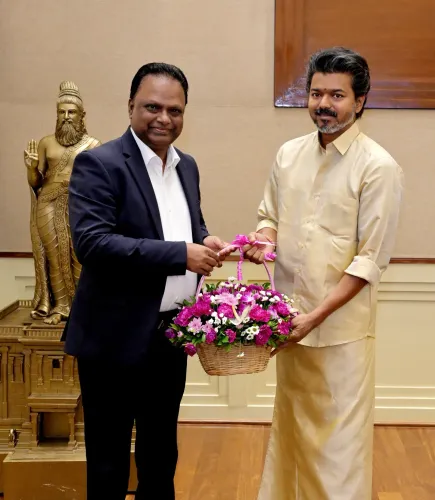
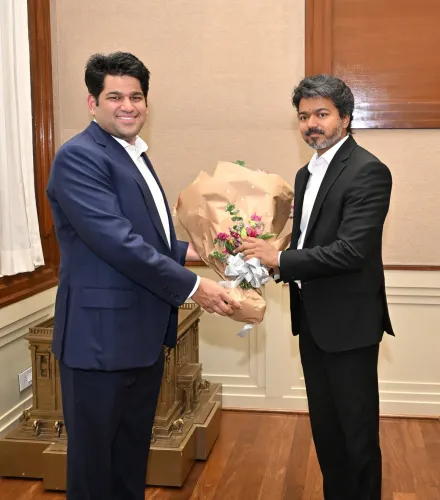
Chief Minister C. Joseph Vijay received Ashok Leyland Chairman Dheeraj G. Hinduja at the Tamil Nadu Secretariat on 26 May 2026, in a high-level meeting between the state government and one of India's largest commercial vehicle makers. No details of the discussions were officially disclosed.
Key Takeaways
Joseph Vijay met Ashok Leyland Chairman Dheeraj G.
Hinduja at the Tamil Nadu Secretariat on 26 May 2026 .
Ashok Leyland , headquartered in Chennai , is the flagship commercial vehicle brand of the Hinduja Group .
The company operates major manufacturing plants in Hosur and Ennore in Tamil Nadu, making it a key industrial employer in the state.
No specific outcomes or investment figures were announced in the official CMO post.
Tamil Nadu has positioned itself as India's southern auto hub since the 1950s , with successive governments maintaining close ties with legacy auto majors.
Analysts will watch for follow-up announcements on EV components , capacity expansion or new state incentives for the commercial vehicle sector.
The Chief Minister's Office of Tamil Nadu announced on Tuesday, 26 May 2026, that Chief Minister C. Joseph Vijay met Dheeraj G. Hinduja, Chairman of Ashok Leyland, at the Tamil Nadu Secretariat in Chennai. The meeting signals continued high-level engagement between the state government and one of India's largest commercial vehicle manufacturers.
Context
The CMO's post in Tamil reads: 'மாண்புமிகு தமிழ்நாடு முதலமைச்சர் திரு.ச. ஜோசப் விஜய் அவர்களை இன்று (26.05.2026) தலைமைச் செயலகத்தில், அசோக் லேலண்ட் நிறுவனத்தின் தலைவர் திரு. தீரஜ் ஜி. இந்துஜா அவர்கள் சந்தித்துப் பேசினார்.' — 'Today (26.05.2026), Dheeraj G. Hinduja, Chairman of Ashok Leyland, called on the Honourable Chief Minister of Tamil Nadu, Mr C. Joseph Vijay, at the Secretariat.' No further details of the discussions were disclosed in the official post.
Ashok Leyland is headquartered in Chennai and is the flagship commercial vehicle company of the Hinduja Group, a diversified conglomerate with interests spanning automotive, banking and energy sectors in India and abroad.
Policy Backdrop
Tamil Nadu has been India's southern automotive manufacturing hub since the 1950s, when Ashok Leyland established its first plant in the state. The company has since expanded to facilities in Hosur and Ennore, making it one of the state's most significant industrial employers.
Successive state governments have maintained regular dialogue with legacy auto majors to sustain employment, navigate the ongoing shift toward electric vehicles, and attract fresh capital expenditure along the Chennai–Coimbatore industrial corridor. The commercial vehicle sector remains a critical pillar of Tamil Nadu's manufacturing economy.
Stakeholders and Impact
Ashok Leyland manufactures buses, trucks and defence vehicles, directly and indirectly employing a large workforce across its Tamil Nadu facilities. Any commitments arising from this meeting — whether on capacity expansion, electric vehicle components or supply-chain deepening — would have downstream effects on the state's auto ancillary ecosystem.
The Hinduja Group's broader investment footprint in India means that a constructive relationship with the Tamil Nadu government could also influence decisions in adjacent sectors such as energy and infrastructure.
What's Next
Observers will watch for follow-up announcements on potential capacity expansion at existing plants, investment in EV component manufacturing, or new state policy incentives targeting the commercial vehicle segment. The meeting, held at the highest executive level, suggests that substantive discussions on the state's industrial roadmap are underway.
Point of View
Such a meeting at the Secretariat level suggests the state is actively working to retain and expand Ashok Leyland's manufacturing footprint rather than risk losing ground to competing states. The Hinduja Group's diversified interests also mean this engagement could signal ambitions beyond vehicles alone. Until official outcomes are disclosed, however, the meeting is best read as a high-level relationship signal rather than a concrete policy commitment.
NationPress
10 Oct 2026
Frequently Asked Questions
Why did Ashok Leyland chairman meet Tamil Nadu CM?
The official CMO post does not specify the agenda. Such meetings typically cover investment plans, employment, industrial policy and emerging areas like electric vehicle manufacturing.
Who is Dheeraj G. Hinduja?
Dheeraj G. Hinduja is the Chairman of Ashok Leyland and a senior figure in the Hinduja Group , a major Indian conglomerate with interests in automotive, banking and energy sectors.
Where is Ashok Leyland manufactured in Tamil Nadu?
Ashok Leyland has manufacturing facilities in Chennai , Hosur and Ennore in Tamil Nadu, making the state its primary production base since the 1950s.
What is Tamil Nadu's role in India's auto industry?
Tamil Nadu is India's southern automotive hub, hosting major vehicle and component manufacturers along the Chennai–Coimbatore industrial corridor , with Ashok Leyland among its oldest and largest auto employers.
Will Ashok Leyland expand in Tamil Nadu?
No official announcement has been made following the 26 May 2026 meeting. Observers are watching for future statements on capacity expansion, EV component projects or new state incentives.