CM Vijay Inspects MTC Electric Bus Depot in Vyasarpadi
Synopsis
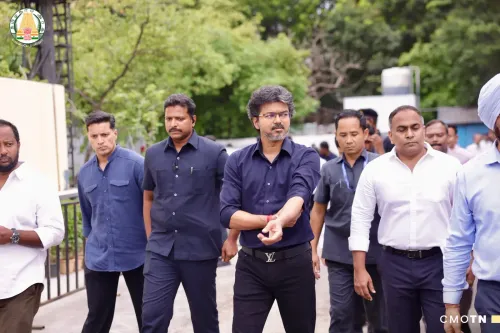
Chief Minister C. Joseph Vijay visited the Metropolitan Transport Corporation's electric bus depot in Vyasarpadi, Chennai on 13 July 2026, inspecting charging infrastructure and reviewing operational progress as Tamil Nadu advances its urban fleet electrification agenda.
Key Takeaways
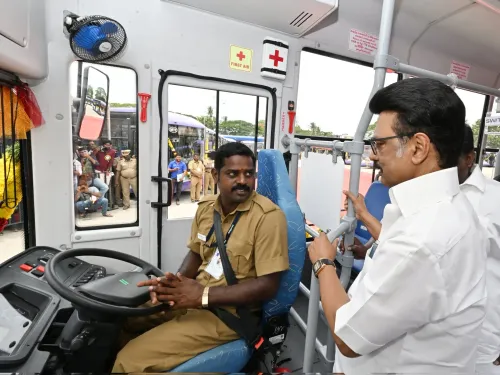
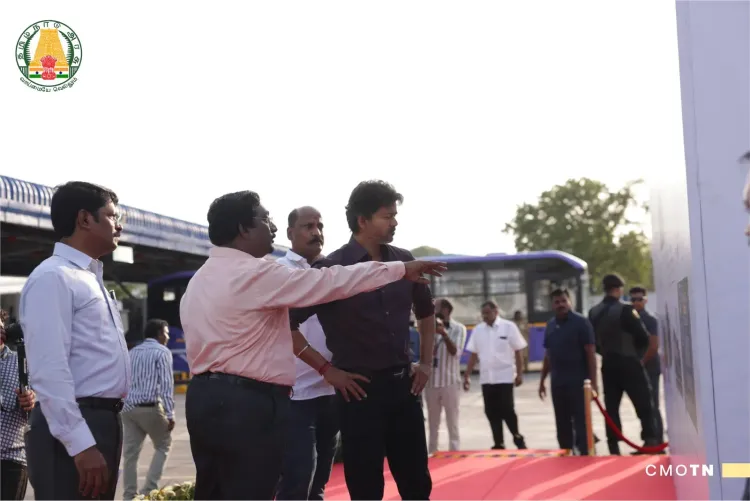
Joseph Vijay personally inspected the MTC electric bus depot in Vyasarpadi, north Chennai on 13 July 2026 .
The Chief Minister reviewed bus charging operations and sought detailed information on depot functioning.
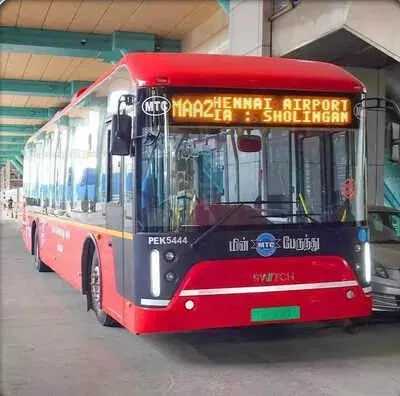
The Vyasarpadi facility is a key maintenance and charging hub for MTC's growing electric bus fleet.
Tamil Nadu's electric bus push is anchored in the Tamil Nadu EV Policy 2019 and FAME-aligned central funding.
Multiple tenders for MTC electric buses have been floated since 2021-22 , with depot infrastructure as the critical enabler.
The inspection signals continued high-level political focus on urban transport electrification in the state.
The Chief Minister's Office of Tamil Nadu announced on Monday, 13 July 2026 that Chief Minister C. Joseph Vijay visited and inspected the Metropolitan Transport Corporation (MTC) electric bus depot in Vyasarpadi, Chennai, reviewing the facility's bus charging operations in detail.
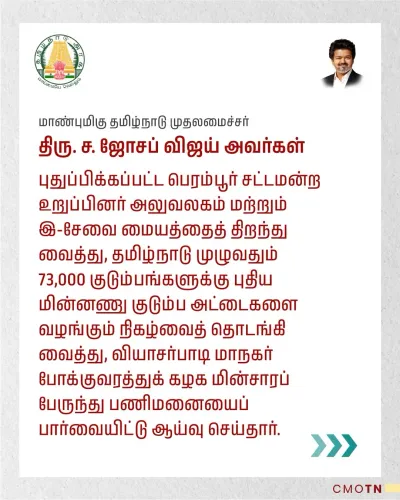
The official post stated that the Chief Minister 'visited and inspected the Metropolitan Transport Corporation electric bus workshop operating in Vyasarpadi and sought information on bus charging operations' (மின்சாரப் பேருந்து பணிமனையைப் பார்வையிட்டு ஆய்வு செய்து, பேருந்து மின்னேற்றச் செயல்பாடுகள் குறித்துக் கேட்டறிந்தார்). The visit signals continued high-level political attention to the pace and quality of urban fleet electrification in the state.
Context
Vyasarpadi is an industrial and residential locality in north Chennai that hosts one of MTC's key bus maintenance and charging facilities. The depot serves as a logistical hub for the corporation's growing fleet of electric buses, handling overnight charging cycles and day-to-day maintenance essential to keeping vehicles on city routes. A hands-on inspection by the Chief Minister underscores the strategic importance the state government places on this infrastructure.Policy Backdrop
Tamil Nadu's push toward electric public transport is rooted in the Tamil Nadu Electric Vehicle Policy of 2019, which set formal targets for promoting electric mobility across sectors, including urban bus services. Since 2021-22, the state has floated multiple tenders for procuring electric buses for MTC, drawing on state funds as well as central government schemes aligned with the FAME (Faster Adoption and Manufacturing of Electric Vehicles) programme. The phased approach has focused heavily on depot-level charging infrastructure as the backbone of daily operations, ensuring buses complete full duty cycles without range disruptions. Tamil Nadu's trajectory mirrors broader efforts by southern states to reduce fleet emissions and meet national electric vehicle adoption targets. Building out reliable charging depots is widely regarded as the critical enabler for scaling e-bus fleets beyond pilot phases.Stakeholders and Impact
The primary beneficiaries of a well-functioning MTC electric fleet are Chennai's daily bus commuters, who depend on the corporation for affordable urban mobility. MTC operational staff — drivers, technicians, and depot workers — are directly affected by the transition, as electric buses require different maintenance protocols and charging management skills compared to conventional diesel vehicles. Successful depot operations also have downstream effects on air quality in densely populated north Chennai neighbourhoods surrounding the Vyasarpadi facility. For the state government, efficient depot performance is a visible metric of policy delivery, making the Chief Minister's inspection both an administrative review and a public accountability exercise.What's Next
Attention will now turn to whether the inspection yields specific directives on expanding charging capacity, accelerating fleet induction, or addressing operational bottlenecks at the Vyasarpadi depot. Recent state budgets have included provisions for commissioning additional e-bus depots and widening the charging network across Chennai. A mid-term review of fleet electrification targets is also anticipated, which could set revised timelines for retiring older diesel buses. The Chief Minister's direct engagement with depot-level operations suggests that progress on urban electrification will remain a closely monitored policy priority for the Tamil Nadu government in the months ahead.Point of View
Not just a policy headline. By engaging directly with depot-level infrastructure, the Chief Minister positions himself as hands-on on climate-linked public services — a politically resonant stance in a city where commuter experience is a live electoral issue. The visit also fits a broader southern-state pattern of using EV fleet expansion as a visible governance differentiator. Whether it translates into faster depot commissioning or revised fleet targets will be the real test of intent.
NationPress
12 Oct 2026
Frequently Asked Questions
Why did CM Joseph Vijay visit the Vyasarpadi MTC depot?
CM C. Joseph Vijay visited the Metropolitan Transport Corporation's electric bus depot in Vyasarpadi, Chennai to inspect the facility and review bus charging operations as part of the state's urban fleet electrification push.
What is the MTC electric bus depot in Vyasarpadi?
The Vyasarpadi depot is one of MTC's key facilities in north Chennai used for maintaining and charging electric buses that operate on city routes in Chennai.
What is Tamil Nadu's electric bus policy?
Tamil Nadu's electric vehicle push for public buses is anchored in the Tamil Nadu EV Policy 2019, with multiple tenders for electric buses floated since 2021-22 under state funds and central FAME-scheme support.
How many electric buses does MTC Chennai operate?
The exact current fleet size was not specified in the official announcement; the state has been inducting electric buses in phases since 2021-22 under successive procurement tenders.
What is FAME scheme and how does it help Tamil Nadu's electric buses?
FAME (Faster Adoption and Manufacturing of Electric Vehicles) is a central government scheme that provides financial support for electric vehicle adoption, including subsidies for procuring electric buses for state transport corporations like MTC.