CM Vishnu Deo Sai Champions SHG Women in Navratri Message
Synopsis
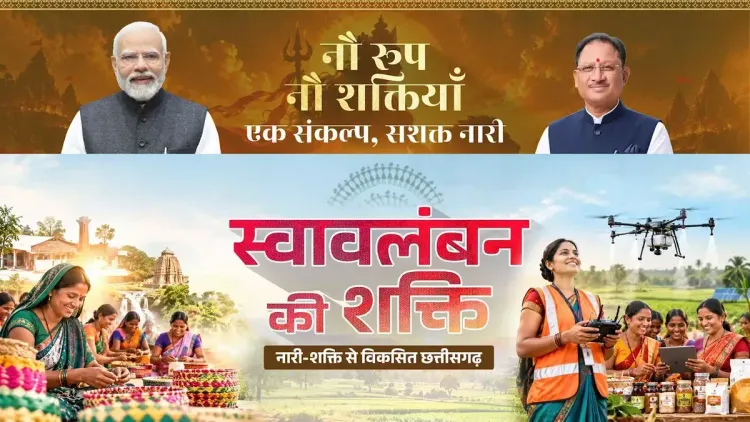
On Navratri 2026, Chhattisgarh CM Vishnu Deo Sai hailed lakhs of self-help group women as the foundation of a self-reliant state, reaffirming the BJP government's commitment to women-led economic empowerment under its Mahatari campaign.
Key Takeaways
CM Vishnu Deo Sai posted on 16 October 2026 during Navratri, celebrating women in self-help groups as builders of Atmanirbhar Chhattisgarh .
He described growing self-respect, confidence, and prosperity among SHG women as 'the greatest success' of the government's efforts.
The post was tied to the Sai government's 'Mahatari' branding, reflected in hashtags #महतारी_का_सम्मान and #महतारी_के_मान .
The National Rural Livelihoods Mission (2011) underpins SHG formation and bank linkage across Chhattisgarh.
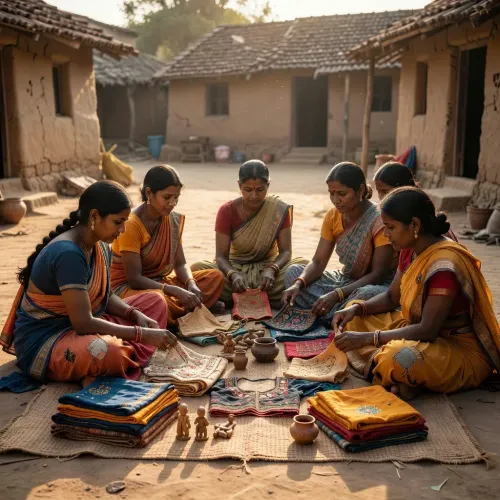
SHGs in the state engage rural women in food processing, handicrafts, micro-lending, and agri-linked enterprises.
Policy observers will watch the 2026 winter assembly session for new allocations or expanded Mahatari-linked programme guidelines.
This Navratri, Chhattisgarh Chief Minister Vishnu Deo Sai turned the festival's reverence for the feminine into a pointed policy statement — saluting the lakhs of women across the state who are rewriting their own economic stories through self-help groups, one skill and one rupee at a time.
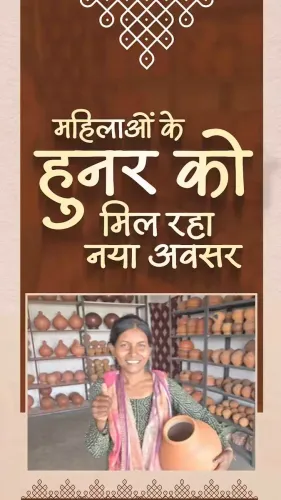
Posting on Friday, 16 October 2026, CM Sai wrote: 'हमारी बहनों के हुनर को अवसर मिले और वे आत्मविश्वास के साथ अपने सपनों को साकार करें - यही हमारा संकल्प है' — 'That our sisters get opportunities for their talent, and that they realise their dreams with confidence — this is our resolve.' He described the growing self-respect, confidence, and prosperity in their lives as 'the greatest success of our efforts.'
SHGs as Chhattisgarh's Economic Backbone
The self-help group model is not new — the National Rural Livelihoods Mission (NRLM), launched in 2011, has spent over a decade weaving rural women into formal financial networks through savings, credit linkages, and collective enterprise. In Chhattisgarh, the current BJP administration has layered a distinct identity onto this framework: the vision of an Atmanirbhar Chhattisgarh — a self-reliant state — where SHGs are positioned not just as poverty-reduction tools but as the 'strong foundation' of state prosperity.
CM Sai's message frames these women as the economic pillar of their families. It is a deliberate elevation — from beneficiary to builder. Millions of rural women in the state are today engaged in activities ranging from food processing and handicrafts to micro-lending and agri-linked businesses, channelling local skill into household income.
Navratri, the 'Mahatari' Campaign, and Political Messaging
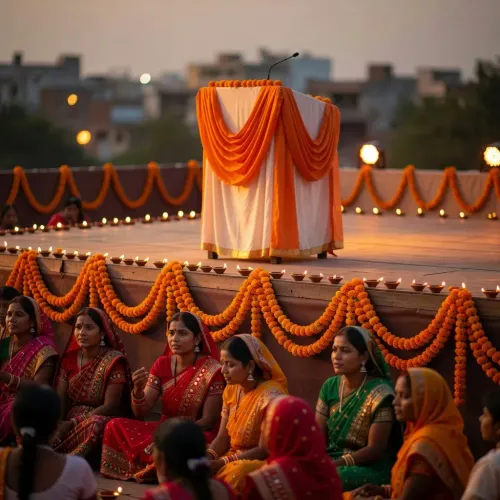
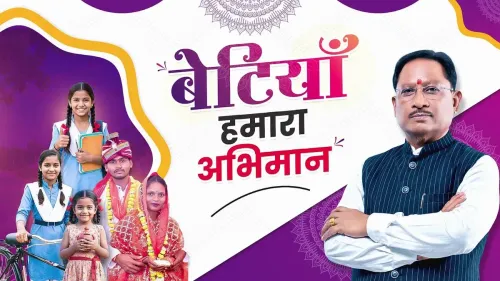
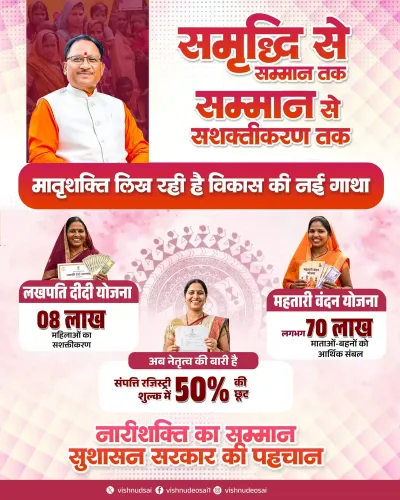
The post carries hashtags #CGNavratri2026, #महतारी_का_सम्मान (Mahatari ka Samman — respect for the mother), and #महतारी_के_मान — anchoring the economic empowerment message firmly within the 'Mahatari' (mother/woman) branding that has become a signature of the Sai government's communication with women voters. Navratri — nine nights venerating the goddess — provides a culturally resonant backdrop for this messaging, merging the sacred and the developmental.
The convergence is deliberate: a festival that celebrates female power becomes the occasion to spotlight real women exercising real economic power. Policy meets sentiment, and the state's rural women stand at the intersection.
What the SHG Push Means on the Ground
For rural Chhattisgarh — a state with deep tribal belts, forested interiors, and historically low female workforce participation — SHGs represent one of the most accessible on-ramps to formal economic life. The groups provide a structure for savings, a channel for government scheme benefits, and crucially, a social network that builds the confidence CM Sai explicitly names. When a woman moves from subsistence to earning, her household's nutritional, educational, and social outcomes shift with her.
The Chief Minister's message is a reaffirmation that the state intends to keep — and likely deepen — this investment. Budget watchers and rural development observers will now track whether the 2026 winter assembly session brings fresh allocations or expanded guidelines for Mahatari-linked programmes to match the rhetoric.
Self-help groups have always been India's quiet revolution. In Chhattisgarh, the Chief Minister just turned up the volume.
Point of View
The messaging attempts to shift the political identity of SHG beneficiaries from recipients to agents, which carries real electoral resonance in Chhattisgarh's tribal and rural constituencies. The post also signals continuity: the Atmanirbhar Chhattisgarh branding suggests the administration intends to compete with the Centre's own Atmanirbhar Bharat imagery on women's empowerment. Whether the rhetoric is matched by fresh programme investment will be the real test when the winter budget session arrives.
NationPress
16 Oct 2026
Frequently Asked Questions
What are self-help groups in Chhattisgarh?
Self-help groups (SHGs) in Chhattisgarh are community organisations, primarily of rural women, that pool savings, access credit, and undertake income-generating activities such as food processing, handicrafts, and micro-enterprise — supported under the National Rural Livelihoods Mission and state schemes.
What is the Mahatari Samman scheme in Chhattisgarh?
'Mahatari' means mother in Chhattisgarhi. The Sai government has used 'Mahatari' branding as an umbrella identity for women-centric welfare and empowerment initiatives; specific programme details and latest allocations should be verified with official state government releases.
What did CM Vishnu Deo Sai say about women on Navratri 2026?
CM Sai said his government's resolve is to ensure women get opportunities for their talent and realise their dreams with confidence. He called the growing self-respect and prosperity of SHG women the greatest success of the state's efforts.
What is the National Rural Livelihoods Mission?
The National Rural Livelihoods Mission (NRLM), launched in 2011 , is a central government programme that supports formation, capacity building, and bank linkage of women's self-help groups across Indian states, including Chhattisgarh.
What is Atmanirbhar Chhattisgarh?
'Atmanirbhar Chhattisgarh' translates to 'self-reliant Chhattisgarh' — a vision articulated by the Vishnu Deo Sai-led BJP government positioning grassroots economic empowerment, particularly through women's SHGs, as the foundation of the state's development model.