CM Vishnu Deo Sai to Attend Bastar Dussehra and Muriya Darbar
Synopsis
Chhattisgarh CM Vishnu Deo Sai announced he will travel to Bastar to seek blessings of Maa Danteshwari and attend the 75-day Bastar Dussehra festival and the Muriya Darbar tribal assembly, praying for the state's prosperity.
Key Takeaways
CM Vishnu Deo Sai announced his visit to Bastar on 23 October 2026 to attend Bastar Dussehra and Muriya Darbar.
He will seek blessings of Maa Danteshwari , the presiding deity of Bastar, and pray for the welfare of Chhattisgarh's residents.
Bastar Dussehra is a 75-day tribal festival, one of the longest in the world, distinct from mainstream Dussehra celebrations.
The Muriya Darbar is a traditional assembly where state leadership engages formally with tribal community representatives.
Chief Ministers of Chhattisgarh have made attending Bastar Dussehra a consistent practice as a gesture of cultural solidarity with the region's indigenous communities.
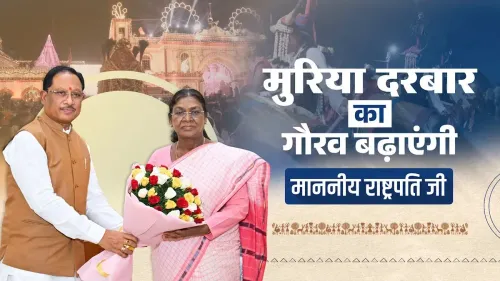
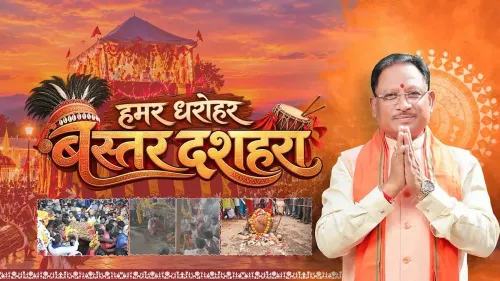
In the forested heartland of southern Chhattisgarh, a festival older than the state itself is about to begin — and Chhattisgarh Chief Minister Vishnu Deo Sai will be there to witness it. The CM announced on Friday, 23 October 2026, that he will travel to Bastar to seek the blessings of presiding deity Maa Danteshwari and participate in the celebrated Bastar Dussehra and Muriya Darbar events.
A Vow at Maa Danteshwari's Feet
In his post, CM Sai wrote: 'बस्तर की आराध्य देवी माँ दंतेश्वरी के श्रीचरणों में शीश नवाकर प्रदेशवासियों के सुख-समृद्धि, खुशहाली और निरंतर उन्नति की कामना करूँगा' — ('I will bow at the feet of Bastar's revered goddess Maa Danteshwari and pray for the happiness, prosperity and continuous progress of the people of the state'). The pledge is personal and ceremonial in equal measure: a chief minister invoking divine sanction for the welfare of his entire state, at the most sacred site of Bastar's tribal faith.
Maa Danteshwari, enshrined at Dantewada, is the presiding deity of the Bastar region and the spiritual centrepiece of the Dussehra observances. Her temple is among the most venerated in Chhattisgarh, drawing pilgrims from across the tribal belt each year as the festival season opens.
Bastar Dussehra: Where Tribal Tradition Rewrites the Calendar
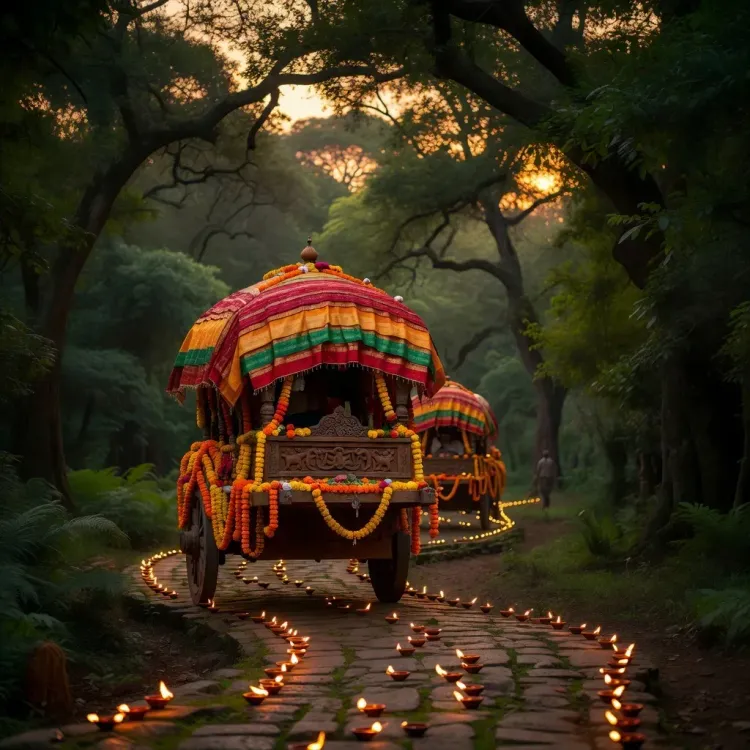
This is not the ten-day Dussehra most of India follows. Bastar Dussehra runs for 75 days, making it one of the longest festivals in the world, and its rituals trace a lineage through the royal house of Bastar and the indigenous communities who have shaped them for centuries. Effigies of Ravana are not burned here. Instead, a richly layered sequence of tribal ceremonies, royal protocols, and community processions unfolds — a living archive of a civilisation that predates modern administrative boundaries.
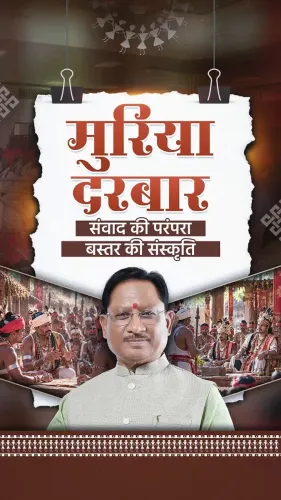
Central to this tradition is the Muriya Darbar — a formal assembly in which the ruling authority meets tribal representatives in a ritual of dialogue and recognition. Historically, it was the moment the king of Bastar sat in open court with leaders of the Muriya Gond community. Today, the Chief Minister's presence at the Darbar carries that symbolic weight forward: the state acknowledging its most ancient constituents face to face.
Why CMs Keep Coming Back to Bastar
Chief Ministers of Chhattisgarh have made attendance at Bastar Dussehra a near-consistent practice, and the reasons are layered. Bastar is a region of extraordinary cultural richness — and also one of the most complex developmental and security landscapes in central India. Showing up at the festival is, at one level, a gesture of cultural solidarity. At another, it is a statement that the state's leadership sees and values what makes Bastar irreducibly itself.
CM Sai described the festival as 'समृद्ध सांस्कृतिक विरासत और ऐतिहासिक गौरव का प्रतीक' — ('a symbol of rich cultural heritage and historical glory') — and said he would be a witness to this 'glorious tradition'. The framing matters: a witness, not a patron. The tradition belongs to Bastar; the chief minister is there to honour it.
For a state whose tribal communities hold some of the most distinct identities in the country, that distinction carries real political and social meaning — and the festival offers a rare stage on which it can be expressed and celebrated without reduction.
When the procession moves and the Darbar convenes, the story Bastar tells about itself will be centuries in the making. CM Sai will be watching — and, this year, so will the rest of Chhattisgarh.
Point of View
Sai signals deference to the tradition's indigenous ownership — a calculated but genuine distinction. Sustained high-level participation in such events reflects a broader BJP strategy of weaving cultural and tribal identity politics into governance optics across central and eastern India.
NationPress
23 Oct 2026
Frequently Asked Questions
What is Bastar Dussehra and why is it unique?
Bastar Dussehra is a tribal festival in the Bastar region of Chhattisgarh that spans 75 days, making it one of the longest festivals in the world. Unlike mainstream Dussehra, it does not involve burning effigies of Ravana; instead, it features ancient tribal rituals, royal-tribal ceremonies, and community processions rooted in the traditions of the Bastar royal house and indigenous Gond communities.
What is the Muriya Darbar?
The Muriya Darbar is a traditional assembly held during Bastar Dussehra where the ruling authority meets tribal representatives — historically the king of Bastar meeting Muriya Gond community leaders. Today, the Chief Minister participates in this assembly, carrying forward the ritual of formal dialogue between state leadership and Bastar's indigenous communities.
Who is Maa Danteshwari?
Maa Danteshwari is the presiding deity of the Bastar region, enshrined at Dantewada in Chhattisgarh. She is the spiritual centrepiece of Bastar Dussehra observances and one of the most venerated goddesses in the tribal belt of central India.
Why is CM Vishnu Deo Sai visiting Bastar Dussehra in 2026?
CM Sai announced he will attend Bastar Dussehra and the Muriya Darbar to seek the blessings of Maa Danteshwari and pray for the prosperity of Chhattisgarh's residents. He described the festival as a symbol of the state's rich cultural heritage and said he wished to be a witness to its glorious traditions.
Have previous Chhattisgarh Chief Ministers attended Bastar Dussehra?
Yes. Chief Ministers of Chhattisgarh have routinely participated in Bastar Dussehra as a way of acknowledging the region's distinct tribal customs and the royal-tribal traditions of the festival. The visit is seen as a symbol of state-level recognition of indigenous cultural heritage.