CM Mohan Yadav Vows New Chapter in MP Pulse Output
Synopsis
Chief Minister Dr. Mohan Yadav has declared that Madhya Pradesh will write a new chapter in pulse production, linking the pledge to the Viksit Madhya Pradesh vision. The state is already India's largest pulse producer and the announcement signals further policy momentum ahead of the rabi season review.
Key Takeaways
Mohan Yadav , Chief Minister of Madhya Pradesh , announced on 24 May 2026 that the state will write a new chapter in pulse production.
Madhya Pradesh is India's largest producer of pulses, with significant output of gram, lentil, and pigeon pea over the past decade.
The announcement was made under the #ViksitMadhyaPradesh campaign, aligned with the national Viksit Bharat@2047 goals.
The state recorded successive increases in pulse acreage and productivity between 2015 and 2023 through expansion under state agricultural plans.
Final 2025-26 rabi pulse estimates and potential new procurement or seed-subsidy measures in the forthcoming state budget are the key near-term developments to watch.
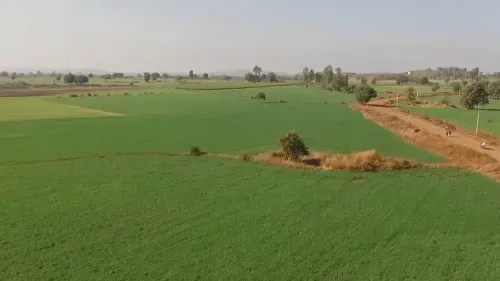
Madhya Pradesh Chief Minister Dr. Mohan Yadav on Sunday, 24 May 2026, declared that the state is poised to write a new chapter in pulse production, sharing his vision through a post on X under the #ViksitMadhyaPradesh banner.
Context
In the post, Dr. Yadav wrote in Hindi: 'दलहन उत्पादन में मध्यप्रदेश लिखेगा नया अध्याय' — 'Madhya Pradesh will write a new chapter in pulse production.' The statement was accompanied by a video and tagged under the state government's flagship development campaign, Viksit Madhya Pradesh, which is aligned with the national Viksit Bharat@2047 goals.
The announcement signals a renewed push by the state government to consolidate Madhya Pradesh's position as the country's leading pulse-producing state, a distinction the state has held for over a decade across crops including gram, lentil, and pigeon pea.
Policy Backdrop
Madhya Pradesh recorded successive increases in pulse acreage and productivity between 2015 and 2023, driven by the expansion of gram and lentil cultivation under state agricultural plans. The state's rain-fed central Indian belt has been central to this growth, with pulse cultivation offering farmers a viable crop-diversification option.
The Viksit Madhya Pradesh vision document frames agricultural transformation — including pulse self-sufficiency — as a pillar of the state's broader economic ambitions. Pulse production gains have featured prominently in recent rabi season reviews and state agriculture budget discussions, reflecting a consistent policy emphasis under Dr. Yadav's government, which took office in December 2023.
At the national level, reducing dependence on pulse imports has been a stated priority, and state-level surpluses from Madhya Pradesh directly contribute to that goal by bolstering domestic availability and moderating prices for consumers.
Stakeholders and Impact
The primary beneficiaries of any expansion in pulse output are the state's pulse farmers and agricultural cooperatives, who stand to gain from improved procurement support, seed subsidies, and market linkages. Pulse cultivation is particularly significant for smallholder and rain-fed farmers in central Madhya Pradesh, for whom it represents a key source of income during the rabi season.
Consumers across India also have a stake in the outcome: higher domestic production from the country's largest pulse-growing state can help stabilise prices of staples such as chana dal and masoor dal, which are sensitive to supply shortfalls. Agricultural cooperatives are expected to play a facilitative role in procurement and distribution if new targets are formalised.
What's Next
The immediate focus will be on the release of final 2025-26 rabi pulse production estimates by the Madhya Pradesh state agriculture department, which will provide a quantitative baseline for the 'new chapter' the Chief Minister has invoked. Any new procurement mechanisms or seed-subsidy announcements in the forthcoming state budget will be closely watched by farmers and policy observers alike.
If the state follows through with concrete programme expansions, Madhya Pradesh could further widen its lead over other pulse-producing states and reinforce the national food-security architecture — making this declaration a potential inflection point in the state's agricultural policy calendar.
Point of View
The BJP government in Bhopal is reinforcing its alignment with the Centre's Viksit Bharat@2047 agenda, lending the statement both developmental and electoral weight. The timing — ahead of rabi season assessments — suggests the government may be preparing the ground for concrete programme announcements. Whether the 'new chapter' translates into measurable policy action, such as enhanced minimum support price procurement or expanded seed subsidies, will determine how the declaration is received by farmers and opposition alike.
NationPress
14 Oct 2026
Frequently Asked Questions
Is Madhya Pradesh the largest pulse producer in India?
Yes, Madhya Pradesh has been India's largest producer of pulses for over a decade, with significant output of gram, lentil, and pigeon pea, particularly from its rain-fed central belt.
What is Viksit Madhya Pradesh?
Viksit Madhya Pradesh is the state government's vision document and campaign for economic and agricultural transformation, aligned with the national Viksit Bharat@2047 goals championed by the central government.
What did CM Mohan Yadav say about pulse production?
Chief Minister Dr. Mohan Yadav posted on X on 24 May 2026 that 'Madhya Pradesh will write a new chapter in pulse production,' signalling a renewed push to expand the state's already dominant position in domestic pulse output.
How have pulse farmers in Madhya Pradesh benefited from state policies?
Pulse farmers in Madhya Pradesh have benefited from successive increases in acreage support and productivity initiatives between 2015 and 2023, with agricultural cooperatives playing a role in procurement and market linkages.
What should I watch for next on Madhya Pradesh pulse policy?
The key developments to watch are the release of final 2025-26 rabi pulse production estimates by the state agriculture department and any new procurement or seed-subsidy announcements in the forthcoming Madhya Pradesh state budget.