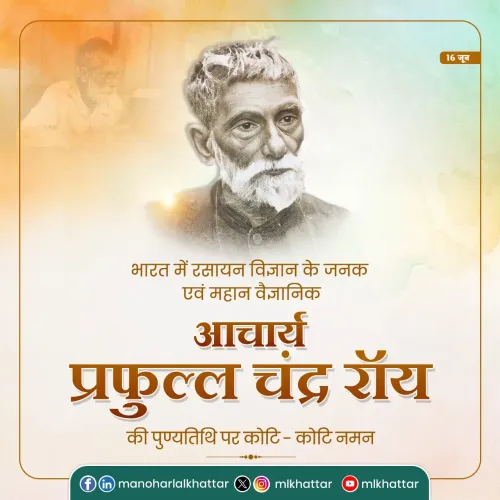
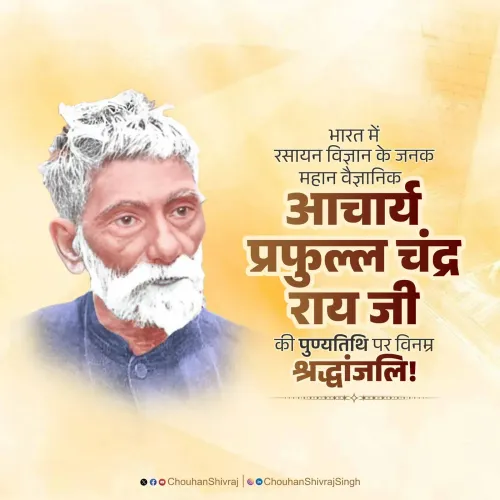
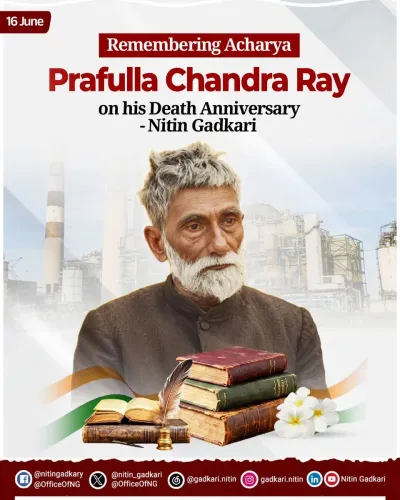
CM Mohan Yadav Pays Tribute to Father of Indian Chemistry
Synopsis
Madhya Pradesh Chief Minister Dr. Mohan Yadav paid tribute to Acharya Prafulla Chandra Ray on his death anniversary, honouring the 1892 founder of Bengal Chemicals and Pharmaceuticals Works as the father of Indian chemistry and a champion of Swadeshi self-reliance.
Key Takeaways
Mohan Yadav , Chief Minister of Madhya Pradesh, paid tribute to Acharya Prafulla Chandra Ray on his death anniversary on 16 June 2026 .
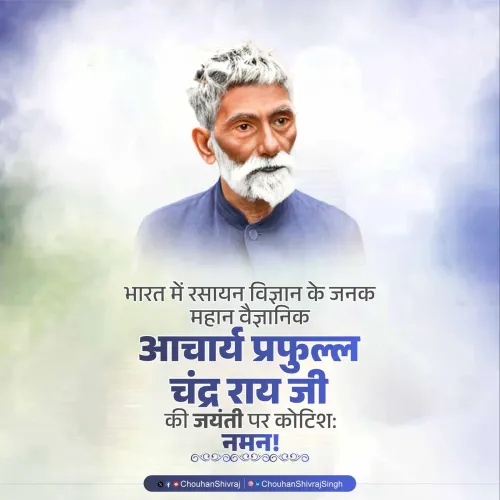
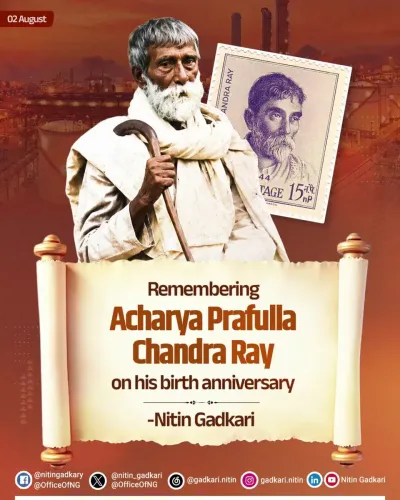
Acharya Prafulla Chandra Ray (1861–1944) is widely recognised as the father of Indian chemistry and a leading figure in the Swadeshi movement.
Ray founded Bengal Chemicals and Pharmaceuticals Works Limited in 1892 in Kolkata , establishing India's first modern indigenous pharmaceutical company.
The Chief Minister highlighted Ray's role in promoting entrepreneurship, self-reliance, and Swadeshi through his industrial and educational work.
Ray's legacy is seen as a precursor to contemporary Indian policies emphasising domestic pharmaceutical manufacturing and reduced import dependence.
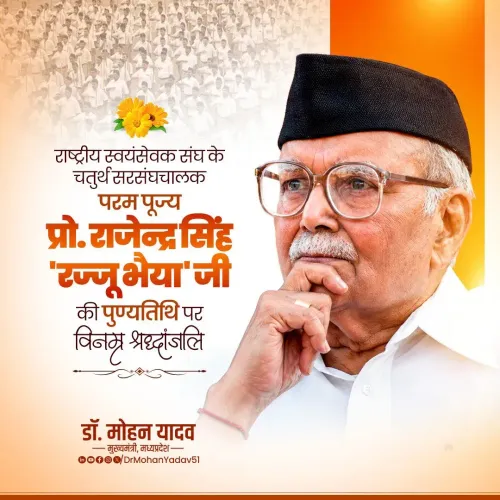
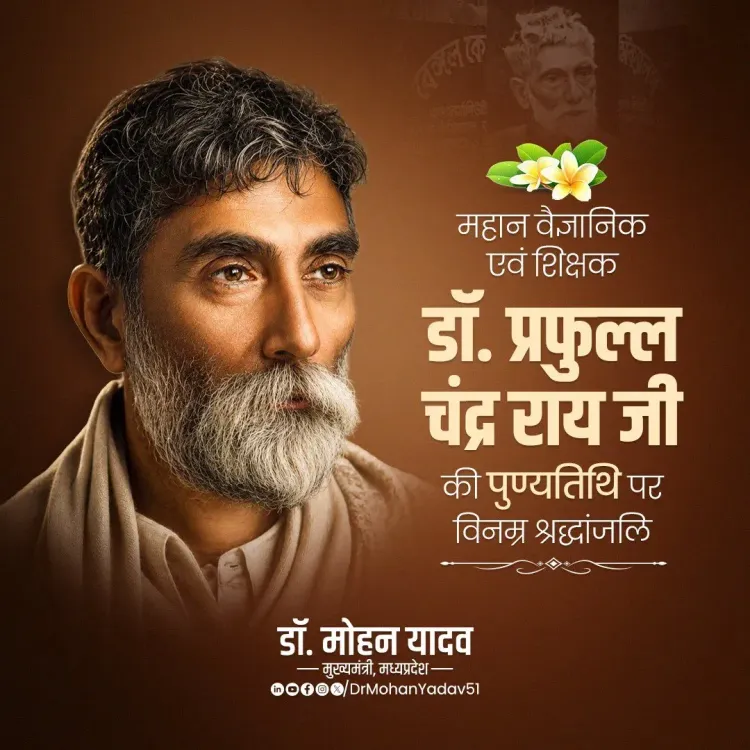
Madhya Pradesh Chief Minister Dr. Mohan Yadav on Tuesday, 16 June 2026 paid homage to Acharya Prafulla Chandra Ray on his death anniversary, honouring the scientist as the father of Indian chemistry and a pioneering educator who laid the foundations of the country's pharmaceutical industry.
Context
In his post, Dr. Yadav offered a tribute — 'विनम्र श्रद्धांजलि' (humble homage) — to Acharya Prafulla Chandra Ray, describing him as a great educationist and the father of Indian chemistry. He noted that Ray had ignited the spirit of entrepreneurship, self-reliance, and Swadeshi through the establishment of Bengal Chemicals and Pharmaceuticals Works Limited, calling it the country's first pharmaceutical company.
The Chief Minister concluded that Ray 'will always remain a source of inspiration for all of us,' underscoring the enduring relevance of the scientist's legacy to contemporary India.
Policy Backdrop
Acharya Prafulla Chandra Ray (1861–1944) founded Bengal Chemicals and Pharmaceuticals Works in 1892 in Kolkata, establishing India's first modern indigenous pharmaceutical manufacturing unit at a time when the country was almost entirely dependent on imported medicines. His venture was a direct expression of the Swadeshi movement — the early 20th-century campaign that urged Indians to produce and consume domestically made goods.
Ray's industrial and academic contributions were inseparable: he built a school of chemistry at Presidency College, Calcutta, trained generations of Indian scientists, and channelled the profits of his pharmaceutical enterprise back into scientific education. His twin emphasis on indigenous manufacturing and scientific self-sufficiency placed him at the intersection of nationalism and modern science.
Stakeholders and Impact
Ray's legacy resonates most directly with India's pharmaceutical sector, which today ranks among the world's largest by volume, supplying generic medicines to over 200 countries. The ideals he championed — domestic production, reduced import dependence, and scientific entrepreneurship — are frequently cited as precursors to contemporary policy frameworks that seek to strengthen indigenous drug manufacturing.
Science educators and pharmaceutical entrepreneurs across India regard Ray as a foundational figure whose model of combining industrial enterprise with academic rigour remains a template worth emulating. His story is also taught widely in school curricula as an example of pre-independence nation-building through science.
What's Next
Tributes from senior political figures to pre-independence scientific pioneers often coincide with or precede state-level policy announcements in related sectors. Madhya Pradesh has been expanding its pharmaceutical manufacturing footprint, and statements that invoke Swadeshi ideals and self-reliance may signal continued emphasis on domestic industry promotion in upcoming policy addresses by Dr. Yadav's government.
Observers will watch whether commemorations of Acharya Ray's death anniversary translate into concrete incentives for pharmaceutical manufacturing or science education initiatives at the state level, reinforcing the link between historical inspiration and present-day governance priorities.
Point of View
The Chief Minister frames domestic manufacturing not as a new policy choice but as a civilisational continuity. For Madhya Pradesh, which has been positioning itself as a pharmaceutical investment destination, such statements carry soft-power value beyond ceremonial respect. The tribute also signals that science-led nationalism remains a politically resonant narrative for the BJP's state leadership.
NationPress
24 Sept 2026
Frequently Asked Questions
Who is Acharya Prafulla Chandra Ray?
Acharya Prafulla Chandra Ray (1861–1944) was an Indian chemist widely regarded as the father of Indian chemistry. He founded Bengal Chemicals and Pharmaceuticals Works in 1892, India's first modern pharmaceutical company, and was a prominent figure in the Swadeshi movement.
What is Bengal Chemicals and Pharmaceuticals Works?
Bengal Chemicals and Pharmaceuticals Works Limited, founded by Acharya Prafulla Chandra Ray in 1892 in Kolkata, was India's first indigenous pharmaceutical manufacturing company. It was established to produce medicines domestically and reduce dependence on imported drugs.
Why did CM Mohan Yadav pay tribute to Prafulla Chandra Ray?
Dr. Mohan Yadav paid tribute on the occasion of Acharya Prafulla Chandra Ray's death anniversary, honouring his contributions as the father of Indian chemistry, a pioneering educator, and the founder of India's first pharmaceutical company.
What was the Swadeshi movement and how was Ray connected to it?
The Swadeshi movement was an early 20th-century campaign urging Indians to use domestically produced goods and boycott foreign imports. Acharya Prafulla Chandra Ray actively participated in the movement through his pharmaceutical enterprise and advocacy for indigenous scientific production.
What is Dr. Mohan Yadav's role?
Dr. Mohan Yadav is the Chief Minister of Madhya Pradesh and a senior BJP leader. He assumed office as Chief Minister of Madhya Pradesh in December 2023.