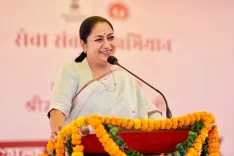
Khattar Pays Tribute to Father of Indian Chemistry P.C. Ray
Synopsis
Union Power Minister Manohar Lal Khattar on June 16, 2026, paid tribute to Acharya Prafulla Chandra Ray on his death anniversary, honouring the father of Indian chemistry's Swadeshi dedication and calling his legacy an eternal guide for science, education, and national service.
Key Takeaways
Union Power Minister Manohar Lal Khattar paid homage to Acharya Prafulla Chandra Ray on his death anniversary on June 16, 2026 .
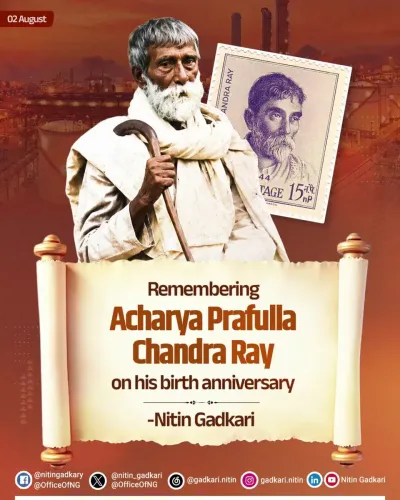
Acharya Prafulla Chandra Ray (1861–1944) is regarded as the father of Indian chemistry and founded Bengal Chemicals and Pharmaceuticals in 1901 .
Khattar praised Ray's 'unparalleled dedication to Swadeshi and nation-building' as an enduring inspiration for future generations.
The tribute links Ray's legacy to the broader Atmanirbhar Bharat narrative, which frames contemporary self-reliance as a continuation of the Swadeshi movement .
Senior BJP ministers have regularly marked anniversaries of pre-independence scientists on social media, connecting historical figures to current policy goals since 2014 .
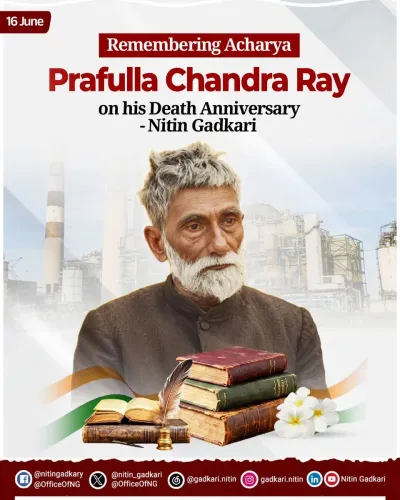
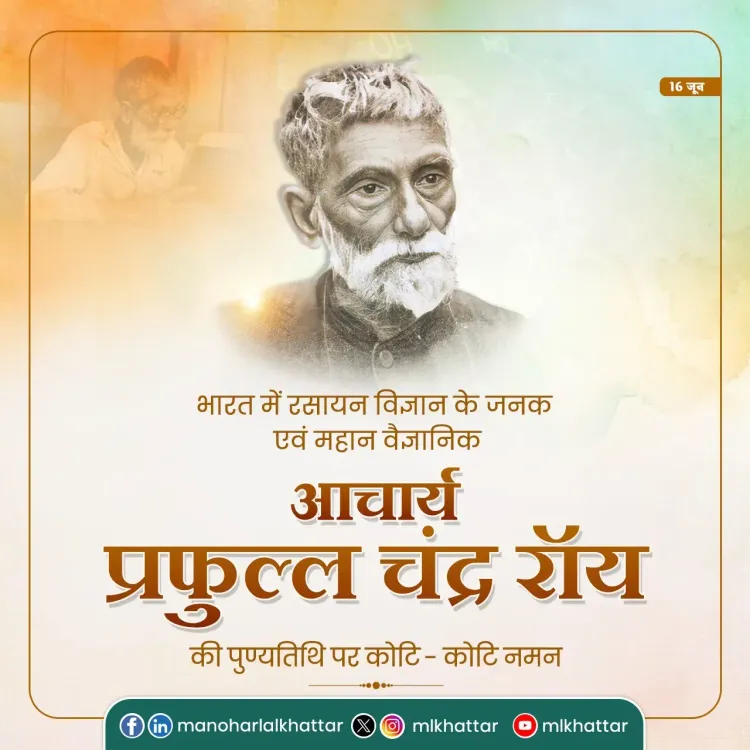
Union Power Minister Manohar Lal Khattar on Tuesday, June 16, 2026, paid homage to Acharya Prafulla Chandra Ray, widely regarded as the father of Indian chemistry, on his death anniversary, calling his commitment to Swadeshi and nation-building an enduring inspiration for future generations.
Context
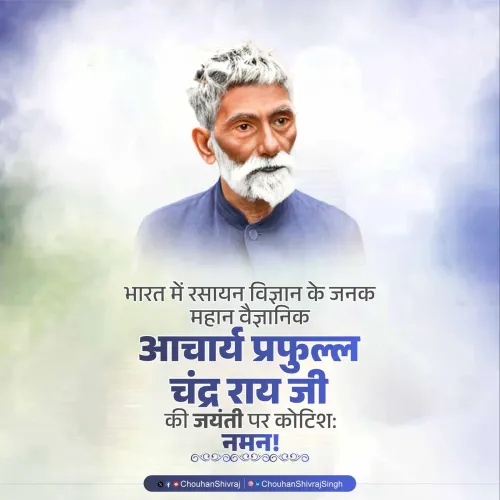
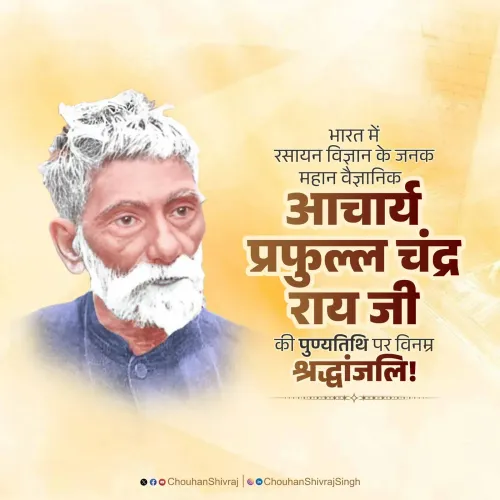
Posting in Hindi on X, Khattar wrote: 'भारत में रसायन विज्ञान के जनक, महान वैज्ञानिक आचार्य प्रफुल्ल चंद्र रॉय जी की पुण्यतिथि पर कोटिशः नमन अर्पित करता हूँ!' — ('I offer countless salutations on the death anniversary of the great scientist Acharya Prafulla Chandra Ray, the father of chemistry in India!'). He added that Ray's 'unparalleled dedication to Swadeshi and nation-building will always inspire future generations to walk the path of science, education, and service to the nation.'
Acharya Prafulla Chandra Ray (1861–1944) was a pioneering Bengali chemist whose contributions to inorganic chemistry and pharmaceutical science laid foundational stones for scientific self-reliance in pre-independence India. His establishment of Bengal Chemicals and Pharmaceuticals in 1901 is considered one of the earliest examples of indigenous industrial enterprise in the country.
Policy Backdrop
Ray's legacy is frequently invoked in the context of the Swadeshi movement, the early 20th-century campaign that championed Indian-made goods and self-reliance during the freedom struggle. The Atmanirbhar Bharat Abhiyan, launched in 2020, explicitly frames India's contemporary push for economic self-sufficiency as a continuation of that Swadeshi tradition.
Senior BJP ministers have consistently used social media platforms to mark the death and birth anniversaries of pre-independence scientists, reformers, and institution-builders, connecting historical self-reliance efforts to the current government's emphasis on indigenous manufacturing, scientific temper, and innovation. This pattern has been a visible feature of the ruling party's cultural and developmental communication since 2014.
Stakeholders and Impact
The tribute resonates most directly with India's scientific community and student population, for whom Acharya Ray remains a symbol of intellectual rigour combined with national service. His model of a scientist-entrepreneur who built domestic industry while advancing academic knowledge continues to be cited in chemistry curricula and institutional histories across the country.
By invoking Ray's Swadeshi ethos, the minister's post also speaks to ongoing policy conversations around domestic pharmaceutical manufacturing, chemical sector self-reliance, and the government's push to reduce import dependence in critical industries.
What's Next
Observers of science and education policy will watch for references to Acharya Ray and similar historical figures in forthcoming events by the Ministry of Education and the Ministry of Science and Technology, particularly as parliamentary deliberations on the new National Research Foundation continue. Such tributes by senior ministers often precede or accompany broader institutional announcements celebrating India's scientific heritage.
Point of View
The post implicitly frames indigenous industrial enterprise as both historically rooted and politically relevant. Such gestures cost little but yield significant symbolic capital among science educators, students, and a public receptive to national pride narratives. The consistency of this pattern across senior ministers suggests a coordinated, long-term communication strategy rather than spontaneous individual commemoration.
NationPress
24 Sept 2026
Frequently Asked Questions
Who is Acharya Prafulla Chandra Ray and why is he called the father of Indian chemistry?
Acharya Prafulla Chandra Ray (1861–1944) was a pioneering Bengali chemist who made foundational contributions to inorganic chemistry and founded Bengal Chemicals and Pharmaceuticals in 1901, making him the father of Indian chemistry and one of the earliest advocates of indigenous industrial enterprise.
Why did Manohar Lal Khattar pay tribute to Prafulla Chandra Ray?
Union Power Minister Manohar Lal Khattar paid tribute on Ray's death anniversary, June 16, 2026, honouring his Swadeshi commitment and calling his legacy an inspiration for future generations in science, education, and national service.
What is the connection between Prafulla Chandra Ray and the Swadeshi movement?
Ray was a strong proponent of the Swadeshi movement, which promoted Indian-made goods and self-reliance during the freedom struggle. His founding of Bengal Chemicals and Pharmaceuticals in 1901 is one of the earliest concrete expressions of that Swadeshi industrial philosophy.
What is Bengal Chemicals and Pharmaceuticals?
Bengal Chemicals and Pharmaceuticals is one of India's oldest pharmaceutical companies, founded by Acharya Prafulla Chandra Ray in 1901 as a Swadeshi enterprise to develop indigenous medicines and chemicals.
How does the BJP use tributes to pre-independence scientists?
Senior BJP ministers regularly mark the death and birth anniversaries of pre-independence scientists and reformers on social media, linking their self-reliance ethos to contemporary policies such as Atmanirbhar Bharat — a pattern that has been consistent since 2014.