Shivraj Singh Chouhan Pays Tribute to Acharya P.C. Ray
Synopsis
Union Agriculture Minister Shivraj Singh Chouhan on 16 June 2026 honoured Acharya Prafulla Chandra Ray, the father of Indian chemical science and founder of Bengal Chemicals and Pharmaceuticals, on his death anniversary, calling his legacy a lasting inspiration for youth to build a capable nation through science.
Key Takeaways
Shivraj Singh Chouhan , Union Agriculture Minister, paid tribute to Acharya Prafulla Chandra Ray on his death anniversary, 16 June 2026 .
Acharya Prafulla Chandra Ray is regarded as the father of chemical science in India .
Ray founded Bengal Chemicals and Pharmaceuticals in 1901 , India's first indigenous pharmaceutical company.
Chouhan's message called Ray's service to nation and society through science an enduring inspiration for Indian youth.
The tribute aligns with the government's Atmanirbhar Bharat emphasis on indigenous science, pharmaceuticals, and chemical manufacturing.
The National Education Policy 2020 advocates using India's scientific heritage to build scientific temper among students.
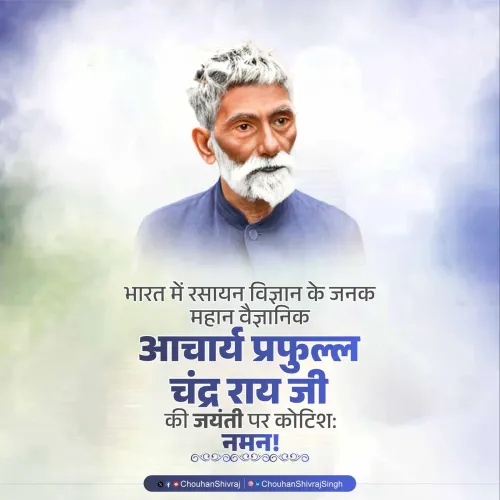
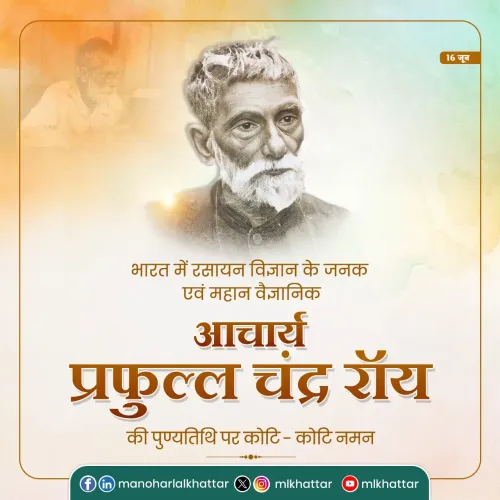
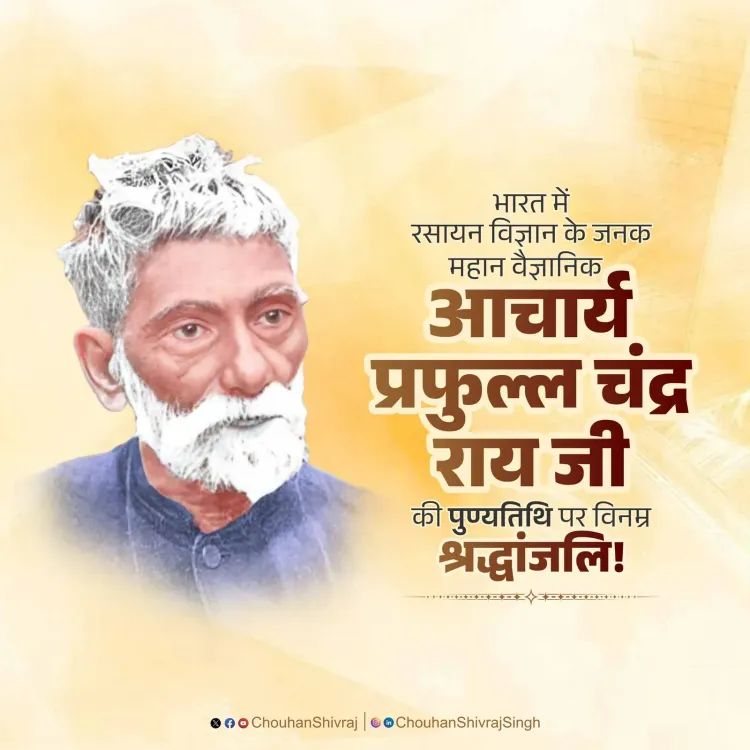
Union Agriculture Minister Shivraj Singh Chouhan on Tuesday, 16 June 2026 paid tribute to Acharya Prafulla Chandra Ray, widely regarded as the father of chemical science in India, on his death anniversary. Chouhan posted a heartfelt message on X honouring the pioneering scientist's contributions to nation-building through science.
In his post, Chouhan wrote: 'Bharat mein rasayan vigyan ke janak, mahan vaigyanik Acharya Prafulla Chandra Ray ji ki punyatithi par vinamra shraddhanjali arpit karta hoon!' ('I humbly pay tribute to the great scientist Acharya Prafulla Chandra Ray, the father of chemical science in India, on his death anniversary!'). He added that Ray's 'unparalleled efforts to serve the nation and society through science will always inspire youth to build a capable nation and an empowered society.'
Context
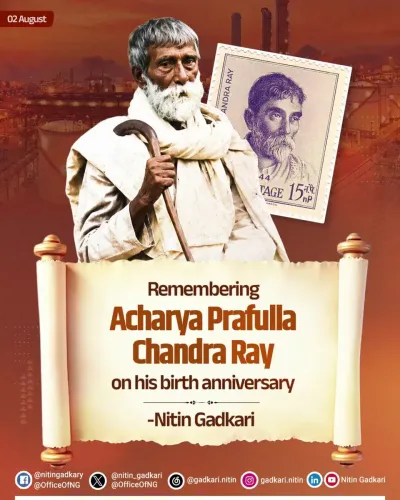
Acharya Prafulla Chandra Ray (1861–1944) was a Bengali chemist, educator, and entrepreneur whose contributions fundamentally shaped modern science in India. He is best remembered for his discovery of mercurous nitrite and for establishing Bengal Chemicals and Pharmaceuticals in 1901 — the first pharmaceutical company to be owned and operated by Indians. Beyond the laboratory, Ray was a passionate advocate for scientific education and self-reliance, values that continue to resonate in contemporary policy discourse.
Ray's legacy extends to institution-building: he mentored generations of scientists at Presidency College, Calcutta, and authored the landmark work A History of Hindu Chemistry, which traced the roots of chemical knowledge in the Indian subcontinent. His insistence on indigenous industry over colonial dependence made him a precursor to the idea of economic self-sufficiency.
Policy Backdrop
The tribute aligns with a consistent pattern among Union ministers of invoking pre-independence scientific figures to reinforce the government's emphasis on indigenous research and industrial capability. The National Education Policy 2020 explicitly stresses incorporating examples from India's scientific heritage to foster scientific temper and innovation among students — a goal that figures such as Ray exemplify.
India's broader Atmanirbhar Bharat framework has placed renewed focus on domestic pharmaceutical and chemical manufacturing, sectors that Ray helped pioneer over a century ago. Annual commemorations of scientists like Ray serve as a cultural touchpoint connecting historical achievement to present-day policy goals in chemicals, pharmaceuticals, and education.
Stakeholders and Impact
The primary audience for such tributes is India's youth and the scientific community, who are frequently cited as the intended beneficiaries of messages connecting historical inspiration to contemporary ambition. Chouhan's post, shared from his personal X account with a following that spans BJP supporters and agricultural-policy watchers, carries the weight of a senior Cabinet minister's endorsement of Ray's legacy.
For the pharmaceutical and chemistry sectors, the annual visibility afforded to Ray's story reinforces a narrative of Indian scientific self-reliance that complements current government initiatives in domestic drug manufacturing and chemical research. Educational institutions that carry Ray's name or legacy also benefit from the renewed public attention.
What's Next
Commemorative references to Acharya Prafulla Chandra Ray around 16 June each year are likely to persist as a fixture in the government's science-heritage calendar. Observers will watch for whether future budget cycles or education-ministry communications translate such commemorations into concrete schemes promoting chemistry and pharmaceutical research, building a policy bridge between historical tribute and institutional investment.
Point of View
Having combined laboratory science with industrial entrepreneurship a century before 'Make in India' became a slogan. The post signals the government's continued effort to build a cultural vocabulary around Indian scientific self-reliance, targeting youth as both an audience and a constituency. Whether such commemorations translate into substantive policy action in chemistry or pharmaceutical education remains the key question for observers.
NationPress
15 Sept 2026
Frequently Asked Questions
Who is Acharya Prafulla Chandra Ray?
Acharya Prafulla Chandra Ray (1861–1944) was a pioneering Bengali chemist regarded as the father of chemical science in India. He discovered mercurous nitrite, founded Bengal Chemicals and Pharmaceuticals in 1901 — India's first indigenous pharmaceutical company — and mentored generations of scientists at Presidency College, Calcutta.
Why did Shivraj Singh Chouhan pay tribute to Prafulla Chandra Ray?
Shivraj Singh Chouhan paid tribute on 16 June 2026 to mark Acharya Prafulla Chandra Ray's death anniversary, honouring his legacy as a scientist and nation-builder who served society through science and championed indigenous industry.
When did Acharya Prafulla Chandra Ray establish Bengal Chemicals and Pharmaceuticals?
Acharya Prafulla Chandra Ray established Bengal Chemicals and Pharmaceuticals in 1901, making it the first pharmaceutical company to be owned and operated by Indians.
What is Acharya Prafulla Chandra Ray's connection to Atmanirbhar Bharat?
Ray's pioneering work in building an indigenous pharmaceutical and chemical industry over a century ago is seen as a historical precursor to the Atmanirbhar Bharat vision of economic and scientific self-reliance that the current Indian government actively promotes.
What did Shivraj Singh Chouhan say about Prafulla Chandra Ray?
Chouhan said Ray's 'unparalleled efforts to serve the nation and society through science will always inspire youth to build a capable nation and an empowered society,' honouring him as the father of chemical science in India.