Gadkari Pays Tribute to Acharya Prafulla Chandra Ray
Synopsis
Union Minister Nitin Gadkari marked the death anniversary of Acharya Prafulla Chandra Ray on June 16, 2026, honouring the 1861-1944 chemist as the father of chemical science in India and crediting his role in founding the country's first modern chemistry research school.
Key Takeaways
Union Minister Nitin Gadkari paid tribute to Acharya Prafulla Chandra Ray on his death anniversary on June 16, 2026 .
Gadkari described Ray as 'the father of chemical science in India.' Acharya Prafulla Chandra Ray (1861–1944) founded the first modern Indian research school in chemistry.
Ray established the Bengal Chemical and Pharmaceutical Works , one of India's earliest indigenous pharmaceutical enterprises.
He is credited with the discovery of mercurous nitrite in 1896 , a landmark in Indian scientific history.
The tribute reflects a broader national tradition of honouring pre-independence scientists who shaped India's modern disciplines.
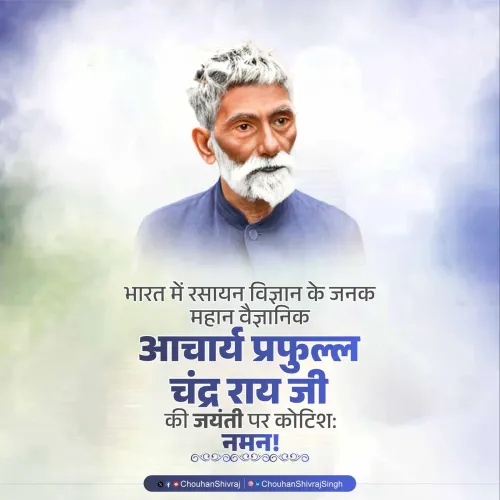
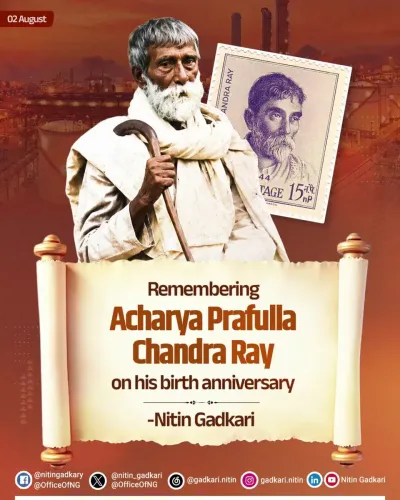
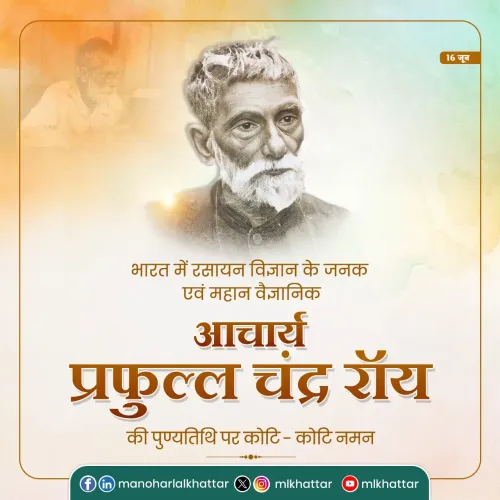
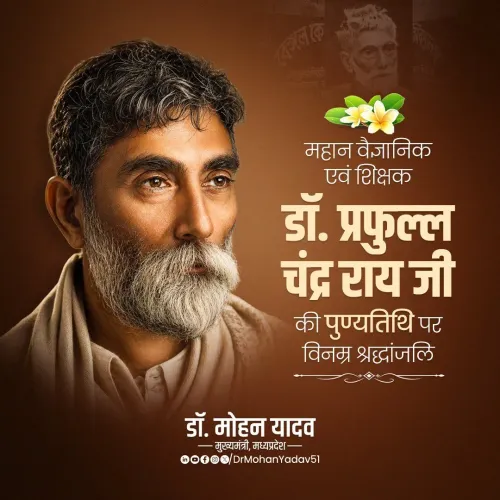
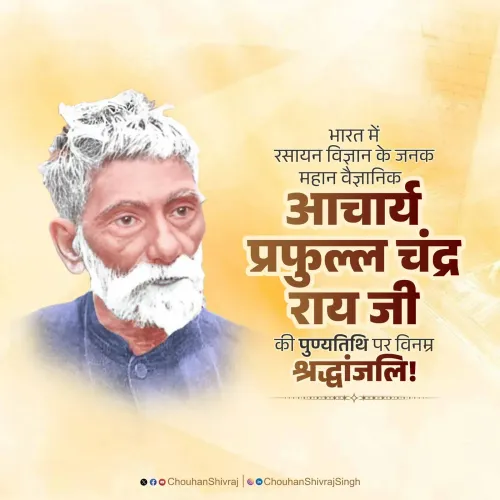
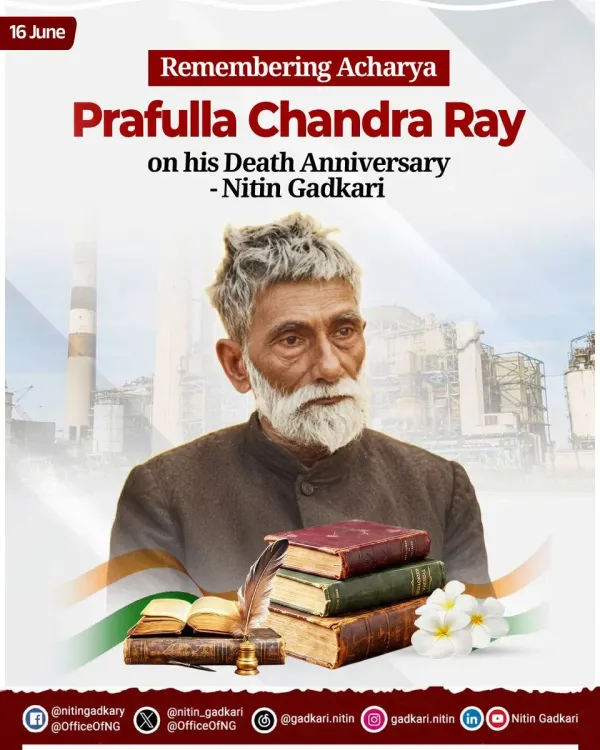
Union Road Transport and Highways Minister Nitin Gadkari on Tuesday, June 16, 2026, paid tribute to Acharya Prafulla Chandra Ray on his death anniversary, calling him 'the father of chemical science in India' and honouring his foundational role in building the country's first modern research school in chemistry.
Context
Acharya Prafulla Chandra Ray (1861–1944) is widely regarded as the pioneer of modern chemistry in India. A scientist, educator, and nationalist, he dedicated his life to building indigenous scientific capability at a time when India remained under colonial rule. Gadkari's post noted that Ray's 'contribution in the field of Chemistry and his efforts in establishment of the first modern Indian research school in chemistry will always be remembered.'
Ray is best known for his discovery of mercurous nitrite in 1896 and for founding the Bengal Chemical and Pharmaceutical Works, one of India's earliest indigenously owned pharmaceutical and chemical enterprises. His work laid the groundwork for organised chemical research and manufacturing in the subcontinent.
Policy Backdrop
Indian political leaders across party lines have a long tradition of commemorating pre-independence scientists to reinforce the country's deep-rooted engagement with science and innovation. These tributes carry symbolic weight in a national discourse that increasingly emphasises indigenous scientific achievement, research capacity, and self-reliance in technology and manufacturing.
Ray's legacy is particularly resonant given India's contemporary push to strengthen domestic pharmaceutical production and chemical research infrastructure. The Bengal Chemical and Pharmaceutical Works he established in Kolkata remains a reference point in discussions about the origins of India's pharmaceutical sector.
Stakeholders and Impact
The tribute is significant to India's scientific community, chemistry researchers, and academic institutions that trace their intellectual lineage to the school of thought Ray cultivated in the late 19th and early 20th centuries. His students went on to populate universities and research bodies across the country.
For the broader public, commemorations such as this serve as reminders of the contributions made by figures who are often overshadowed by political leaders in popular historical memory. Ray's story — of building world-class science with limited resources under colonial constraints — continues to inspire educators and policymakers alike.
What's Next
Tributes to scientists such as Acharya Prafulla Chandra Ray often coincide with or precede announcements related to science education, research fellowships, or institutional commemorations. India's national science bodies periodically name awards, chairs, and fellowships after such pioneers. Whether this tribute leads to any formal institutional announcement remains to be seen, but it adds to a pattern of renewed public attention to India's pre-independence scientific heritage.
Point of View
A senior BJP leader signals alignment with the broader 'Atmanirbhar Bharat' narrative, which draws rhetorical strength from India's own history of self-reliant innovation. Ray's founding of the Bengal Chemical and Pharmaceutical Works makes him a particularly apt symbol at a time when domestic pharmaceutical and chemical manufacturing are policy priorities. Such commemorations, while ceremonial in form, carry real discursive weight in shaping how India's scientific heritage is remembered and invoked in contemporary policymaking.
NationPress
15 Sept 2026
Frequently Asked Questions
Who is Acharya Prafulla Chandra Ray?
Acharya Prafulla Chandra Ray (1861–1944) was an Indian chemist widely regarded as the father of chemical science in India. He founded the Bengal Chemical and Pharmaceutical Works and established the first modern Indian research school in chemistry.
Why is Nitin Gadkari remembering Prafulla Chandra Ray?
Nitin Gadkari posted a tribute on June 16, 2026, to mark the death anniversary of Acharya Prafulla Chandra Ray, honouring his contributions to chemistry and science education in India.
What did Prafulla Chandra Ray discover?
Prafulla Chandra Ray is credited with the discovery of mercurous nitrite in 1896, a significant milestone in Indian scientific research.
What is Bengal Chemical and Pharmaceutical Works?
Bengal Chemical and Pharmaceutical Works is one of India's earliest indigenously owned pharmaceutical and chemical enterprises, founded by Acharya Prafulla Chandra Ray in Kolkata in the late 19th century.
When did Acharya Prafulla Chandra Ray die?
Acharya Prafulla Chandra Ray passed away in 1944. His death anniversary is observed on June 16 each year.