CM Mohan Yadav Attends PM's ₹2,400 Cr Jobs Incentive Event
Synopsis
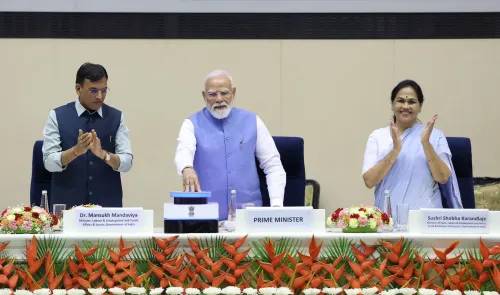
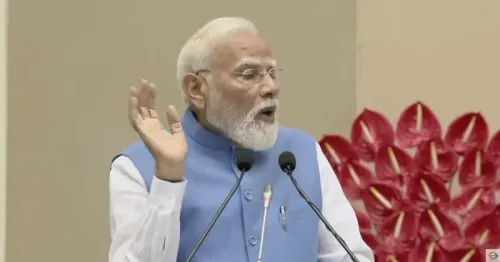
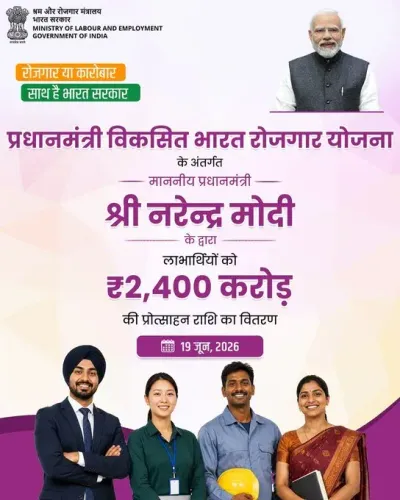
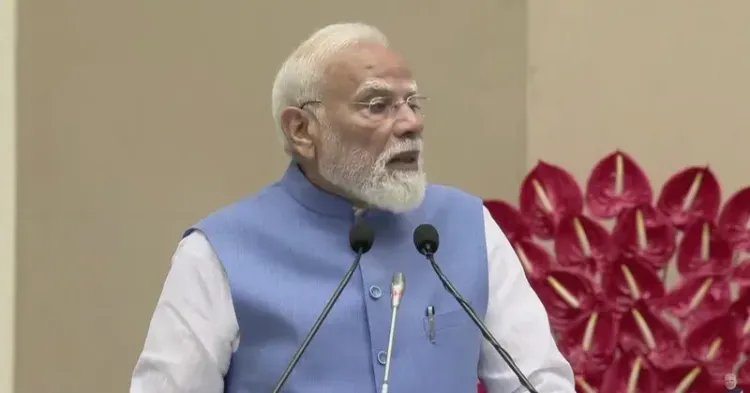
Prime Minister Narendra Modi disbursed ₹2,400 crore in employer incentives under the PM-Viksit Bharat Rozgar Yojana in New Delhi on 19 June 2026. Madhya Pradesh Chief Minister Dr. Mohan Yadav participated in the national event, signalling the state's alignment with the Centre's push to expand formal employment across India.
Key Takeaways
₹2,400 crore in employer incentives were distributed by Prime Minister Narendra Modi under the PM-Viksit Bharat Rozgar Yojana in New Delhi on 19 June 2026 .
Madhya Pradesh Chief Minister Dr.
Mohan Yadav publicly broadcast and participated in the live event, reflecting state-level ownership of the central scheme.
The scheme targets private-sector employers who add workers to formal payrolls, offering direct financial incentives to reduce the cost of compliance.
The programme is part of India's Viksit Bharat vision to develop the country into a developed economy by 2047 .
It follows the lineage of the PM Rojgar Protsahan Yojana (2016) and complements Skill India (2015) in addressing formal employment creation.
State-level utilisation reports from Madhya Pradesh and future Union Budget revisions will be key indicators of the scheme's scale and reach.
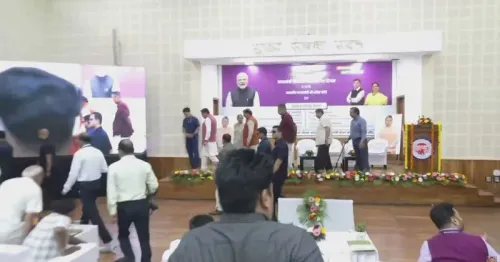
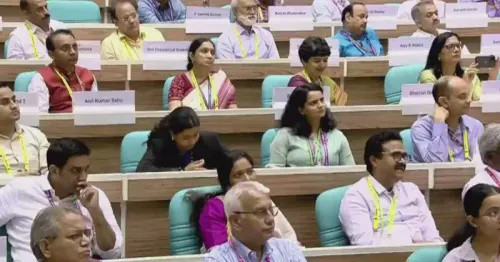
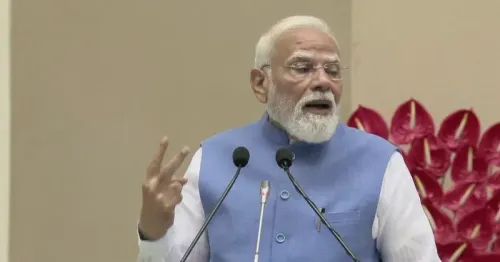
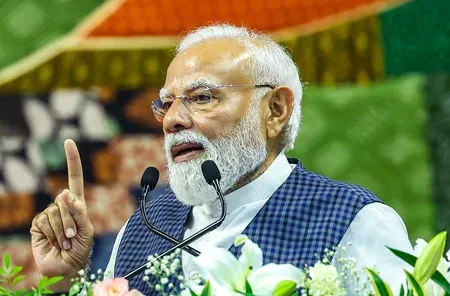
Madhya Pradesh Chief Minister Dr. Mohan Yadav on Friday, 19 June 2026, shared a live broadcast of Prime Minister Narendra Modi's distribution of ₹2,400 crore in incentives under the 'PM-Viksit Bharat Rozgar Yojana' (PM-Developed India Employment Scheme), held in New Delhi. The Chief Minister's post flagged his participation in the national event, signalling Madhya Pradesh's active alignment with the Centre's employment-generation push.
Context
Prime Minister Modi convened the event in New Delhi to disburse ₹2,400 crore in employer incentives under the 'PM-Viksit Bharat Rozgar Yojana', a scheme designed to encourage private-sector employers to create new, formal jobs. CM Dr. Mohan Yadav broadcast the live stream to his followers, underscoring the state government's stake in the programme's outcomes for Madhya Pradesh. The scheme sits within the broader Viksit Bharat vision — the central government's framework to position India as a developed economy by 2047.
Policy Backdrop
India has layered successive employment-incentive programmes over the past decade, beginning with the PM Rojgar Protsahan Yojana launched in 2016, which subsidised employer contributions to provident fund accounts for new hires. The present scheme extends that lineage by channelling direct financial incentives to employers who add workers to formal payrolls, complementing parallel initiatives such as Skill India (launched 2015) that focus on workforce readiness. The combined approach reflects the government's dual strategy: supply-side skilling and demand-side incentivisation to close India's persistent formal-employment gap.
The ₹2,400 crore disbursement represents a significant single-day outflow under the scheme, targeting private employers across sectors including manufacturing and services. Federal coordination — with state chief ministers publicly amplifying central events — has become a consistent feature of how flagship economic programmes are rolled out, ensuring political ownership at both national and state levels.
Stakeholders and Impact
The primary beneficiaries of the incentive distribution are private-sector employers who have registered new employees under formal social-security frameworks, and the job-seeking youth those employers hire. For Madhya Pradesh — a large state with a substantial agrarian workforce seeking non-farm employment — the scheme's incentives could accelerate industrial hiring in urban and semi-urban centres. CM Dr. Mohan Yadav's visible participation signals the state's intent to maximise its share of central allocations and encourage local employers to enrol.
Small and medium enterprises, which historically resist formal employment contracts due to compliance costs, are a key target group. The direct incentive model is intended to offset those costs and nudge employers toward regularising the workforce.
What's Next
Attention will now turn to state-level utilisation data, particularly how many employers and workers in Madhya Pradesh are enrolled under the scheme and how quickly disbursed funds translate into verified new jobs. Any revision to incentive norms in the next Union Budget will indicate whether the government scales up the programme based on early uptake. The event also sets a benchmark: a ₹2,400 crore single-day incentive release will be measured against employment numbers in quarterly labour-force surveys in the months ahead.
Point of View
400 crore single-day incentive release under the PM-Viksit Bharat Rozgar Yojana is the latest escalation in the BJP government's effort to demonstrate tangible employment outcomes ahead of state and national electoral cycles. Chief Minister Dr. Mohan Yadav's decision to amplify the event publicly is a calculated act of federal alignment, ensuring Madhya Pradesh is seen as a proactive partner rather than a passive recipient of central funds. The scheme's architecture — rewarding employers rather than workers directly — reflects a supply-chain theory of job creation that has drawn both support and scepticism from labour economists. The real test will come when independent labour-force data either validates or challenges the employment numbers generated by this disbursement.
NationPress
20 Sept 2026
Frequently Asked Questions
What is the PM-Viksit Bharat Rozgar Yojana?
The PM-Viksit Bharat Rozgar Yojana is a central government employment scheme that provides direct financial incentives to private-sector employers who add new workers to formal payrolls, aiming to expand organised employment in India as part of the Viksit Bharat 2047 vision.
How much money was distributed under the scheme on 19 June 2026?
Prime Minister Narendra Modi distributed ₹2,400 crore in incentives to employers under the PM-Viksit Bharat Rozgar Yojana at an event held in New Delhi on 19 June 2026.
Why did Madhya Pradesh CM Mohan Yadav attend the PM's employment event?
CM Dr. Mohan Yadav participated in and live-streamed the event to signal Madhya Pradesh's alignment with the central government's employment-generation agenda and to encourage state-based employers to enrol in the scheme.
How is the PM-Viksit Bharat Rozgar Yojana different from earlier job schemes?
It builds on the PM Rojgar Protsahan Yojana (2016), which subsidised employer provident fund contributions, by offering direct financial incentives to employers for formal hiring, complementing skill-development efforts under Skill India (2015).
Who benefits from the PM-Viksit Bharat Rozgar Yojana?
Private-sector employers who formally register new employees benefit through direct incentive payments, while job-seeking youth gain access to formal employment with associated social-security protections.