Dr. Jitendra Singh: PM Modi to Disburse ₹2,400 Cr Employment Push
Synopsis
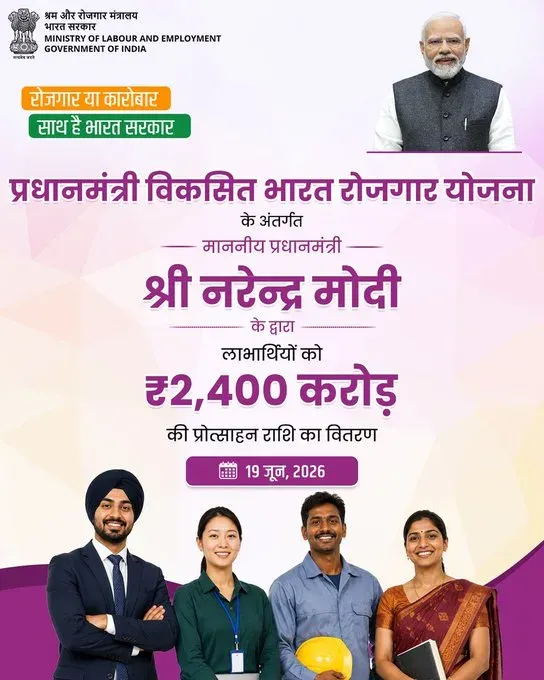
Prime Minister Narendra Modi will distribute ₹2,400 crore to beneficiaries under the PM Viksit Bharat Rozgar Yojana on 19 June 2026. Union Minister Dr. Jitendra Singh announced the disbursement on X, framing it as a major step in India's formal employment push under the Viksit Bharat 2047 development vision.
Key Takeaways
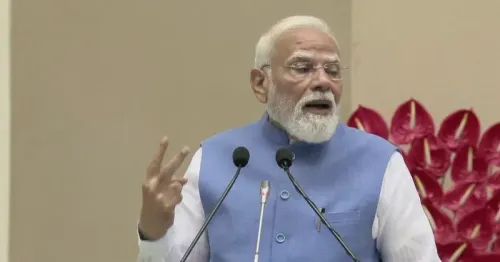
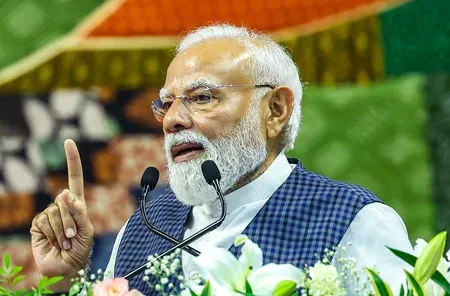
PM Narendra Modi will personally preside over the distribution of ₹2,400 crore in employment incentives on 19 June 2026 .
The disbursement is under the Pradhan Mantri Viksit Bharat Rozgar Yojana , an employment-linked incentive scheme targeting formal job creation.
The announcement was made by Union Minister Dr.
Jitendra Singh via his official X account.
The scheme is part of the government's broader Viksit Bharat 2047 framework linking job creation to India's developed-economy goals.
India's employment incentive architecture is built on EPFO integration and Aadhaar-linked Direct Benefit Transfers , a model in use since the 2016 Union Budget .
Key stakeholders include young formal-sector workers and private employers , especially small and medium enterprises.
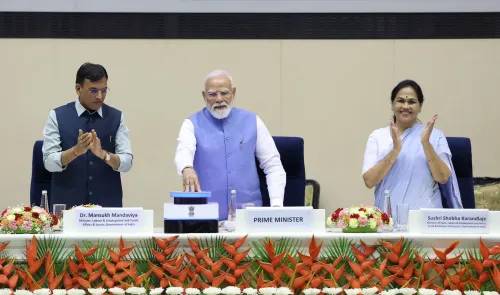
Union Science and Technology Minister Dr. Jitendra Singh announced on 19 June 2026 that Prime Minister Narendra Modi will distribute an incentive amount of ₹2,400 crore to beneficiaries under the Pradhan Mantri Viksit Bharat Rozgar Yojana on the same day, marking a significant push to accelerate formal employment generation across India.
Context
Dr. Jitendra Singh shared the announcement on X, writing in Hindi: 'Rozgar srijan ko nayi gati dete hue' — 'Giving new momentum to employment creation' — before noting that PM Modi would personally preside over the disbursement event. The outreach targets beneficiaries enrolled under the scheme, with the incentive routed as a direct financial transfer. The post was accompanied by an image and carried the hashtag #PMViksitBharatRozgarYojana.
The announcement frames the disbursement as part of the government's broader 'Viksit Bharat' — or 'Developed India' — vision, which sets ambitious economic and social development targets aligned with 2047, the centenary of Indian independence.
Policy Backdrop
India's central government has a long track record of employer-linked employment incentive schemes. The Pradhan Mantri Rojgar Protsahan Yojana (PMRPY), announced in the 2016 Union Budget, pioneered the model of reimbursing employers' contributions to the Employees' Provident Fund Organisation (EPFO) for newly enrolled workers, thereby incentivising formal hiring. The current scheme appears to extend that architecture under the 'Viksit Bharat' umbrella.
Direct Benefit Transfers (DBT) linked to Aadhaar and EPFO payroll data have increasingly become the delivery mechanism of choice for such outlays, reducing leakage and enabling real-time tracking of beneficiary counts. Successive Union Budgets have periodically revised and expanded these employment-linked incentive pools based on EPFO payroll additions.
Stakeholders and Impact
The primary beneficiaries of the scheme are young workers entering the formal workforce and the private-sector employers who register them under EPFO. By subsidising the cost of formal employment, the scheme is designed to nudge businesses — particularly small and medium enterprises — away from informal hiring arrangements.
A disbursement of ₹2,400 crore in a single tranche signals the scale of enrolment under the programme and underscores the government's intent to use fiscal incentives as a lever for formalisation. Youth unemployment and the quality of job creation remain closely watched indicators ahead of future electoral cycles and economic assessments.
What's Next
Analysts and policymakers will watch whether the disbursement event is accompanied by updated beneficiary data, EPFO enrolment figures, or a revised outlay projection in keeping with the scheme's stated goals. The next Union Budget and the annual Economic Survey are likely to carry a dedicated chapter on employment-linked incentive utilisation, offering a fuller picture of the scheme's reach. Parliamentary questions on scheme coverage and fund utilisation are also expected to follow such high-profile distribution events.
With PM Modi personally presiding over the handover, the government is clearly positioning employment generation as a centrepiece of its Viksit Bharat 2047 narrative heading into the second half of 2026.
Point of View
400 crore disbursement under the PM Viksit Bharat Rozgar Yojana is the latest instalment in the BJP-led government's sustained effort to make formal employment creation a visible, quantifiable policy deliverable. By having PM Modi personally preside over the handover, the government is embedding job-creation optics into the Viksit Bharat 2047 narrative — a framework designed to define the party's long-arc governance identity. The choice of Dr. Jitendra Singh, a minister whose portfolio spans science and the PMO, to amplify the announcement signals a whole-of-government communications push around employment data. Scrutiny will inevitably follow on whether EPFO enrolment numbers and on-ground formalisation rates keep pace with the scale of financial outlays being publicised.
NationPress
18 Sept 2026
Frequently Asked Questions
What is the PM Viksit Bharat Rozgar Yojana?
The PM Viksit Bharat Rozgar Yojana is a central government employment incentive scheme that provides financial incentives to employers and workers to promote formal job creation, situated within the broader Viksit Bharat 2047 development framework.
How much money will PM Modi distribute on 19 June 2026?
PM Modi will distribute ₹2,400 crore in incentive amounts to beneficiaries under the PM Viksit Bharat Rozgar Yojana on 19 June 2026 .
Who announced the PM Viksit Bharat Rozgar Yojana disbursement?
Union Minister of State (Independent Charge) for Science and Technology Dr. Jitendra Singh announced the disbursement on his official X account on 19 June 2026 .
What is the Viksit Bharat 2047 vision?
Viksit Bharat 2047 is the Indian government's overarching development goal to make India a developed economy by 2047 , the centenary of independence, with employment generation as one of its key pillars.
How does India's employment incentive scheme work?
India's employment incentive schemes, starting with the Pradhan Mantri Rojgar Protsahan Yojana launched in 2016 , reimburse employers' EPFO contributions for new hires, with disbursements now routed via Aadhaar-linked Direct Benefit Transfers to reduce leakage and improve tracking.