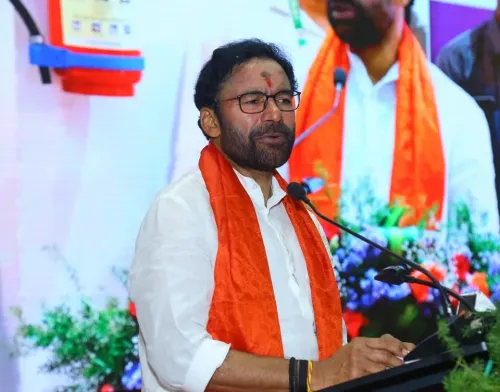
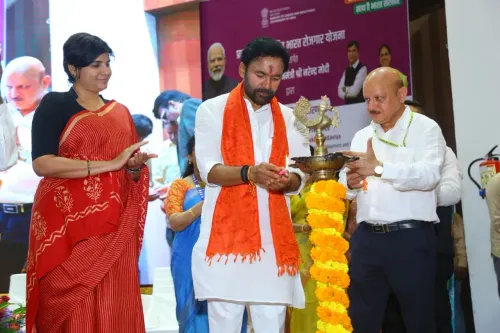
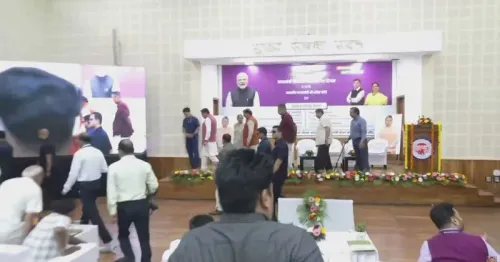
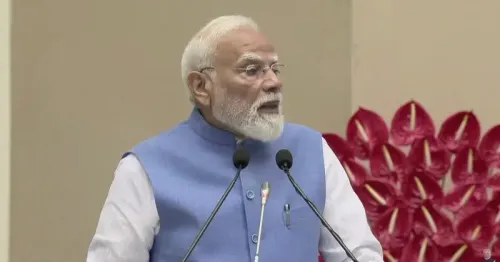
Kishan Reddy shares live PM-Viksit Bharat Rozgar Yojana disbursal
Synopsis
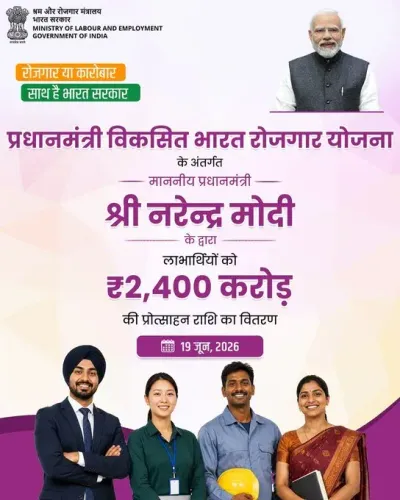
Union Minister G. Kishan Reddy shared a live broadcast on June 19, 2026, of PM Narendra Modi distributing ₹2,400 crore in incentives under the PM-Viksit Bharat Rozgar Yojana, underscoring the government's push to expand formal employment under the Viksit Bharat 2047 vision.
Key Takeaways
Kishan Reddy shared a live broadcast of PM Modi's PM-Viksit Bharat Rozgar Yojana incentive event on June 19, 2026 .
PM Narendra Modi presided over the distribution of ₹2,400 crore in employment incentives.
The scheme continues the government's policy of using direct fiscal incentives to expand formal, EPFO-registered employment .
The initiative is linked to the Viksit Bharat 2047 vision of building a developed India by the centenary of Independence.
Formal sector employers and new job seekers are the primary beneficiaries of the incentive structure.
Quarterly EPFO payroll data will be a key indicator of whether the disbursal translates into sustained formal job creation.
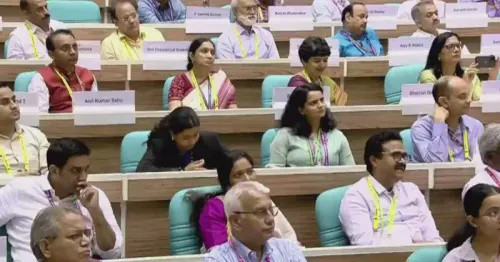
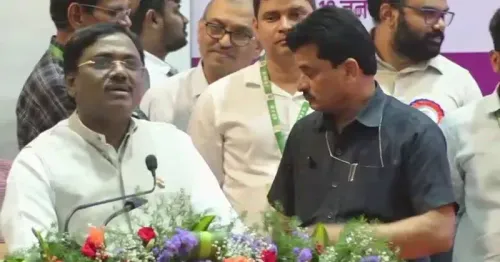
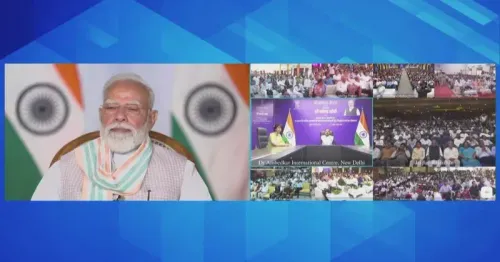
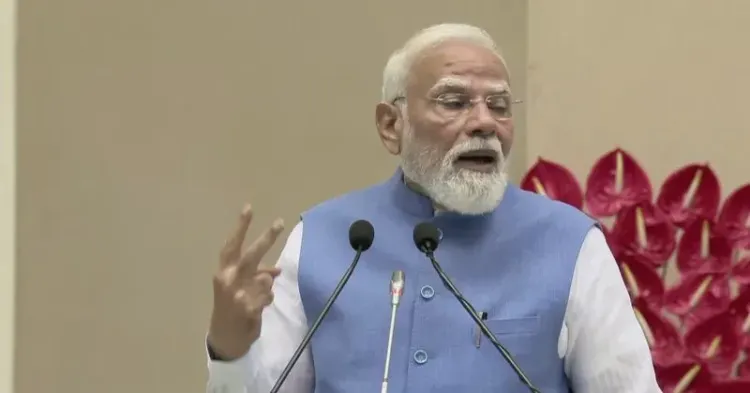
Union Coal and Mines Minister G. Kishan Reddy on Friday, June 19, 2026, shared a live broadcast of Prime Minister Narendra Modi distributing ₹2,400 crore in incentives under the PM-Viksit Bharat Rozgar Yojana, a central government scheme aimed at expanding formal employment across India.
Context
Reddy posted the link to the live stream on X, writing: 'Live: पीएम श्री @narendramodi द्वारा PM-विकसित भारत रोजगार योजना के तहत ₹2,400 करोड़ का इंसेंटिव वितरण' — ('Live: Incentive distribution of ₹2,400 crore under the PM-Viksit Bharat Rozgar Yojana by PM Shri Narendra Modi'). The post directed followers to a live broadcast of the event, indicating a real-time, high-visibility rollout of the scheme's benefits.
As BJP Telangana state president, Reddy regularly amplifies central government welfare and employment initiatives, particularly those tied to the broader Viksit Bharat 2047 vision — the government's long-term development blueprint targeting a developed India by the centenary of Independence.
Policy Backdrop
The PM-Viksit Bharat Rozgar Yojana sits within a lineage of employment-linked incentive schemes. The government's earlier PM Rojgar Protsahan Yojana, launched in 2016, incentivised employers by subsidising their Employees' Provident Fund Organisation (EPFO) contributions for new hires — a model designed to nudge businesses toward formal, registered employment.
The Atmanirbhar Bharat stimulus package of 2020 extended similar logic, offering direct fiscal support to employers who retained or added workers during an economic downturn. The current scheme appears to continue this pattern, using direct incentive disbursals to draw more workers into the formal economy and expand social security coverage.
The ₹2,400 crore disbursal is positioned as a concrete fiscal commitment, with PM Modi personally presiding over the distribution — a format the government has used for other high-profile scheme rollouts to signal scale and political ownership.
Stakeholders and Impact
The primary beneficiaries of employment-linked incentive schemes are formal sector employers — particularly small and medium enterprises — and new job seekers entering the organised workforce. Incentives of this nature are structured to reduce the cost of hiring, making formal employment more attractive for businesses that might otherwise rely on informal labour.
For workers, formalisation means access to EPFO-linked social security benefits including provident fund, insurance, and pension coverage. The scale of the ₹2,400 crore outlay suggests a significant number of beneficiary employers or employees are covered under this tranche, though the precise beneficiary count was not specified in the post.
What's Next
Parliamentary questions on scheme utilisation rates and independent assessments of employment generation are likely to follow a disbursal of this magnitude. Quarterly EPFO payroll data — a closely watched indicator of formal job creation — will be a key metric to gauge whether the incentive translates into sustained employment growth.
The government's continued deployment of direct-benefit, high-visibility disbursals signals that employment generation will remain a central political and policy priority ahead of upcoming state and national electoral cycles.
Point of View
400 crore disbursal under the PM-Viksit Bharat Rozgar Yojana is the latest in a decade-long arc of employment-linked fiscal incentives, stretching from the 2016 PM Rojgar Protsahan Yojana through the Atmanirbhar Bharat package. Having PM Modi personally preside over the event — and a senior minister amplify it live — reflects the government's deliberate strategy of making employment generation a high-visibility political deliverable. The scale of the outlay will invite scrutiny: independent labour economists and opposition benches are likely to press for granular data on actual jobs created versus incentives claimed. How the EPFO payroll numbers respond in the subsequent quarters will determine whether this disbursal is seen as a structural shift or a political signalling exercise.
NationPress
18 Sept 2026
Frequently Asked Questions
What is the PM-Viksit Bharat Rozgar Yojana?
The PM-Viksit Bharat Rozgar Yojana is a central government employment scheme under which fiscal incentives are distributed to formal sector employers to encourage hiring and expand social security coverage for workers.
How much money was distributed under PM-Viksit Bharat Rozgar Yojana on June 19, 2026?
Prime Minister Narendra Modi distributed ₹2,400 crore in incentives under the PM-Viksit Bharat Rozgar Yojana on June 19, 2026.
Who is G. Kishan Reddy?
G. Kishan Reddy is India's Union Minister of Coal and Mines and the BJP's Telangana state president. He frequently communicates central government schemes and policies on social media.
How does the PM-Viksit Bharat Rozgar Yojana relate to earlier employment schemes?
The scheme follows a policy lineage that includes the PM Rojgar Protsahan Yojana (2016), which subsidised EPFO contributions for new hires, and the Atmanirbhar Bharat (2020) employment incentives — all designed to shift workers from informal to formal employment.
What is the Viksit Bharat 2047 vision?
Viksit Bharat 2047 is the Indian government's long-term development blueprint that aims to make India a fully developed nation by 2047, the centenary of Independence. Employment generation and formalisation of labour are key pillars of this vision.