CM Dhami joins PM Modi's ₹2,400 Cr job incentive rollout
Synopsis
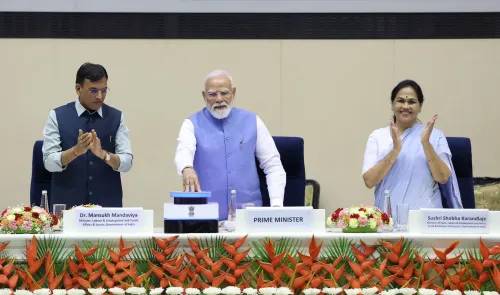
Prime Minister Narendra Modi distributed ₹2,400 crore in employer incentives under the PM Viksit Bharat Rozgar Yojana on 19 June 2026. Uttarakhand Chief Minister Pushkar Singh Dhami participated in the live national event, signalling the state's alignment with the central government's formal employment drive under the Viksit Bharat 2047 framework.
Key Takeaways
₹2,400 crore in incentives was distributed by Prime Minister Narendra Modi under the PM Viksit Bharat Rozgar Yojana on 19 June 2026 .
Uttarakhand Chief Minister Pushkar Singh Dhami joined the live national event, amplifying the rollout at the state level.
The scheme offers direct fiscal incentives to employers — especially MSMEs — for each new formal hire added to their payrolls.
The initiative is part of the broader Viksit Bharat 2047 vision, which targets India's development goals by the centenary of independence.
Earlier employment-linked incentive programmes such as the Pradhan Mantri Rojgar Protsahan Yojana (2016) laid the policy groundwork for this scheme.
State-wise utilisation data and upcoming Union Budget discussions are expected to shed light on the scheme's on-ground impact.
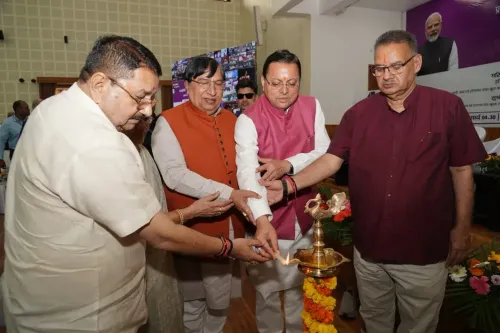
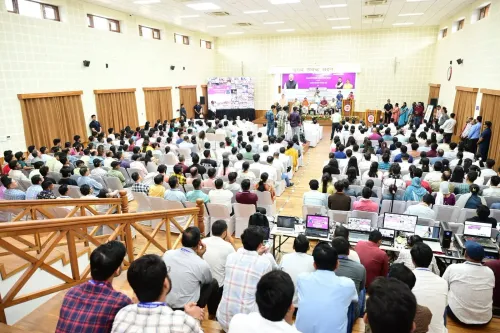
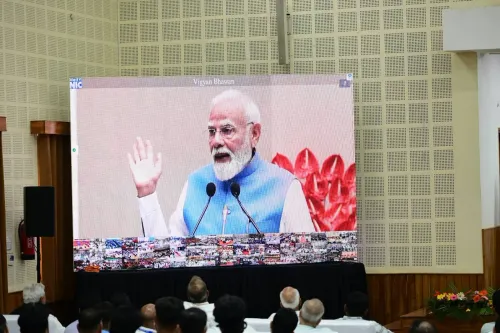
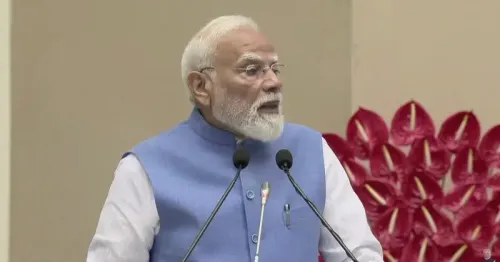
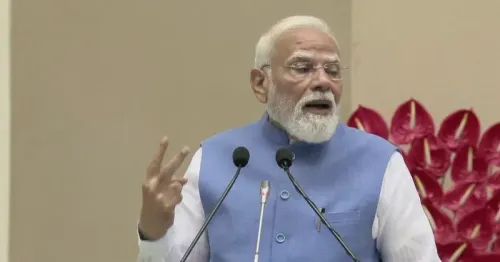
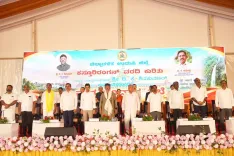
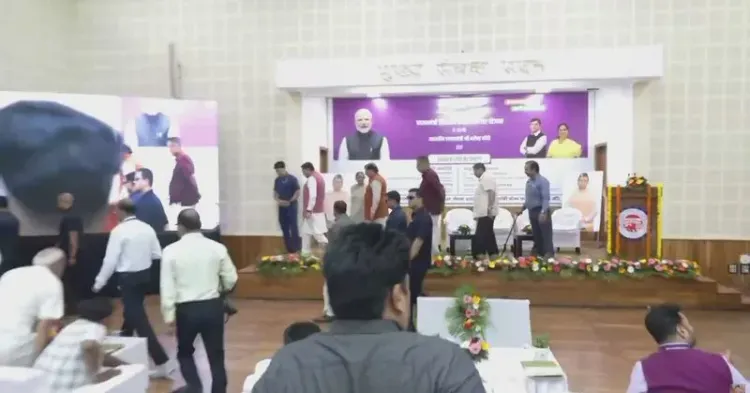
Uttarakhand Chief Minister Pushkar Singh Dhami on Friday, 19 June 2026, joined a live national event in which Prime Minister Narendra Modi distributed ₹2,400 crore in incentives under the PM Viksit Bharat Rozgar Yojana, a central government scheme aimed at boosting formal employment across India.
Context
Dhami shared the live broadcast of the event on X, describing it as Prime Minister Modi distributing incentives worth '₹2400 करोड़' (₹2,400 crore) under the PM Viksit Bharat Rozgar Yojana. The event marks one of the larger single-day incentive disbursements under the scheme, which is designed to encourage employers to expand their formal workforce by offering direct financial incentives linked to new hires.
State chief ministers attending or amplifying such events has become a standard feature of how the BJP-led central government coordinates rollout messaging with state governments. Dhami's participation signals Uttarakhand's active alignment with the national employment push.
Policy Backdrop
The PM Viksit Bharat Rozgar Yojana sits within a broader ecosystem of employment-linked incentive programmes that the central government has developed over the past decade. Earlier schemes such as the Pradhan Mantri Rojgar Protsahan Yojana, launched in 2016, reimbursed employers' contributions to the Employees' Provident Fund for each new hire, reducing the cost of formalising workers.
The current scheme draws on the same fiscal logic but is positioned explicitly under the Viksit Bharat 2047 vision, which the government first articulated in 2023 as a framework for India's development goals up to the centenary of independence. Employment generation — particularly in the formal sector — has been a recurring centrepiece of that vision, alongside manufacturing growth under Make in India and skilling under the Skill India Mission.
Stakeholders and Impact
The primary beneficiaries of the incentive disbursement are employers — particularly MSMEs and manufacturing units — who receive direct payouts for each new formal employee added to their payrolls. Workers benefit indirectly through expanded access to formal employment, which comes with social-security protections including provident fund coverage.
For Uttarakhand, a state that has actively courted industrial investment and relies significantly on tourism and hydropower for employment, participation in national employment schemes adds a layer of fiscal support for businesses operating in the state. Youth and first-time job seekers are among the groups the scheme is intended to bring into the formal economy.
What's Next
Attention will now turn to state-wise utilisation data — how much of the ₹2,400 crore flows to employers in each state and how many net new formal jobs are generated as a result. Parliamentary employment committees and the next Union Budget are likely venues where the scheme's performance will be scrutinised.
For CM Dhami, the event also represents an opportunity to attract employers to Uttarakhand by highlighting the availability of central incentives, potentially reinforcing the state's pitch to investors ahead of future industrial summits.
Point of View
400 crore disbursement under PM Viksit Bharat Rozgar Yojana is the latest in a decade-long pattern of employment-linked fiscal incentives that the BJP-led government has used to push formal job creation without direct public-sector hiring. By tying the scheme to the Viksit Bharat 2047 brand, the government is reinforcing a long-horizon narrative around economic transformation ahead of the 2047 centenary milestone. CM Dhami's visible participation is a textbook instance of how state governments amplify central schemes to signal governance alignment and attract investment. The real test will be whether utilisation data shows genuine net job formalisation or merely incentivises paperwork for hires that would have happened anyway.
NationPress
19 Sept 2026
Frequently Asked Questions
What is PM Viksit Bharat Rozgar Yojana?
PM Viksit Bharat Rozgar Yojana is a central government employment scheme that provides direct financial incentives to employers for each new formal employee they add to their payroll, aimed at expanding India's formal workforce under the Viksit Bharat 2047 vision.
How much money was distributed under PM Viksit Bharat Rozgar Yojana on 19 June 2026?
Prime Minister Narendra Modi distributed ₹2,400 crore in incentives under the scheme on 19 June 2026.
Who benefits from PM Viksit Bharat Rozgar Yojana?
Employers — particularly MSMEs and manufacturing units — receive direct payouts for hiring new formal workers. Employees benefit indirectly through access to formal employment and social-security protections such as provident fund coverage.
What is Viksit Bharat 2047?
Viksit Bharat 2047 is the BJP-led central government's long-term development framework, first articulated in 2023, that outlines India's economic and social goals up to the centenary of independence in 2047, with formal employment generation as a key pillar.
Why did Uttarakhand CM Pushkar Singh Dhami attend the PM Viksit Bharat Rozgar Yojana event?
CM Dhami's participation signals Uttarakhand's alignment with the central government's employment push and helps the state highlight available incentives to attract businesses and investors.