Gadkari hails PM Modi's ₹2,400 Cr jobs scheme payout
Synopsis
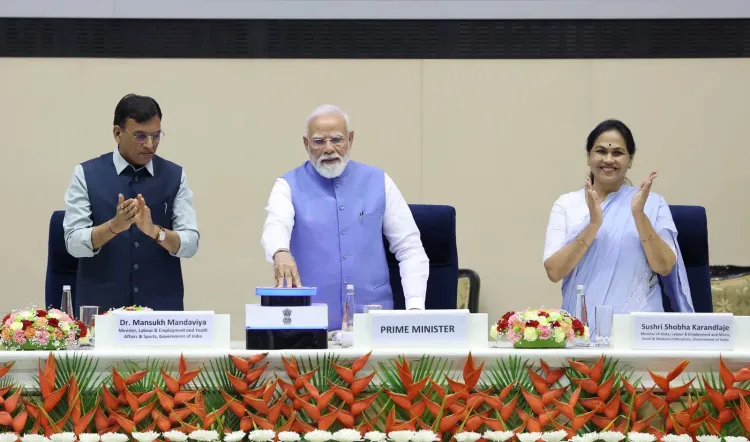
Prime Minister Narendra Modi distributed ₹2,400 crore in incentives to beneficiaries under the PM Viksit Bharat Rozgar Yojana on 20 June 2026. The scheme offers first-time formal employees up to ₹15,000 and employers up to ₹3,000 per month per additional hire to formalise India's workforce.
Key Takeaways
Prime Minister Narendra Modi distributed ₹2,400 crore in incentives to PM Viksit Bharat Rozgar Yojana beneficiaries on 20 June 2026 .
First-time formal employees receive an incentive of up to ₹15,000 under the scheme.
Employers generating additional formal jobs receive up to ₹3,000 per month per new hire.
The scheme continues a policy lineage dating to the Pradhan Mantri Rojgar Protsahan Yojana of 2016 , which used EPFO subsidies to incentivise formal hiring.
Union Minister Nitin Gadkari highlighted the disbursement on X, underscoring the scheme's role in making youth self-reliant through formal employment.
EPFO quarterly payroll data and the next Union Budget allocation will be key indicators of the scheme's scale and reach.
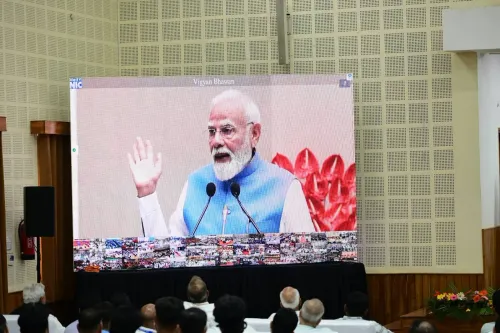
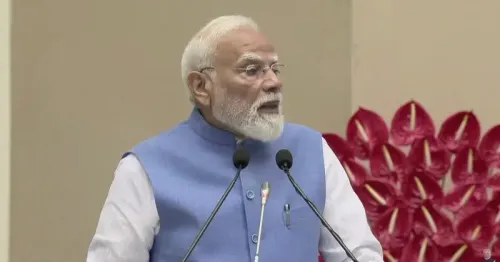
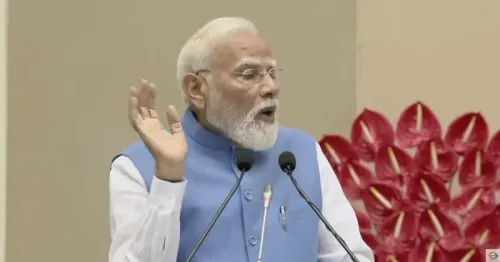
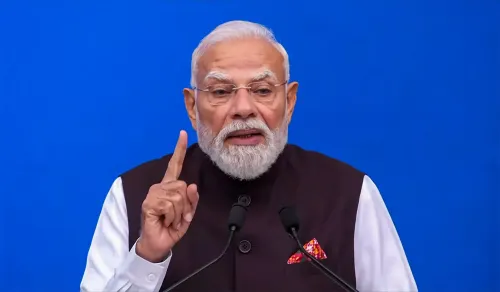
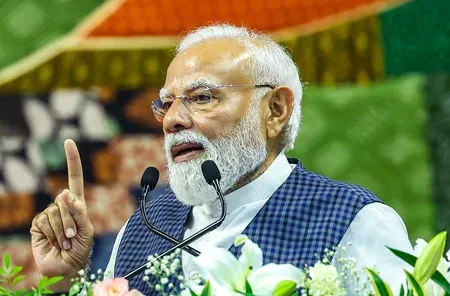
Union Road Transport and Highways Minister Nitin Gadkari on Saturday, 20 June 2026, highlighted Prime Minister Narendra Modi's disbursement of ₹2,400 crore in incentives to beneficiaries under the Pradhan Mantri Viksit Bharat Rozgar Yojana, a central scheme designed to boost formal employment creation across India.
Context
Gadkari shared the development on X, noting that Prime Minister Modi personally distributed the incentive amount to scheme beneficiaries. Translating his post, Gadkari wrote: 'Pradhan Mantri Viksit Bharat Rozgar Yojana ke antargat aaj Pradhan Mantri Shri Narendra Modi ji ne laabharthiyon ko ₹2,400 crore ki protsahan rashi vitarit ki' — 'Under the Pradhan Mantri Viksit Bharat Rozgar Yojana, Prime Minister Narendra Modi today distributed incentive amounts of ₹2,400 crore to beneficiaries.'
The scheme targets youth entering formal employment for the first time, offering them an incentive of up to ₹15,000. Employers who generate additional formal jobs receive up to ₹3,000 per month for each new hire, creating a dual-sided push to formalise India's workforce.
Policy Backdrop
The Pradhan Mantri Viksit Bharat Rozgar Yojana sits within a longer arc of central government efforts to shift workers from informal to formal employment. An earlier iteration, the Pradhan Mantri Rojgar Protsahan Yojana, launched in 2016, reimbursed employers' contributions to the Employees' Pension Scheme to incentivise new formal hiring.
Successive governments have used Employees' Provident Fund Organisation (EPFO)-linked subsidies as the primary instrument to formalise workforce participation, expand social security coverage, and widen the tax base. The current scheme continues that lineage by directing incentives directly to first-time formal employees alongside employer-side support.
Labour code reforms enacted in recent years have further sought to simplify compliance for employers, making EPFO enrolment more accessible for smaller firms that traditionally operated outside the formal sector.
Stakeholders and Impact
The scheme's dual-beneficiary design means both first-time formal sector employees and employers expanding their workforce stand to gain directly. For young job-seekers, the one-time incentive of up to ₹15,000 provides a meaningful financial cushion in the early months of formal employment, while encouraging EPFO registration.
On the employer side, the ₹3,000 per month per additional hire reduces the marginal cost of formalising new workers, particularly for micro, small and medium enterprises (MSMEs) that have historically been reluctant to take on the compliance burden of formal employment contracts. Gadkari's ministry, which oversees large-scale road construction and highway development, has a direct stake in formalising the construction labour force — one of India's largest informal employment segments.
What's Next
Quarterly EPFO payroll data releases will serve as the primary indicator of whether the scheme is translating into measurable gains in formal job creation. Analysts will watch whether the ₹2,400 crore disbursement corresponds to a proportional uptick in new EPFO registrations in the months ahead.
Any supplementary allocation in the next Union Budget will signal the government's intent to scale the scheme further. With youth unemployment and workforce formalisation remaining central political and economic concerns, the scheme's performance is likely to feature prominently in the government's outreach ahead of future electoral cycles.
Point of View
With youth unemployment a persistent pressure point for the ruling dispensation. The dual-incentive architecture — rewarding both employee and employer — reflects the government's recognition that supply-side nudges alone cannot shift India's vast informal labour pool into the formal economy. Gadkari's involvement is notable given his ministry's direct interface with construction labour, one of the most informalised sectors in the country. The ₹2,400 crore disbursement figure, if borne out in EPFO data, would represent a meaningful injection into formal-sector onboarding and is likely to be cited as a governance deliverable in the run-up to budget season.
NationPress
19 Sept 2026
Frequently Asked Questions
What is PM Viksit Bharat Rozgar Yojana?
PM Viksit Bharat Rozgar Yojana is a central government scheme aimed at boosting formal employment by offering first-time formal sector employees an incentive of up to ₹15,000 and employers up to ₹3,000 per month for each additional hire they make.
How much did Modi distribute under the rozgar yojana in June 2026?
Prime Minister Narendra Modi distributed ₹2,400 crore in incentives to beneficiaries under the PM Viksit Bharat Rozgar Yojana on 20 June 2026, as highlighted by Union Minister Nitin Gadkari.
Who benefits from PM Viksit Bharat Rozgar Yojana?
The scheme benefits two groups: youth who are entering formal employment for the first time, who receive up to ₹15,000, and employers who create additional formal jobs, who receive up to ₹3,000 per month per new hire.
What is the difference between PM Viksit Bharat Rozgar Yojana and the older Pradhan Mantri Rojgar Protsahan Yojana?
The earlier Pradhan Mantri Rojgar Protsahan Yojana, launched in 2016, reimbursed employers' Employees' Pension Scheme contributions to incentivise formal hiring. PM Viksit Bharat Rozgar Yojana extends the approach by also providing direct incentives to first-time formal employees, making it a dual-sided scheme.
Why did Nitin Gadkari post about the employment scheme?
As a senior BJP leader and Union Minister, Gadkari regularly amplifies central government welfare and employment initiatives on social media. His ministry's work in road construction also gives him a direct stake in formalising large segments of India's construction workforce.