Kishan Reddy pitches PM-VBRY as India's jobs dividend engine
Synopsis
Union Minister G. Kishan Reddy championed PM-VBRY at a public address on 19 June 2026, citing a ₹99,446 crore outlay and a 3.5 crore job target. He framed the scheme as India's tool to convert its youth bulge into formal employment and economic growth.
Key Takeaways
Kishan Reddy , Union Minister of Coal and Mines, publicly advocated for PM-VBRY on 19 June 2026 .
The scheme carries a stated outlay of ₹99,446 crore and targets support for over 3.5 crore jobs .
PM-VBRY focuses on first-time employees, aiming to pull more workers into the formal economy.
The initiative is built on three pillars: 'Dignity for Labour, Certainty for Youth, and Growth for Employers.' The scheme is rooted in the employment-linked incentive approach introduced in the Union Budget 2024 .
State-level implementation and forthcoming Economic Survey data will be the key indicators of real-world impact.
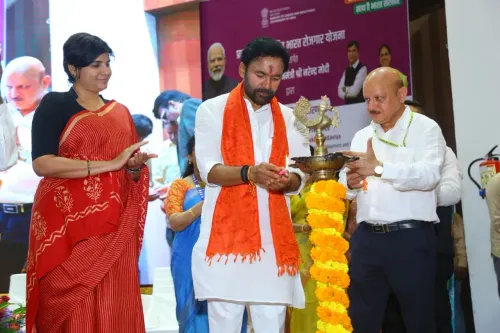
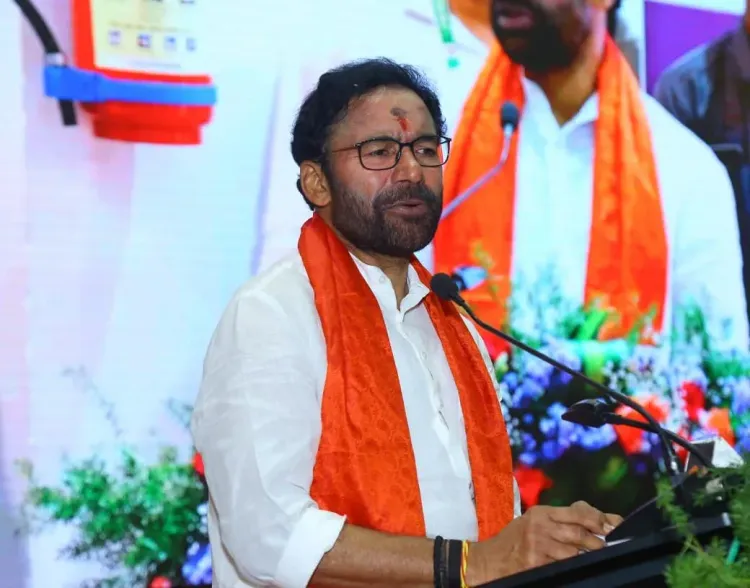
Union Coal and Mines Minister G. Kishan Reddy on Friday, 19 June 2026 highlighted the PM Vistrit Berojgari Rozgar Yojana (PM-VBRY) as a landmark initiative to convert India's demographic advantage into measurable economic growth, speaking at an address where he underscored the scheme's scale and intent.
Context
In his address, Kishan Reddy framed PM-VBRY around three stated pillars: 'Dignity for Labour, Certainty for Youth, and Growth for Employers.' The minister said the scheme is specifically designed to empower first-time employees entering the formal workforce, while simultaneously incentivising industries to generate quality jobs at scale.
He described the initiative as a direct policy tool to transform India's 'demographic dividend into a development dividend' — a phrase that has become central to the ruling coalition's economic messaging as the country hosts one of the world's largest working-age populations.
Policy Backdrop
The employment-linked incentive approach has a clear lineage in successive Union Budgets, with the Union Budget 2024 having announced a package of schemes to boost formal job creation and skilling. PM-VBRY appears to be a significant expansion of that policy architecture, carrying an outlay of ₹99,446 crore and a target of supporting over 3.5 crore jobs — figures the minister cited in his remarks.
The focus on formalisation is deliberate: a large share of India's workforce remains in the informal economy, and successive administrations have sought to use fiscal incentives to shift that balance. Employer participation is built into the scheme's design, making it a supply-side as well as a demand-side intervention.
Stakeholders and Impact
First-time employees are the scheme's primary beneficiaries, with the government positioning PM-VBRY as a mechanism to ease the transition from education or informal work into formal, registered employment. Industries — particularly those in labour-intensive sectors — stand to gain through incentives that reduce the cost of onboarding new workers.
Youth form the largest stakeholder group: with millions of young Indians entering the job market each year, a scheme targeting 3.5 crore jobs would, if fully realised, represent one of the most ambitious employment-linked outlays in recent memory. State governments will play a critical role in implementation, as scheme uptake will vary significantly across regions depending on industrial capacity and administrative readiness.
What's Next
Attention will now turn to the release of formal scheme guidelines, state-level implementation frameworks, and early uptake data. Subsequent Economic Surveys are expected to carry employment data that will serve as the first independent benchmark for PM-VBRY's on-ground impact.
As BJP's Telangana state president, Kishan Reddy is also likely to amplify the scheme's messaging in the southern state, where the party has been seeking to consolidate its position. The political and policy dimensions of PM-VBRY will thus play out simultaneously at the national and state levels in the months ahead.
Point of View
Particularly in Telangana. With a ₹99,446 crore outlay cited, the government is staking a large fiscal commitment on the scheme's visibility — but credibility will hinge on independent employment data that has yet to emerge. The 'demographic dividend to development dividend' framing is a calculated rebuttal to opposition critiques on joblessness, seeking to shift the debate from the existence of unemployment to the architecture of solutions.
NationPress
18 Sept 2026
Frequently Asked Questions
What did Kishan Reddy say about PM-VBRY?
Union Minister G. Kishan Reddy said PM-VBRY reflects the government's commitment to 'Dignity for Labour, Certainty for Youth, and Growth for Employers,' and described it as a tool to convert India's demographic dividend into a development dividend.
Who benefits from PM-VBRY?
The scheme's primary beneficiaries are first-time employees entering the formal workforce. Industries that onboard new workers and youth seeking their first formal jobs are also key stakeholders.
How much money has the government allocated for PM-VBRY?
The government has cited an outlay of ₹99,446 crore for PM-VBRY, with a target of supporting over 3.5 crore jobs.
How does PM-VBRY connect to earlier budget announcements?
PM-VBRY builds on the employment-linked incentive framework introduced in the Union Budget 2024, which aimed to boost formal job creation and skilling through fiscal incentives for both employers and employees.