CM Yogi backs Swadeshi goods to keep India's money in India
Synopsis
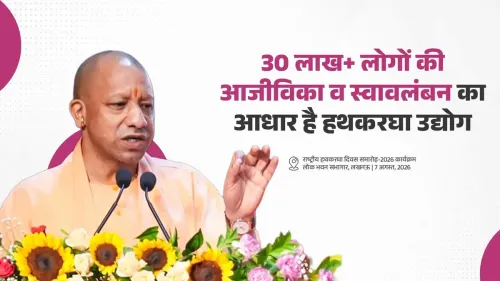
Uttar Pradesh CM Yogi Adityanath on 7 August 2026 called for promoting Swadeshi products, arguing that keeping India's money inside India will deliver prosperity to handicraft artisans — echoing the Atmanirbhar Bharat and Vocal for Local policy framework.
Key Takeaways
CM Yogi Adityanath on 7 August 2026 called for promoting Swadeshi products to keep India's money circulating within the country.
He directly linked local consumption to artisan welfare, saying it will bring 'happiness and prosperity' to handicraft communities.
The statement aligns with the national Atmanirbhar Bharat campaign (launched May 2020 ) and its Vocal for Local consumer drive.
Uttar Pradesh hosts major handicraft clusters — Banarasi silk, chikankari, brassware, leather — whose producers are the primary intended beneficiaries.
BJP governments have sustained this economic-nationalism messaging consistently since 2017, tying it to state-level craft-cluster support in UP.
Follow-up policy action — budget provisions, buyer-seller meets, procurement mandates — will determine whether the message translates to measurable artisan support.
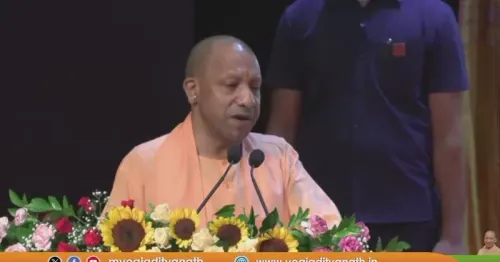
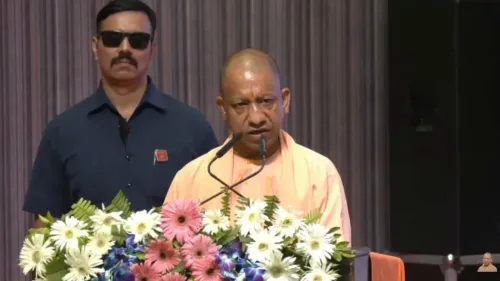
Every rupee spent on a foreign product is a rupee that leaves an Indian artisan's hands empty. Uttar Pradesh Chief Minister Yogi Adityanath made that case sharply on Friday, 7 August 2026, posting on X that promoting indigenous goods is the surest path to prosperity for India's handicraft communities.
Posting in Hindi, CM Yogi wrote: 'जब हम स्वदेशी उत्पादों को बढ़ावा देंगे तो भारत का पैसा भारत में ही लगेगा।' — 'When we promote Swadeshi products, India's money will stay in India. This will bring happiness to the faces of our artisans and prosperity to their lives.'
A century-old idea with fresh economic stakes
The word Swadeshi carries weight far beyond a policy label. It traces directly to the 1905 Swadeshi Movement, when Indian leaders called for a boycott of British goods and the embrace of homegrown production as an act of resistance. CM Yogi's invocation of the term ties that historical current to a very contemporary concern: capital retention. When domestic consumers buy imported goods, the argument runs, value chains, jobs, and profits migrate abroad. When they buy local, the money circulates — funding wages, workshops, and the next generation of craftspeople.
That logic underpins the national Atmanirbhar Bharat campaign, launched in May 2020, which called for self-reliance across manufacturing, reduced import dependence, and direct support for small producers. The companion Vocal for Local drive translated the same idea into a consumer-facing slogan. CM Yogi's post sits squarely inside this policy lineage, reinforcing messaging that BJP governments have sustained for over five years.
UP's artisan clusters and what the message means on the ground
Uttar Pradesh is home to some of India's most storied handicraft traditions — Varanasi's Banarasi silk, Agra's leather work, Moradabad's brassware, Lucknow's chikankari embroidery. The state's administrations since 2017 have consistently linked economic-nationalism messaging to concrete support for these craft clusters, framing local consumption not as nostalgia but as live economic policy.
The artisans CM Yogi references are not an abstraction. They are small-scale, often informal producers whose livelihoods depend directly on whether buyers — retail consumers, government procurement desks, or export intermediaries — choose their products over cheaper mass-manufactured alternatives. Every policy nudge toward Swadeshi goods has a direct multiplier at that level.
Watch for follow-up action: buyer-seller meets, state budget provisions for handicraft clusters, or new procurement mandates that could convert this public message into measurable ground-level support for UP's artisan economy.
Point of View
Binding historical legitimacy to contemporary consumer messaging. For a state like Uttar Pradesh — with vast, politically significant artisan communities in Varanasi, Moradabad, and Lucknow — this framing does double duty as both cultural identity and economic promise. The consistency of such messaging across five-plus years suggests it has become a durable pillar of BJP's subnational economic communication, not a one-off statement. Whether it translates into new procurement or cluster-support policy in UP's next budget cycle will be the real test of intent.
NationPress
7 Aug 2026
Frequently Asked Questions
What did CM Yogi Adityanath say about Swadeshi products?
CM Yogi Adityanath said that promoting Swadeshi (indigenous) products will keep India's money within India, bringing happiness and prosperity to the country's handicraft artisans.
What is the Swadeshi movement and why does CM Yogi reference it?
The Swadeshi movement originated in 1905 as a call to buy Indian-made goods and boycott foreign products during the anti-partition protests. CM Yogi's reference ties that historical tradition to the modern goal of retaining economic value within India.
How does Atmanirbhar Bharat relate to CM Yogi's statement?
Atmanirbhar Bharat, launched in May 2020, is a national self-reliance campaign aimed at boosting domestic manufacturing and reducing imports. CM Yogi's call to promote Swadeshi goods directly echoes that framework and its Vocal for Local companion drive.
Which UP artisan communities benefit from Swadeshi promotion policies?
Uttar Pradesh's major handicraft communities — including Varanasi's Banarasi silk weavers, Lucknow's chikankari embroiderers, Moradabad's brass craftsmen, and Agra's leather workers — stand to benefit most directly from policies promoting indigenous goods.
What policy steps could follow CM Yogi's Swadeshi statement?
Analysts will watch for state budget provisions for UP handicraft clusters, government buyer-seller meets, and new procurement mandates that could convert the public messaging into concrete economic support for artisans.