CM Yogi Expands CM-YUVA Loans to ₹10L for UP Artisans
Synopsis
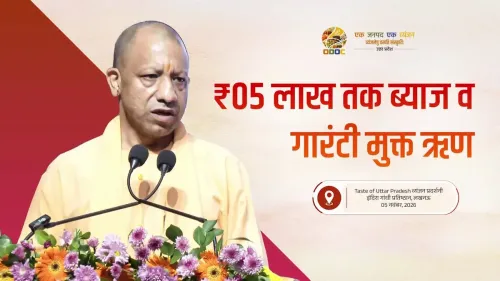
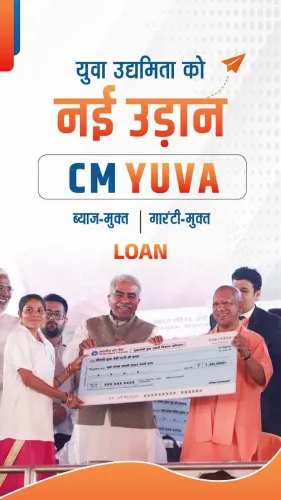
The Uttar Pradesh government's CM-YUVA scheme offers artisans, halwais and women entrepreneurs interest-free, collateral-free loans up to ₹5 lakh to start businesses, with scaled support reaching ₹10 lakh and a proposed ₹20 lakh ceiling for larger ventures.
Key Takeaways
The CM-YUVA scheme provides ₹5 lakh interest-free and guarantee-free loans to artisans, halwais, and women in Uttar Pradesh.
A government subsidy is also provided alongside the loan to help beneficiaries sustain and grow their businesses.
Financial assistance under the scheme has been raised from ₹7.5 lakh to ₹10 lakh for those looking to scale existing ventures.
Work is under way to extend the ceiling further to ₹20 lakh for entrepreneurs pursuing larger businesses.
The scheme targets artisans, halwais, and women — informal-economy workers traditionally excluded from formal credit channels.
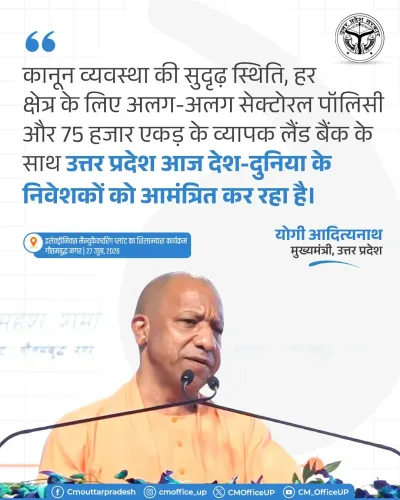
Chief Minister Yogi Adityanath outlined the scheme's full financial structure via the official CMO account on 5 November 2026 .
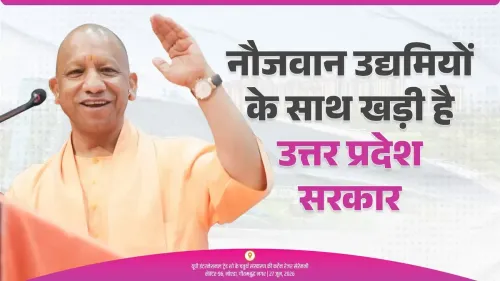
A ₹5 lakh interest-free, collateral-free loan — that is what the Uttar Pradesh government is now placing in the hands of artisans, halwais, and women entrepreneurs who want to start a business from scratch. On 5 November 2026, the Chief Minister's Office of Uttar Pradesh quoted Chief Minister Yogi Adityanath outlining the full financial architecture of the CM-YUVA scheme — and signalling a ceiling that could soon climb even higher.
What the CM-YUVA scheme puts on the table
The scheme's core offer is a ₹5 lakh loan that carries no interest and demands no guarantee — a combination that removes the two biggest barriers keeping informal workers out of formal credit. Beyond the loan, the state also layers in a subsidy so that recipients can sustain and grow what they build, not just launch it.
For those who already have a foothold and want to scale, the financial assistance ceiling has been raised: support is now available from ₹7.5 lakh up to ₹10 lakh. That revision alone widens the runway for micro-enterprises in traditional trades — the kind of businesses that rarely attract institutional lenders but form the backbone of Uttar Pradesh's informal economy.
The ₹20 lakh signal for larger ventures
CM Yogi did not stop at the current limit. The post states that work is under way to extend the scheme's ceiling to ₹20 lakh for entrepreneurs who want to build something bigger. The exact timeline and approvals for this expansion have not yet been formally notified, but the direction of travel is clear.
The progression — from earlier, smaller ceilings, through the current ₹10 lakh mark, toward a proposed ₹20 lakh tier — reflects a deliberate upward revision of the state's bet on micro and small enterprise. Uttar Pradesh has consistently loosened collateral requirements across successive iterations of its self-employment programmes, and CM-YUVA represents the latest, sharpest version of that push.
Who this directly reaches
The scheme explicitly names three beneficiary groups: artisans (kaarigars), halwais (traditional confectioners and cooks), and women (maata-behen — mothers and sisters, in the CM's framing). These are not marginal categories — they represent millions of workers across UP's towns and villages who operate in cash, without credit history, and outside the collateral net that conventional bank lending requires.
Removing both the interest burden and the guarantee requirement simultaneously is what makes the offer structurally different from standard priority-sector lending. The subsidy component adds a third layer of insulation against early-stage failure.
What to watch next
The critical next marker is official notification of the ₹20 lakh ceiling — whether it arrives through a cabinet order, a state budget line, or a scheme amendment. When that happens, CM-YUVA will cover the full spectrum from first-time micro-entrepreneur to small-business founder, all within a single, collateral-free framework.
For the artisans and halwais of Uttar Pradesh, the message from Lucknow is unambiguous: the ceiling is rising, and the floor — no interest, no guarantee — is not moving.
Point of View
Collateral-waiver, and subsidy in a single instrument, the government is effectively substituting state risk-absorption for the market mechanisms that have historically excluded artisans and women from institutional finance. The proposed ₹20 lakh ceiling, if formalised, would push CM-YUVA into small-business territory, blurring the line between micro-finance and MSME support. Whether disbursement infrastructure can match the expanded ambition will determine whether the scheme's rising ceilings translate into on-ground capital access.
NationPress
5 Nov 2026
Frequently Asked Questions
What is the CM-YUVA scheme in Uttar Pradesh?
CM-YUVA is a Uttar Pradesh government scheme that provides interest-free, collateral-free loans and subsidies to artisans, halwais, and women entrepreneurs to help them start or expand their businesses.
How much loan can I get under CM-YUVA scheme?
Under CM-YUVA, eligible applicants can receive up to ₹5 lakh as an interest-free, guarantee-free loan to start a business. Financial assistance can scale up to ₹10 lakh for expansion, with a proposed ₹20 lakh tier being worked on for larger ventures.
Who is eligible for the CM-YUVA scheme loan?
The scheme targets artisans ( kaarigars ), halwais (traditional confectioners and cooks), and women entrepreneurs selected under the CM-YUVA programme in Uttar Pradesh.
Is there a subsidy under the CM-YUVA scheme?
Yes, in addition to the interest-free loan, the UP government also provides a subsidy under CM-YUVA to help beneficiaries sustain and grow their businesses.
What is the maximum loan limit being proposed under CM-YUVA?
Chief Minister Yogi Adityanath has stated that work is under way to make ₹20 lakh available under CM-YUVA for those wishing to start larger enterprises, though this limit has not yet been formally notified.