CM Yogi Champions Smart Policing as UP's New Identity
Synopsis
CM Yogi Adityanath declared smart policing the hallmark of 'new Uttar Pradesh' on October 1, 2026, pairing a tribute to police valour with the governance slogan 'Your security, our resolve' in a video-backed social media post.
Key Takeaways
CM Yogi Adityanath posted on October 1, 2026 framing smart policing as the identity of 'new Uttar Pradesh.' The slogan 'Suraksha aapki, sankalp hamara' — 'Your security, our resolve' — anchors the message around citizen safety as a government commitment.
The post explicitly honours police valour ( veerata ka samman ), elevating law-enforcement personnel as central to UP's transformation narrative.
The message was accompanied by a video , indicating a structured communications drive rather than an off-the-cuff remark.
The 'new Uttar Pradesh' framing has been a consistent pillar of Yogi Adityanath's governance branding since he took office.
Uttar Pradesh , with over 240 million residents, is India's most populous state, making its law-and-order record a national political benchmark.
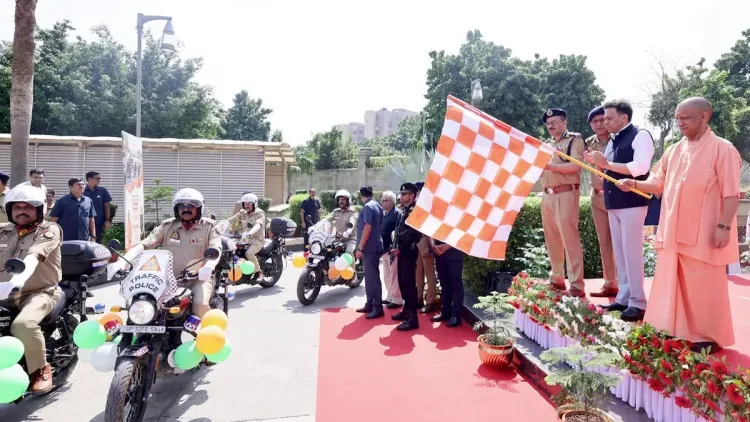
Uttar Pradesh Chief Minister Yogi Adityanath invoked the twin pillars of citizen security and police reform on Thursday, October 1, 2026, framing smart policing as the defining signature of a transformed Uttar Pradesh — a state he has long sought to rebrand from a byword for lawlessness into a model of governance.
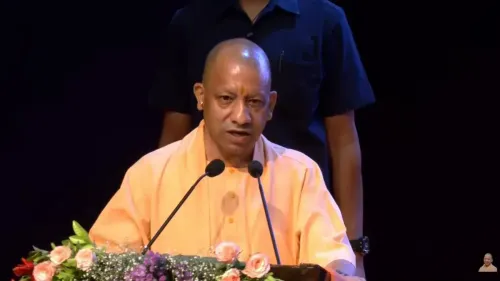
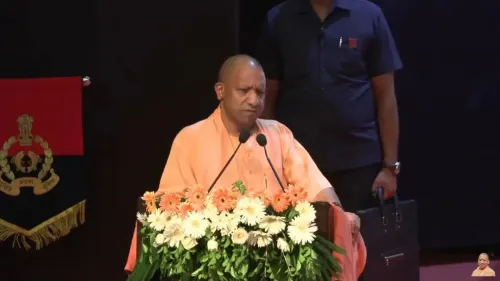
The Chief Minister's post, shared in Hindi, carried the slogan 'Suraksha aapki, sankalp hamara' — 'Your security, our resolve' — and paired it with a tribute to police bravery: 'Veerata ka samman, smart policing bani naye Uttar Pradesh ki pehchaan', which translates as 'Honour for valour, smart policing has become the identity of the new Uttar Pradesh.' The message was accompanied by a video, signalling a deliberate, packaged communication push rather than a casual remark.
'Your Security, Our Resolve' — The Slogan Behind the Strategy
The phrase 'new Uttar Pradesh' (naya Uttar Pradesh) has been a consistent refrain in Yogi Adityanath's political vocabulary since he assumed office. It is a direct rhetorical counter to the state's earlier reputation for high crime rates, a reputation that dogged successive governments. By anchoring the slogan to police bravery — veerata ka samman, or honouring valour — the Chief Minister frames law enforcement not just as an administrative function but as a mission deserving public recognition.
Smart policing, as articulated by the UP government in recent years, has encompassed a range of initiatives: technology-driven surveillance, faster response frameworks, anti-gangster operations, and an emphasis on officer accountability. The framing positions these as structural shifts rather than one-off drives.
Policing as Political Identity in Uttar Pradesh
Uttar Pradesh, with a population exceeding 240 million, is India's most populous state and has historically been a bellwether for national politics. Law and order has remained one of the most charged electoral issues in the state. For Yogi Adityanath, projecting a tough-but-modern policing identity serves a dual purpose: it reassures voters on safety, and it counters opposition narratives about police excess or selective enforcement.
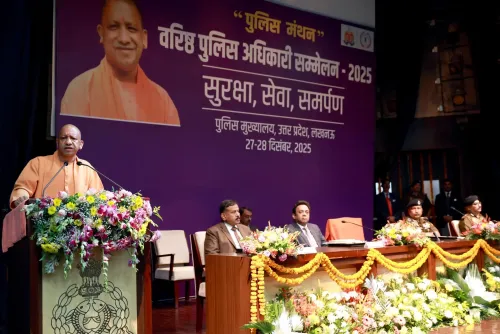
The timing of the post — on the first day of October 2026 — could align with state police commemorations or departmental review events, though no specific occasion was named in the post. The accompanying video likely carries visual testimony to that broader message.
In a state where the distance between a political slogan and a lived reality is watched closely by both supporters and critics, the Chief Minister has chosen to make policing a centrepiece of his governance narrative — and he is betting that voters see the difference.
Point of View
Rather than a programme, is a deliberate political move: it transforms an administrative function into a brand attribute of his government. In a state where law and order has historically swung elections, recasting the police force as both brave and modern blunts two simultaneous opposition lines of attack — that UP remains unsafe and that policing under BJP is blunt rather than professional. The slogan 'Your security, our resolve' is also a forward-looking accountability device, setting a public benchmark the government will be judged against in the next electoral cycle.
NationPress
1 Oct 2026
Frequently Asked Questions
What did CM Yogi Adityanath say about UP policing on October 1 2026?
He declared smart policing the defining identity of 'new Uttar Pradesh' and paid tribute to police bravery, under the slogan meaning 'Your security, our resolve.'
What does 'smart policing' mean in Uttar Pradesh?
In UP, smart policing refers to technology-driven surveillance, faster response systems, anti-gangster operations, and greater officer accountability, framed as a structural modernisation of law enforcement.
What is the 'new Uttar Pradesh' slogan about?
'Naya Uttar Pradesh' or 'new Uttar Pradesh' is a governance branding phrase used by CM Yogi Adityanath to contrast the state's present administration with its earlier reputation for poor law and order.
Why is law and order important for Uttar Pradesh politics?
Uttar Pradesh is India's most populous state with over 240 million residents, and crime and public safety have historically been decisive electoral issues that shape state and national political outcomes.
What is the significance of 'Suraksha aapki, sankalp hamara'?
The Hindi phrase means 'Your security, our resolve' and functions as a government-to-citizen promise, positioning the Yogi Adityanath administration as directly accountable for public safety in UP.