Rabi MSP hike 2027-28: UP farmers welcome safflower, mustard price revision

Synopsis
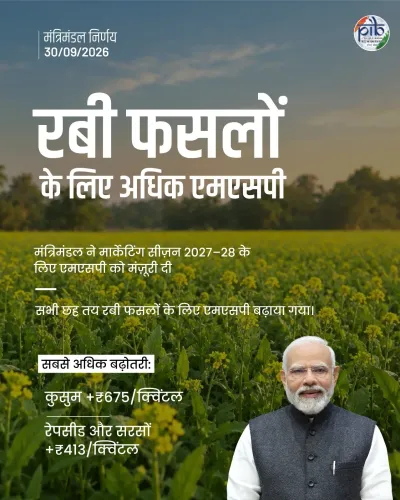
The Centre's Rabi MSP revision for 2027-28 lands with its biggest jump for safflower (₹675/quintal) and mustard (₹413/quintal) — crops India still imports in significant volumes. Farmers in UP's Kushinagar, Basti, and Kanpur Dehat say it will shift market sentiment at mandis and finally make oilseed and pulse cultivation financially viable, raising the stakes for whether procurement machinery can match the price signal.
Key Takeaways
The Centre has cleared MSP hikes for all mandated Rabi crops for 2027-28 .
Safflower received the highest increase at ₹675 per quintal ; rapeseed and mustard rose by ₹413 per quintal .
Farmers in Kushinagar, Basti , and Kanpur Dehat in Uttar Pradesh welcomed the revision as income-boosting and a catalyst for crop diversification .
Concerns persist over rising diesel and fertiliser costs, and stray animal damage to standing crops.
Farmers noted that a higher MSP shifts mandi (wholesale market) sentiment, effectively raising the floor price traders can offer.
Deputy Director of Agriculture Ashok Kumar said the hike will lead to greater economic prosperity for farmers.
The Centre's decision to raise Minimum Support Prices (MSPs) for all mandated Rabi crops for 2027-28 has been welcomed across farming communities in Uttar Pradesh and beyond, with growers describing the move as 'positive, farmer-friendly and income-boosting.' The Cabinet-cleared revision delivers the highest single-crop increase for safflower at ₹675 per quintal, followed by rapeseed and mustard at ₹413 per quintal.
Ground Reaction from Uttar Pradesh Districts
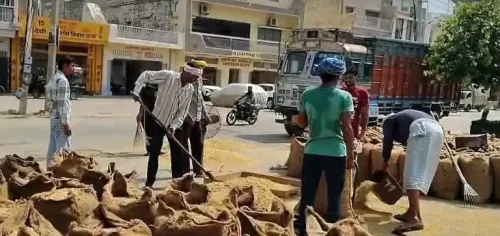
In Kushinagar — a district known for extensive cultivation of paddy, wheat, maize, mustard, sugarcane, and bananas — farmers said the enhanced MSP will ease the burden of rising cultivation costs. Many called the decision a long-overdue response to persistent financial pressure. Some also raised concerns about stray animals damaging crops and urged the government to provide stronger safeguards.
In Basti, the upward revision for wheat, mustard, gram (chana), and peas drew particular appreciation. 'If the government continues to pay attention and raises MSP for pulse crops, the cultivation will expand,' one farmer said. Another cited the Kisan Credit Card (KCC) scheme as an additional positive, noting that higher lending targets had delivered 'significant benefits' to the farming community. 'The MSP hike implemented by the government will boost farmers' income and help mitigate risks,' a third farmer added.
Crop Diversification and Market Sentiment
In Kanpur Dehat, farmers tied the MSP revision to a broader shift in cropping choices. A grower raising concerns about rising diesel and fertiliser costs noted: 'This hike in MSP was essential. The increased prices for mustard and lentils will directly boost our income. The PM-Kisan Samman Nidhi covers our sowing expenses, and now, with the MSP hike, traders in the market will also offer us fair prices.'
Another farmer explained the downstream market effect: 'When the government raises the support price, the entire market sentiment shifts. With the rates for gram and mustard fixed, traders in the mandi (wholesale market) will be unable to offer farmers anything lower than these prices.' This sentiment underscores how MSP revisions function not merely as a floor price but as a price-signal mechanism through the entire agricultural supply chain.
What Officials Said
Ashok Kumar, Deputy Director of Agriculture, said the government's decision to raise the MSP for Rabi crops will benefit farmers and lead to greater economic prosperity. Officials added that the revision is designed to incentivise production of oilseeds and pulses — crops where India remains structurally import-dependent.
Why the MSP Revision Matters
The Rabi MSP hike arrives against the backdrop of elevated input costs — diesel, fertilisers, and hired labour have all risen sharply over recent crop cycles. Farmers in several districts noted that previous MSP levels had failed to keep pace with these cost increases, eroding net margins. This is also the context in which crop diversification has remained sluggish: when wheat and paddy carry assured procurement, smaller oilseed and pulse crops struggle to attract acreage despite policy encouragement.
Notably, the government's decision to lead with safflower and mustard hikes signals an intent to shift that calculus. Whether enhanced MSPs translate into actual procurement at mandis — and whether farmers in non-traditional oilseed districts receive timely price signals — will determine the on-ground impact in the coming Rabi season.
Point of View
₹413 on mustard — are meaningful, but the real story is whether physical procurement machinery expands to match the price signal. Past MSP cycles have seen announcement enthusiasm evaporate at the mandi level when government purchasing agencies failed to show up in volume, leaving farmers to sell below MSP to private traders regardless. Structural import dependence on edible oils and pulses will not ease through price incentives alone if the supply chain from farm gate to aggregation point remains broken. The on-ground feedback from Kushinagar and Kanpur Dehat is positive, but that optimism has a short shelf life if the next Rabi season delivers a repeat of inadequate procurement.
NationPress
1 Oct 2026
Frequently Asked Questions
What is the Rabi MSP hike for 2027-28?
The Centre has raised Minimum Support Prices for all mandated Rabi crops for the 2027-28 season. The largest increase is for safflower at ₹675 per quintal, followed by rapeseed and mustard at ₹413 per quintal, covering key crops like wheat, gram, peas, and lentils as well.
Why does the MSP revision matter for UP farmers?
Farmers in Uttar Pradesh have been facing rising input costs — including diesel, fertilisers, and labour — that had eroded net margins under previous MSP levels. The hike is expected to improve farm incomes and, because MSP sets a floor at mandis, encourage traders to offer competitive prices across the wholesale market.
How does the MSP hike encourage crop diversification?
By raising support prices for oilseeds like mustard and safflower, and pulses like gram and peas, the government is making these crops financially competitive with wheat and paddy, which dominate UP's cropping pattern. Farmers in Kanpur Dehat said fixed mandi rates for gram and mustard would push acreage toward these crops in the coming season.
Which districts in Uttar Pradesh have responded to the MSP hike?
Farmers in Kushinagar, Basti, and Kanpur Dehat have publicly welcomed the revision. Kushinagar cultivates paddy, wheat, maize, mustard, sugarcane, and bananas; Basti farmers highlighted benefits for wheat, mustard, gram, and peas; Kanpur Dehat growers focused on the diversification opportunity from higher mustard and lentil prices.
What concerns did farmers raise alongside welcoming the MSP hike?
Even as most farmers welcomed the revision, some flagged continued pressure from rising diesel and fertiliser costs that partially offset the price benefit. In Kushinagar, farmers also raised the issue of stray animals damaging standing crops and called for greater state support on that front.