CM Yogi cites IIM Lucknow survey validating UP's tablet scheme
Synopsis
Chief Minister Yogi Adityanath has cited an IIM Lucknow survey showing positive results from Uttar Pradesh's tablet and smartphone distribution scheme, with students using the devices in partially online exams in 2022 and 2023.
Key Takeaways
UP students used government-distributed tablets and smartphones in partially online examinations in 2022 and 2023 .
IIM Lucknow was commissioned by the UP government to survey the impact of device distribution on educational outcomes.
The survey found 'positive results' from tablet and smartphone usage, according to CM Yogi Adityanath .
The scheme is part of a wider state-level push to reduce India's digital divide in public education post-pandemic.
The full IIM Lucknow survey findings — including methodology and sample size — have not yet been made public.
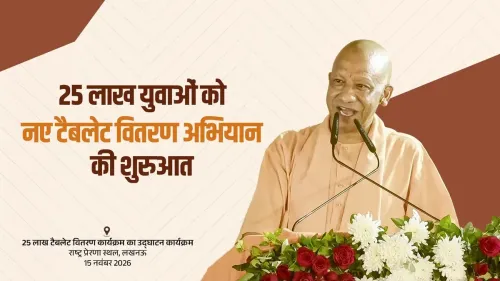
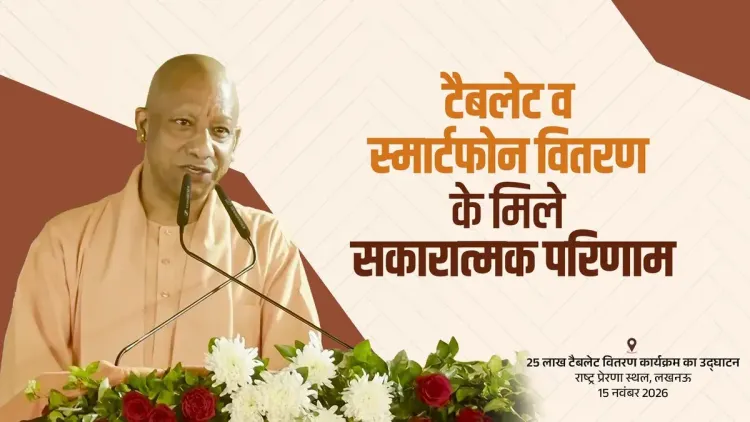
Tablets and smartphones handed to Uttar Pradesh's youth are delivering measurable results in education — and now a premier management institution has the data to prove it. Chief Minister Yogi Adityanath, speaking on Sunday, 15 November 2026, stated that students across the state used the distributed devices in partially online examinations in 2022 and 2023, and that a survey commissioned through IIM Lucknow confirmed positive outcomes from that usage.
What the IIM Lucknow survey found
The Chief Minister's Office of Uttar Pradesh quoted CM Yogi Adityanath directly: 'IIM लखनऊ के माध्यम से हमने इसका सर्वे कराया था, जिसमें यह पाया गया कि टैबलेट और स्मार्टफोन के उपयोग के सकारात्मक परिणाम प्राप्त हुए थे' — 'We had a survey conducted through IIM Lucknow, in which it was found that positive results were obtained from the use of tablets and smartphones.' The state government engaged one of India's top-ranked management schools to independently evaluate the scheme's impact, lending institutional credibility to its claims.
The survey's exact methodology and sample size are not yet in the public domain, but the government's decision to cite IIM Lucknow — rather than an in-house report — signals an attempt to ground the programme's outcomes in third-party validation.
UP's device distribution drive and its exam connection
The Uttar Pradesh government rolled out a large-scale distribution of tablets and smartphones to students as part of its push to close the digital divide in one of India's most populous states. The scheme gained particular significance after the COVID-19 pandemic exposed stark gaps in digital access among students in public institutions. By 2022 and 2023, the devices were already in active use — students deployed them during partially online examinations, an early real-world test of whether the hardware was reaching the right hands and being put to genuine educational use.
Uttar Pradesh's move mirrors broader efforts by several Indian state governments to integrate device distribution with learning outcomes. What sets the UP programme apart, according to the Chief Minister's statement, is the structured feedback loop: commissioning an external survey to assess whether the investment translated into tangible academic benefit.
Why third-party validation matters here
Large-scale government device distribution schemes have faced criticism in India for procurement irregularities, devices lying unused, or benefits not reaching intended recipients. By anchoring its claims in an IIM Lucknow study, the Yogi administration is making an implicit argument that this scheme was different — that the tablets and smartphones found their way into students' hands and into their exam halls. The release of the full survey findings will be the moment that claim is put to its most rigorous test.
With state education budgets for the coming financial year under discussion, the government's framing of validated success sets up a compelling case for a further phase of device distribution — a signal worth watching in the months ahead.
Point of View
The Yogi administration is making a deliberate move to insulate its flagship device distribution scheme from the scepticism that dogs large-scale welfare hardware programmes in India. The timing — with state budget cycles approaching — suggests the survey findings are being deployed as political and fiscal ammunition for a second or expanded phase. The critical missing piece remains transparency: until the full survey data is public, the claim of 'positive results' rests on the government's own framing of a report commissioned by the same government. That tension between third-party credibility and selective disclosure will define how this narrative holds up to scrutiny.
NationPress
15 Nov 2026
Frequently Asked Questions
What is the UP government's tablet and smartphone distribution scheme?
The Uttar Pradesh government distributed tablets and smartphones to students to support digital and online learning, particularly after the COVID-19 pandemic widened the digital divide in public education. Students used the devices in partially online examinations in 2022 and 2023.
What did the IIM Lucknow survey find about UP's tablet scheme?
According to CM Yogi Adityanath, the survey conducted through IIM Lucknow found positive results from students' use of the distributed tablets and smartphones. The full survey findings, including methodology and sample size, have not been made public.
Why did UP commission IIM Lucknow for the survey?
The state government chose IIM Lucknow — a premier national institution — to independently evaluate the scheme's impact, lending credibility to its findings beyond what an in-house assessment would carry.
How many students received tablets and smartphones in Uttar Pradesh?
The exact number of students who received devices under the UP distribution scheme has not been specified in the Chief Minister's current statement. The government has indicated the scheme covered a significant portion of the state's student youth population.
Will Uttar Pradesh distribute more tablets and smartphones to students?
CM Yogi Adityanath's statement citing positive survey results positions the scheme as a success, and observers are watching whether the state's upcoming education budget announcements include a further phase of device distribution.