CM Yogi Claims UP Festivals Were Riot-Free After 2017
Synopsis
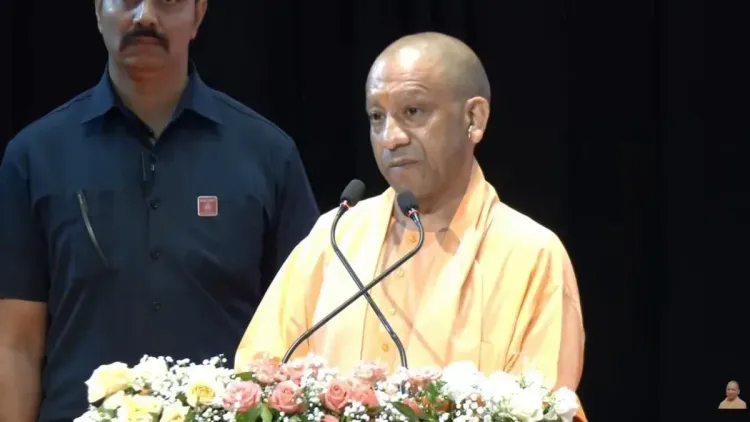
Uttar Pradesh Chief Minister Yogi Adityanath claimed on November 11, 2026, that every major festival — Hindu, Muslim, Sikh, and Christian alike — was preceded by riots in UP before the BJP came to power in 2017, reinforcing his government's signature law-and-order narrative.
Key Takeaways
CM Yogi Adityanath posted on November 11, 2026 , claiming riots preceded every major festival in Uttar Pradesh before 2017 .
The festivals named span multiple religions: Holi, Diwali, Vijayadashami, Janmashtami, Shivratri, Christmas, Eid, Guru Parv, and Makar Sankranti.
The BJP won the UP assembly elections in March 2017 and installed Yogi Adityanath, head of Gorakhnath Math , as Chief Minister.
The statement is part of a consistent BJP governance narrative linking stricter policing after 2017 to communal peace during festivals.
No specific incident data, district names, or statistics were cited in the post to support the broad claim.
The November 2026 timing coincides with the winter festival corridor, when UP district administrations typically receive heightened security directives.
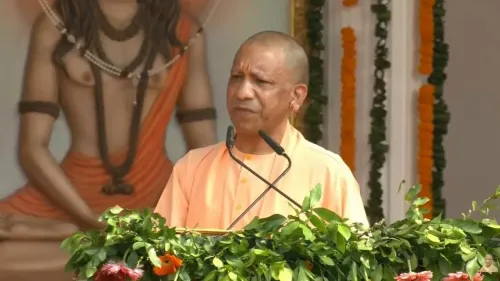
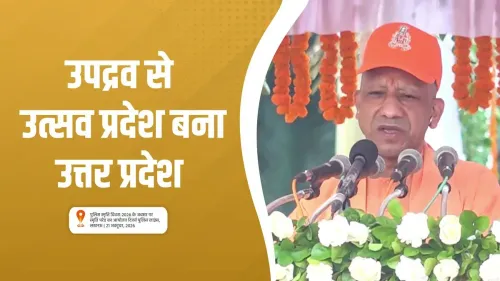
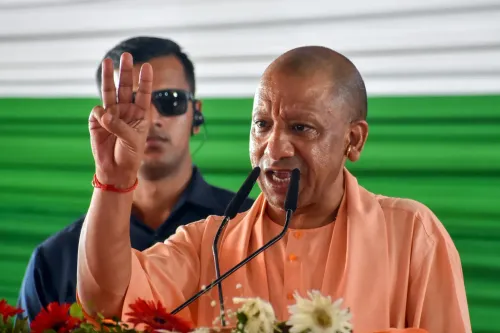
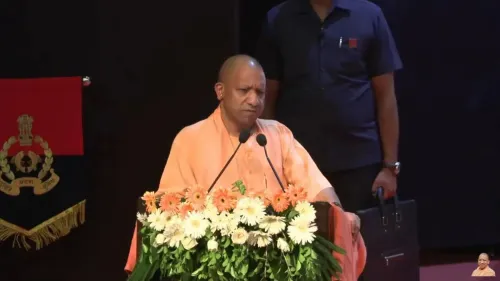
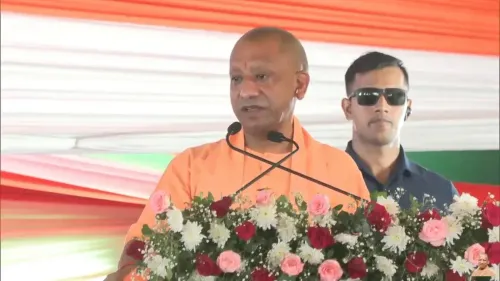
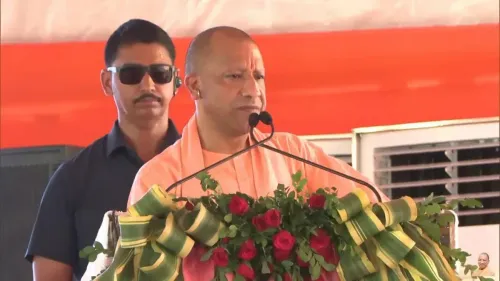
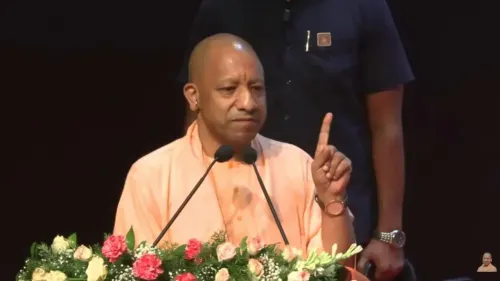
Before 2017, Uttar Pradesh residents bracing for Holi or Diwali were also bracing for violence — that is the stark claim Uttar Pradesh Chief Minister Yogi Adityanath put on record on Wednesday, November 11, 2026, in a pointed statement on the state's law-and-order transformation under his watch.
In the post, written in Hindi, CM Yogi declared: 'वर्ष 2017 के पहले कोई भी त्योहार आता था... इन सबके पहले दंगे शुरू हो जाते थे' — 'Before 2017, whenever any festival arrived — Holi, Diwali, Vijayadashami, Janmashtami, Shivratri, Christmas, Eid, Guru Parv, or Makar Sankranti — riots would break out before every single one of them.' The list is deliberate and striking: it spans Hindu, Muslim, Sikh, and Christian occasions alike, framing the pre-2017 problem as one that cut across every religious community in the state.
The 2017 Pivot and the Law-and-Order Argument
The political context is central to reading this statement. The Bharatiya Janata Party swept the Uttar Pradesh assembly elections in March 2017, installing Yogi Adityanath — head of the Gorakhnath Math in Gorakhpur — as Chief Minister. From day one, his administration anchored its public identity on a firm law-and-order mandate: anti-romeo squads, encounter policing, and high-profile crackdowns on illegal abattoirs and criminal networks were among the early signals sent to the state's roughly 240 million residents. Since then, the government has repeatedly pointed to festival seasons passing without major communal incidents as evidence that the approach is working. This post is the latest iteration of that recurring message, delivered with unusual bluntness — not as a government press note but in the Chief Minister's own direct-to-public voice on social media.A Broad Claim, a Clear Political Purpose
The sweep of Yogi's assertion — every listed festival, every year, riots guaranteed — is a generalisation. The post names no specific incidents, no districts, no casualty figures. What it does achieve is a vivid before-and-after contrast, anchoring the BJP's governance record in the experiential memory of ordinary UP households who plan festivals around safety concerns. That framing has proved durable political currency across multiple election cycles in the state. The timing in November 2026 aligns with the broader festival corridor that runs through the winter calendar — from Diwali into Christmas and Makar Sankranti — a period when district administrations typically receive heightened security directives. Watch for any official government data release on communal incidents during this festival season, which would either reinforce or test the narrative Yogi is once again putting forward.Point of View
The absence of verifiable data means the statement functions primarily as political messaging rather than a policy accountability report. As the BJP prepares for future electoral cycles in India's most electorally significant state, such statements are likely to become more frequent and more data-rich — or face sharper scrutiny from opposition parties demanding evidence.
NationPress
11 Nov 2026
Frequently Asked Questions
What did Yogi Adityanath say about riots before 2017 in Uttar Pradesh?
CM Yogi Adityanath claimed that before 2017, riots would break out ahead of every major festival in Uttar Pradesh — including Holi, Diwali, Eid, Christmas, and Makar Sankranti — implying his government ended that pattern after taking office.
When did BJP come to power in Uttar Pradesh?
The Bharatiya Janata Party won the Uttar Pradesh assembly elections in March 2017 and installed Yogi Adityanath as Chief Minister.
Is Yogi Adityanath's claim about pre-2017 riots in UP verified?
The claim is a broad generalisation. No specific incident data, district-level figures, or casualty statistics were provided in the post to independently verify the assertion that riots preceded every listed festival before 2017.
Why did Yogi Adityanath make this statement in November 2026?
November falls within a major festival corridor in India, running from Diwali through Christmas and Makar Sankranti, making it a recurring period when the UP government reinforces its law-and-order messaging.
Who is Yogi Adityanath?
Yogi Adityanath is the Chief Minister of Uttar Pradesh since March 2017, a senior BJP leader, and the head of the Gorakhnath Math religious institution in Gorakhpur.