CM Yogi Claims UP Is No. 1 in Sugarcane, Sugar, Ethanol
Synopsis
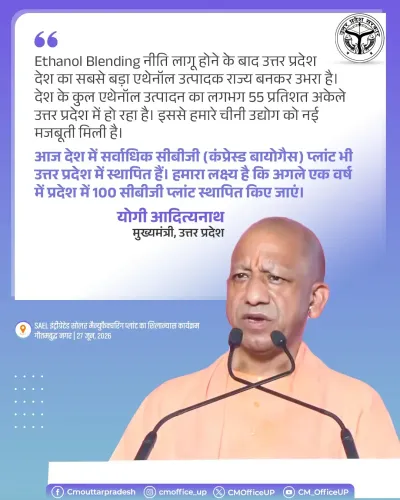
Chief Minister Yogi Adityanath declared on 14 July 2026 that Uttar Pradesh leads India in sugarcane cultivation, sugar production, and ethanol output — positioning the state as an agro-industrial powerhouse under his administration and a key contributor to the national Ethanol Blended Petrol Programme.
Key Takeaways
CM Yogi Adityanath claimed on 14 July 2026 that Uttar Pradesh ranks first in India in sugarcane, sugar, and ethanol production.
UP has historically been the largest sugarcane-growing state, concentrated in the fertile Gangetic plains .
The ethanol claim is linked to the Centre's Ethanol Blended Petrol Programme and the National Policy on Biofuels, 2018 .
State-level incentives have expanded distillery capacity by linking new units to existing sugar mills, supporting farmer payments.
The announcement precedes the next crushing season, with attention now on new distillery approvals and possible revisions to the State Advised Price (SAP) for cane.
Higher ethanol output from UP directly supports India's national blending targets and energy-security goals.
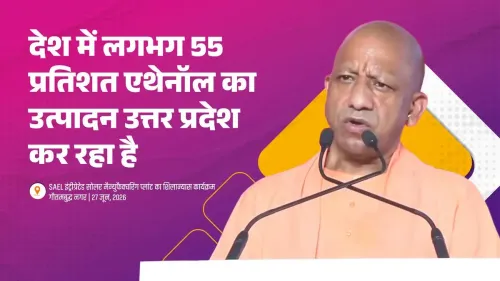
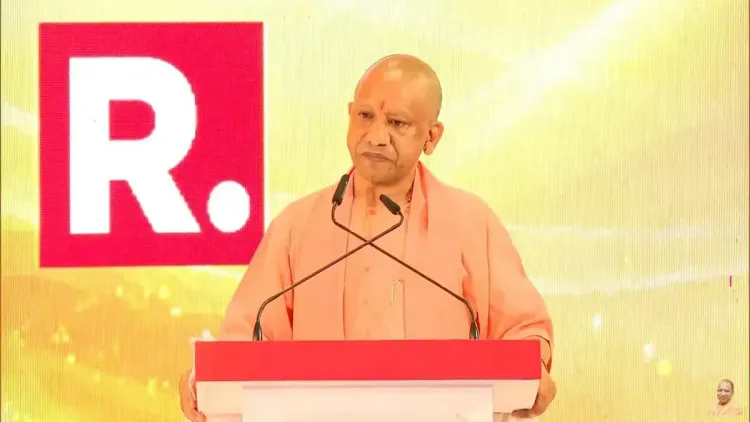
Uttar Pradesh Chief Minister Yogi Adityanath on Tuesday, 14 July 2026 claimed that Uttar Pradesh now ranks first in the country in sugarcane cultivation, sugar production, and ethanol output, asserting the state's dominance across the entire value chain of the crop.
Posting on X, CM Yogi wrote: 'देश के अंदर गन्ना, चीनी और एथेनॉल उत्पादन में यूपी आज नंबर-1 पर है' — 'In the country, UP today stands at number one in sugarcane, sugar, and ethanol production.' The statement positions the state's agricultural and industrial record as a signature achievement of his administration.
Context
Uttar Pradesh has long been the dominant sugarcane belt of India, spread across the fertile Gangetic plains. The state is home to a large concentration of sugar mills and has historically contributed a substantial share of national sugar output. CM Yogi Adityanath, who has held office since 2017, has repeatedly cited the sugarcane sector as a barometer of agricultural governance, pointing to timely cane payments to farmers as a key benchmark.
The claim of a number-one position across all three categories — sugarcane, sugar, and ethanol — signals that the state is presenting itself not merely as a raw-crop producer but as an integrated agro-industrial leader, extending from the field to the fuel pump.
Policy Backdrop
The ethanol dimension of CM Yogi's claim is directly linked to the Centre's Ethanol Blended Petrol (EBP) Programme and the National Policy on Biofuels, 2018, which expanded permissible feedstocks and set progressive blending targets to reduce India's dependence on imported crude oil. States with surplus sugarcane — particularly Uttar Pradesh — were encouraged to establish distilleries attached to sugar mills to convert molasses and sugarcane juice into ethanol for blending with petrol.
The UP government has offered state-level incentives to accelerate distillery capacity, linking new units to existing mill infrastructure. This has allowed the state to capitalise on both surplus cane and assured procurement from oil marketing companies under the national blending programme, creating an additional revenue stream for mills and, by extension, improving their capacity to clear dues owed to farmers.
Stakeholders and Impact
The primary beneficiaries of UP's claimed leadership position are the state's sugarcane farmers, estimated to number in the millions across western and central Uttar Pradesh. A strong ethanol programme provides mills with a secondary revenue channel that supplements income from sugar sales, reducing the chronic problem of delayed cane payments — a politically sensitive issue in the state.
Sugar mills and ethanol distilleries stand to benefit from continued policy support and preferential procurement pricing. At the national level, higher ethanol output from UP contributes directly to India's blending targets, which are part of a broader energy-security and import-substitution strategy. Consumers, in turn, benefit indirectly through reduced pressure on the petroleum import bill.
What's Next
The announcement comes ahead of the next sugarcane crushing season, making it a signal to mills, farmers, and investors about the state's policy direction. Observers will watch for concrete follow-through: new distillery approvals, revisions to the State Advised Price (SAP) for sugarcane, and fresh capacity-addition targets for ethanol. Any upward revision to the cane pricing formula would test whether the production gains translate into higher farmer incomes or remain confined to mill-level metrics.
With national blending targets becoming more ambitious, Uttar Pradesh's ability to sustain and expand its ethanol output will be a key variable in India's energy transition calculus — and a continued political asset for CM Yogi Adityanath heading into future electoral cycles.
Point of View
Sugar, and ethanol — is a carefully constructed political narrative that frames agricultural governance as industrial achievement. By foregrounding ethanol alongside traditional crop metrics, the announcement aligns state performance with a central government priority, reinforcing the BJP's cooperative federal optics ahead of future elections. The timing, before the crushing season, also functions as a pre-emptive signal to mills and farmers on the direction of state policy. Whether the claim withstands independent scrutiny will depend on final season data, but its political utility is immediate and clear.
NationPress
14 Jul 2026
Frequently Asked Questions
Is Uttar Pradesh really number one in sugarcane production in India?
CM Yogi Adityanath claimed on 14 July 2026 that UP ranks first in India in sugarcane, sugar, and ethanol production. UP has historically been the largest sugarcane-producing state, though annual rankings can shift based on monsoon, acreage, and mill efficiency.
What is the Ethanol Blended Petrol Programme and how does UP benefit?
The Ethanol Blended Petrol (EBP) Programme is a central government initiative to mix ethanol derived from sugarcane with petrol, reducing oil imports. UP benefits by supplying ethanol from its extensive sugar mill network, giving mills an additional revenue stream and helping clear dues owed to farmers.
What is the National Policy on Biofuels 2018?
The National Policy on Biofuels 2018 expanded the range of feedstocks allowed for ethanol production and set higher blending targets. It enabled sugarcane juice and molasses — abundantly available in UP — to be used for ethanol, boosting the state's distillery sector.
How does ethanol production help sugarcane farmers in UP?
Ethanol production gives sugar mills a secondary income source beyond selling sugar, which improves their financial health and ability to pay farmers on time. Delayed cane payments have historically been a major grievance among UP's large sugarcane farming community.
What should we watch for after CM Yogi's ethanol announcement?
Key developments to watch include new distillery approvals by the UP government, any revision to the State Advised Price (SAP) for sugarcane, and fresh capacity-addition targets for ethanol ahead of the next crushing season.