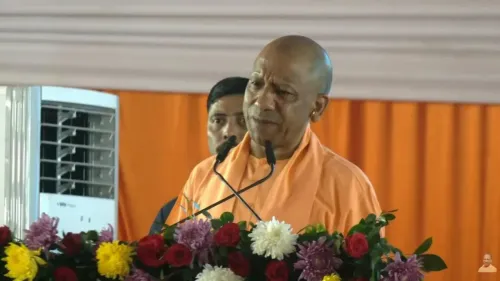
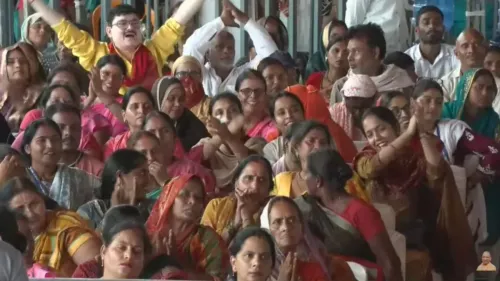
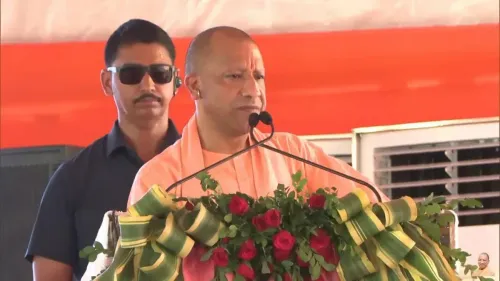
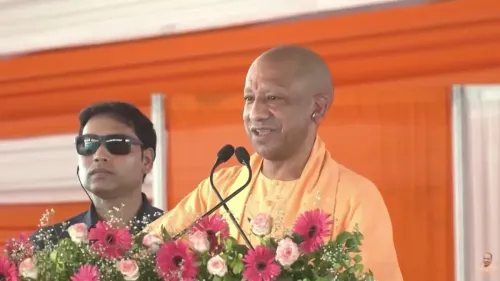
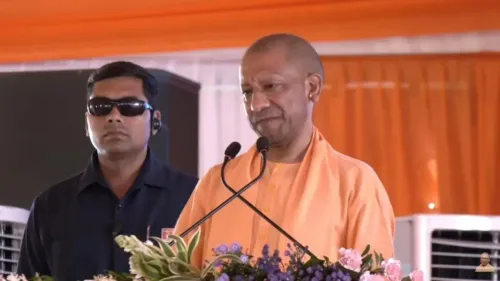
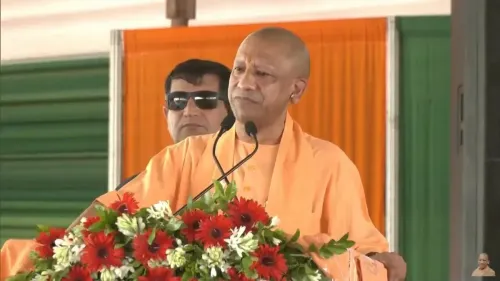
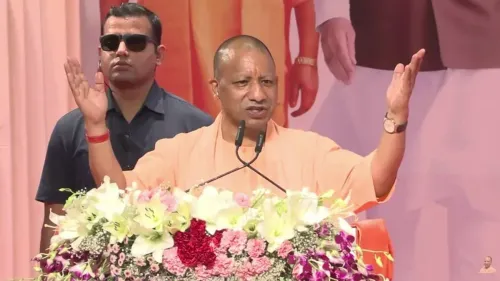
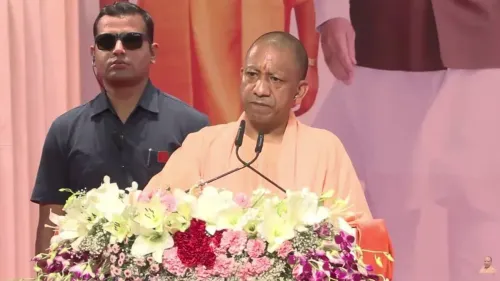
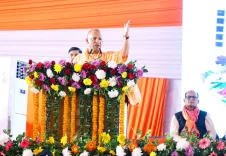
CM Yogi fires at dynastic parties: 'They run gangs, not parties'
Synopsis
Uttar Pradesh Chief Minister Yogi Adityanath sharpened his attack on family-controlled opposition parties on 19 November 2026, declaring they can run gangs but not principled political organisations — a salvo widely seen as targeting the Samajwadi Party and Congress ahead of the 2027 state elections.
Key Takeaways
CM Yogi Adityanath posted a direct attack on dynastic parties on 19 November 2026 , calling them without values, ideals, or principles.
He said such parties 'can run a gang, but cannot run a political party' and that they 'simply do not have it in them.' The unnamed targets are widely understood to include the Samajwadi Party (Yadav family) and the Indian National Congress (Nehru-Gandhi family).
The BJP's anti-dynastic rhetoric dates to Prime Minister Narendra Modi's 2014 Lok Sabha campaign and has been a consistent party-line argument.
The attack comes with Uttar Pradesh assembly elections expected in 2027 , signalling an early escalation of campaign messaging.
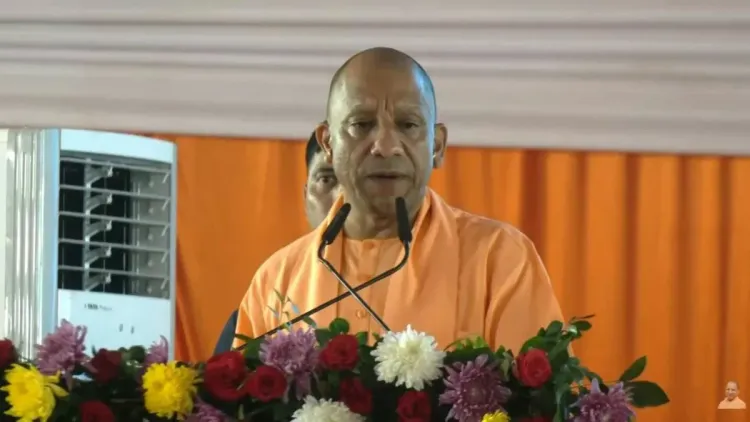
A sharp volley against India's family-run political outfits landed on Thursday evening — and it came with characteristic bluntness. Uttar Pradesh Chief Minister Yogi Adityanath posted a pointed attack on dynastic parties on 19 November 2026, declaring that such organisations lack the values, ideals, and principles that constitute a real political movement.
Posting in Hindi, CM Yogi said: 'वे परिवारवादी पार्टियां हैं, उनका कोई मूल्य, आदर्श और सिद्धांत नहीं है।' — 'They are dynastic parties; they have no values, ideals, or principles.' He went further, drawing a stark line: 'They can run a gang, but they cannot run a political party... they simply do not have it in them.'
The 'gang vs party' distinction — and who it targets
The language is surgical. By framing dynastic outfits as girok — gang-like formations — rather than principled organisations, CM Yogi invokes a critique that runs deep in BJP political rhetoric: that family-controlled parties substitute bloodline loyalty for ideological conviction, and personal fiefdoms for democratic structures.
The targets, while unnamed, are unmistakable in Uttar Pradesh's political geography. The Samajwadi Party, founded by Mulayam Singh Yadav and now led by his son Akhilesh Yadav, and the Indian National Congress, long anchored to the Nehru-Gandhi family, are the two formations most consistently framed by the BJP through this dynastic lens.
A BJP chorus that started in 2014 — and has only grown louder
This is not new territory for the BJP. The anti-dynastic argument was central to Prime Minister Narendra Modi's 2014 Lok Sabha campaign and has since become a recurring instrument in the party's rhetorical arsenal — deployed at rallies, in Parliament, and now on social media with regularity. What it does is force opposition parties onto the defensive over questions of internal democracy and leadership succession.
CM Yogi has been among the most consistent voices in deploying this framing within Uttar Pradesh, positioning the BJP as an organisation of workers and ideology against what he characterises as inherited-power structures.
The 2027 shadow over every sentence
With Uttar Pradesh assembly elections due in 2027, the political temperature is already climbing. Attacks of this kind serve a dual purpose: they energise BJP's base by sharpening the contrast with rivals, and they put opposition parties in a position where any rebuttal risks drawing more attention to questions of dynastic succession. The combative framing — 'they do not have it in them' — signals that this line of attack will likely intensify as the election cycle approaches.
How the Samajwadi Party and Congress respond — and whether they attempt to reframe the narrative around governance delivery — will be worth watching in the weeks ahead.
Point of View
' he escalates the register from political critique to a near-criminal characterisation, designed to delegitimise rather than simply differentiate. This framing consistently puts dynastic outfits on the back foot, forcing them to defend their leadership structures instead of prosecuting a governance debate. With the 2027 Uttar Pradesh election on the horizon, expect this language to anchor the BJP's ground-level messaging across the state.
NationPress
19 Nov 2026
Frequently Asked Questions
What did CM Yogi Adityanath say about dynastic parties?
CM Yogi said dynastic parties have no values, ideals, or principles, and that they can run a gang but cannot run a real political party.
Which parties is CM Yogi targeting with his dynastic politics remark?
While CM Yogi did not name specific parties, the remarks are widely understood to target the Samajwadi Party, led by Akhilesh Yadav, and the Indian National Congress, associated with the Nehru-Gandhi family.
Why does the BJP frequently attack dynastic politics?
The BJP has used anti-dynastic rhetoric as a core contrast with opposition parties since at least PM Narendra Modi's 2014 Lok Sabha campaign, arguing that family-run parties lack internal democracy and ideological consistency.
Is the 2027 Uttar Pradesh election connected to CM Yogi's remarks?
With Uttar Pradesh assembly elections due in 2027, political analysts see attacks of this kind as early campaign messaging designed to sharpen the BJP's contrast with rivals like the Samajwadi Party.
What does 'parivarwaadi party' mean in Indian politics?
'Parivarwaadi party' means a dynastic or family-run party — a term used in Indian political discourse to describe organisations where leadership is passed within a single family rather than through open democratic processes.