CM Yogi: GIDA gave 50,000 jobs in eastern UP in 10 years
Synopsis
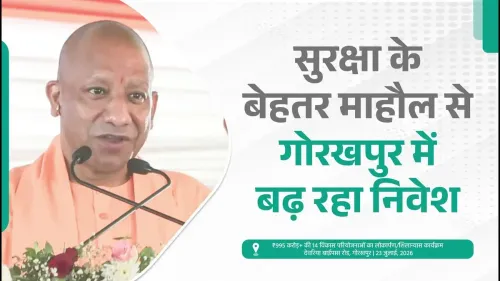
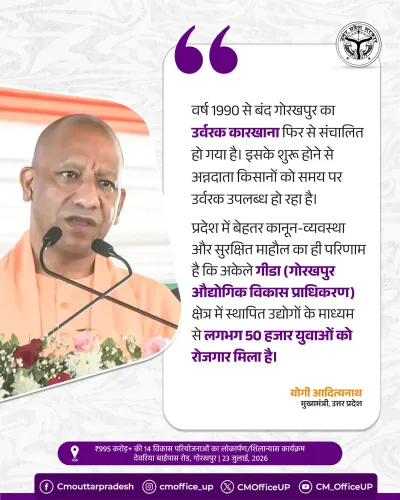
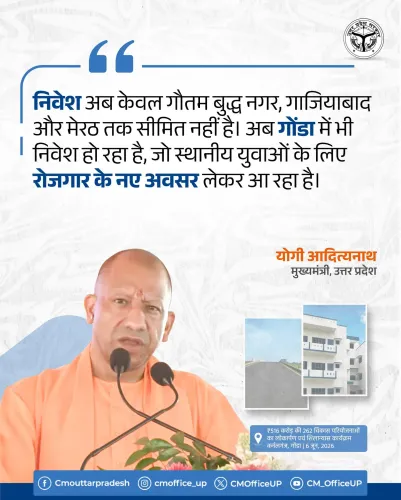
CM Yogi Adityanath says GIDA has created 50,000 jobs for eastern UP youth over a decade and is now attracting larger industrial investments, marking a shift in the region's economic trajectory.
Key Takeaways
CM Yogi Adityanath declared on 1 November 2026 that GIDA is now a premier investment hub in eastern Uttar Pradesh.
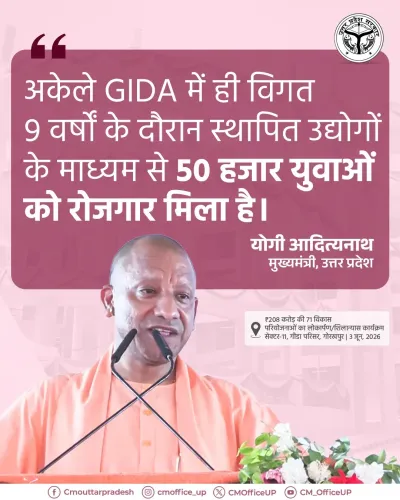
50,000 young people are stated to have received employment through GIDA over the last ten years .
GIDA (Gorakhpur Industrial Development Authority) was established to address the industrial lag in eastern UP relative to the state's western districts.
The UP Industrial Investment and Employment Promotion Policy (2017) placed authorities like GIDA at the centre of east-west industrial rebalancing.
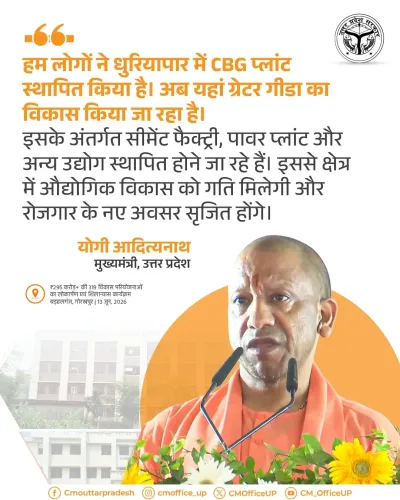
The CM cited new and large industries being established, signalling a potential second phase of industrial growth in the zone.
Eastern UP's industrial push aligns with UP's broader strategy to improve ease-of-doing-business rankings and reduce youth out-migration.
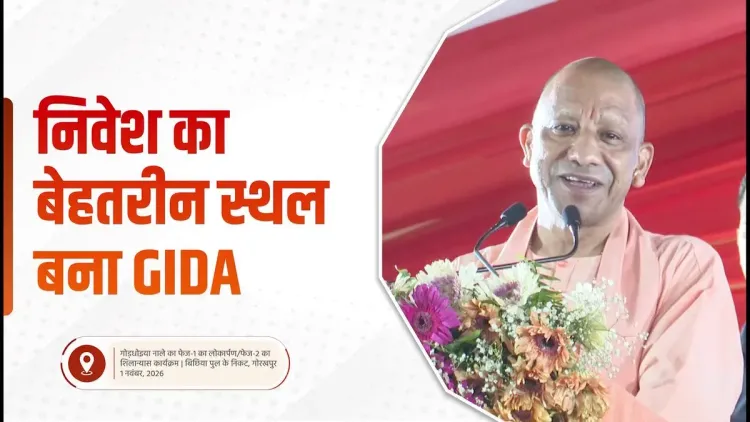
A region once written off as an industrial afterthought is now staking a claim as one of Uttar Pradesh's most compelling investment stories. On Sunday, 1 November 2026, the Chief Minister's Office of Uttar Pradesh quoted Chief Minister Yogi Adityanath on X, declaring that the Gorakhpur Industrial Development Authority (GIDA) has become a premier investment hub in eastern Uttar Pradesh — and that 50,000 young people have found employment there over the last ten years.
The post, in Hindi, reads: 'Aaj GIDA poorvi Uttar Pradesh mein nivesh ka ek pramukh kendra aur naujawanon ke liye rojgar ka mahatvapurna sthal ban chuka hai.' — 'Today, GIDA has become a major centre of investment in eastern Uttar Pradesh and an important site of employment for youth.' The statement adds that new and large industries are being established in the zone.
What GIDA is and why eastern UP needed it
GIDA — the Gorakhpur Industrial Development Authority — was created to seed industrial growth in Gorakhpur and surrounding districts, a region that for decades lagged well behind the factories and logistics corridors of western UP. The authority gives investors a single-window infrastructure base: land, utilities, and connectivity in a part of the state that historically pushed its working-age population toward cities elsewhere.
That out-migration story is exactly what the Yogi Adityanath government, in office since March 2017, has tried to rewrite. The state's Industrial Investment and Employment Promotion Policy of 2017 placed development authorities like GIDA at the centre of a deliberate strategy to correct the east-west imbalance — making eastern UP competitive for capital that previously flowed only to Noida, Agra, and Kanpur.
The 50,000-jobs claim and what it signals
The figure of 50,000 jobs over ten years is cited directly in CM Yogi's statement; independent verification of that number is not available. What is well-documented is the structural logic behind it: when a development authority anchors infrastructure in a labour-surplus region, it tends to attract labour-intensive manufacturing — food processing, textiles, light engineering — that generates employment at scale.
The CM's emphasis on 'new and big industries' arriving now suggests the next phase is meant to move beyond small and medium units. That pivot — from foundational employment to larger-anchor investments — is the classic second act of a greenfield industrial zone finding its footing.
Eastern UP's larger industrial ambition
GIDA's trajectory sits inside a broader state push: Uttar Pradesh has used successive investors' summits to position itself as the country's most investable large state, targeting sectors from defence manufacturing to semiconductors. Eastern UP, anchored by Gorakhpur — the CM's own political base — has been a flagship of that pitch.
The next test will be whether the 'new and large industries' the CM references translate into formal announcements at upcoming investment events, and whether employment data from GIDA is placed in the public domain to substantiate the decade-long jobs count.
For the young workers of eastern UP who have long had to leave home to find a wage, the question is simple: is the factory coming to them — or are they still the ones who have to go?
Point of View
Historically the state's most neglected industrial corridor, has been transformed on his watch. The 50,000-jobs figure, unverified externally, anchors that narrative in a concrete number that is difficult for opponents to directly counter without their own data. The shift in language toward 'new and big industries' is also telling — it signals the government is ready to move from a 'jobs for local youth' pitch to an 'anchor investor' pitch, which would be the more durable economic story ahead of future investment summits. Whether GIDA's growth survives scrutiny as a model — or remains a politically convenient talking point — will depend on transparency in employment and investment data.
NationPress
1 Nov 2026
Frequently Asked Questions
What is GIDA and where is it located?
GIDA stands for Gorakhpur Industrial Development Authority, located in Gorakhpur in eastern Uttar Pradesh. It was set up to promote industrial growth and infrastructure in Gorakhpur and the surrounding districts of eastern UP.
How many jobs has GIDA created according to CM Yogi?
CM Yogi Adityanath stated that GIDA has provided employment opportunities to 50,000 young people over the last ten years . This figure comes directly from his office's statement on 1 November 2026 and has not been independently verified.
Why was GIDA important for eastern Uttar Pradesh?
Eastern Uttar Pradesh historically lagged behind western UP in industrial development, driving youth out-migration to other states and cities. GIDA was designed to attract investment and create local employment, reducing that imbalance.
What is the UP Industrial Investment and Employment Promotion Policy?
Introduced in 2017 by the Uttar Pradesh government, this policy was designed to facilitate new industrial areas, improve ease of doing business, and expand development authorities like GIDA to generate employment across the state, especially in underdeveloped regions.
What industries are coming to GIDA?
CM Yogi's statement says new and large industries are being established at GIDA, but no specific sector names or company names were mentioned in the post. Further details are expected at upcoming state investment events.