CM Yogi Launches GIDA Flatted Factory, EWS-LIG Housing Push in Gorakhpur
Synopsis
Uttar Pradesh Chief Minister Yogi Adityanath inaugurated and laid foundation stones for a flatted factory complex and EWS, LIG residential units in the GIDA area of Gorakhpur on 3 June 2026, combining MSME-friendly industrial space with affordable housing in his home district under the state's industrial and central urban housing frameworks.
Key Takeaways
CM Yogi Adityanath led the inauguration and foundation event in Gorakhpur on 3 June 2026.
The projects are located in the GIDA (Gorakhpur Industrial Development Authority) area.
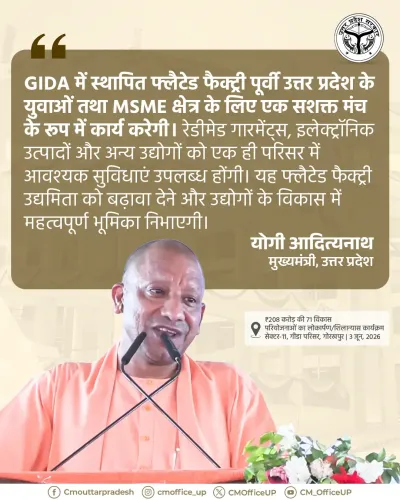
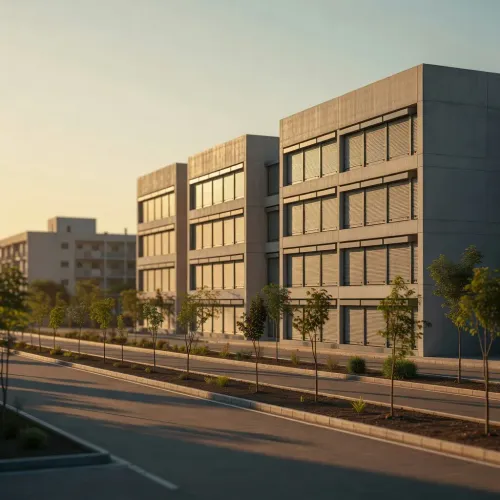
A flatted factory complex targets MSMEs needing ready-to-use multi-storey industrial units.
EWS and LIG residential blocks address affordable housing for lower-income households.
The package aligns with UP's 2017 industrial policy and the Pradhan Mantri Awas Yojana (Urban).
Move reinforces Purvanchal's positioning as a manufacturing and workforce-housing hub.
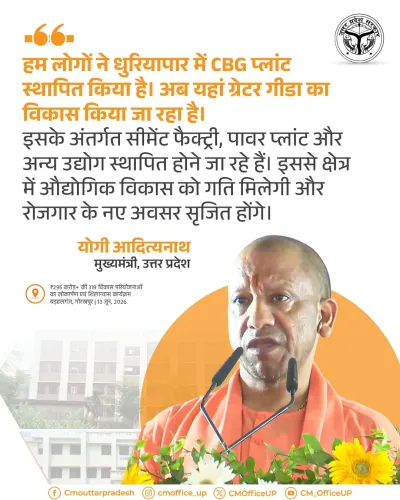
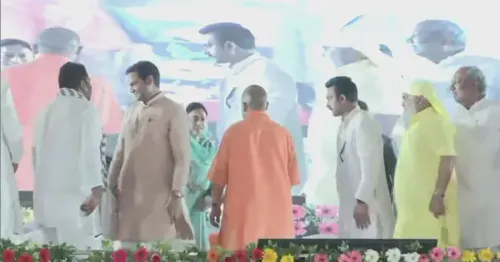
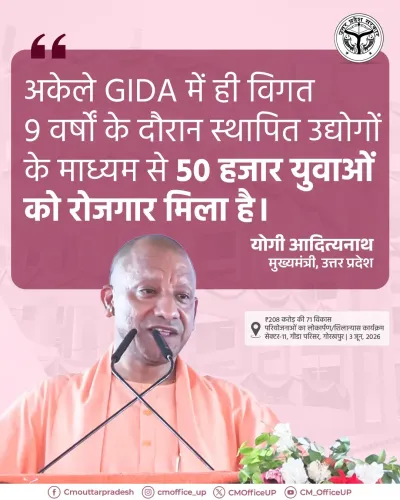
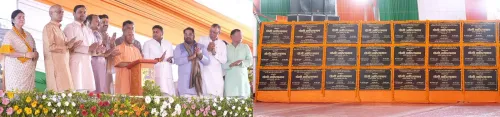
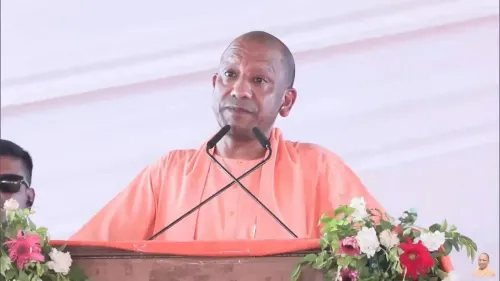
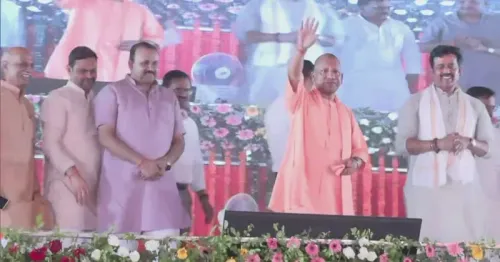
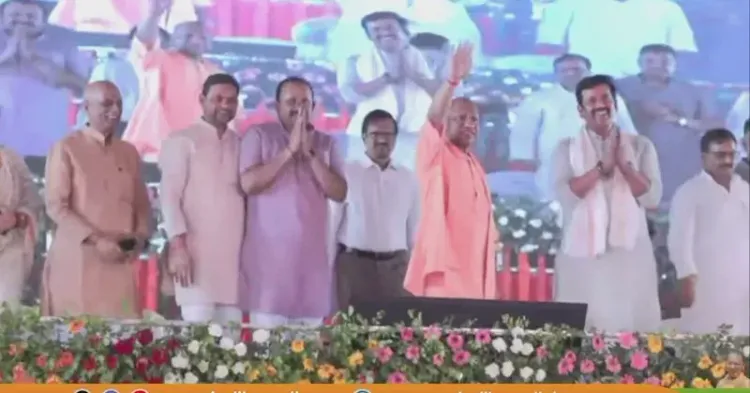
Uttar Pradesh Chief Minister Yogi Adityanath attended a public function in his home district of Gorakhpur on Wednesday, 3 June 2026 to inaugurate and lay the foundation stone for a clutch of development projects, including a flatted factory complex and EWS and LIG residential units in the Gorakhpur Industrial Development Authority (GIDA) area. The Chief Minister shared a live broadcast of the event from his official X handle.
In the post, written in Hindi, the Chief Minister said the gathering had been organised for the 'lokarpan/shilanyas' (inauguration and foundation-laying) of 'various development projects including the flatted factory complex and EWS, LIG residential complex in the GIDA area of Gorakhpur district'. The post carried a link to a live X broadcast and one accompanying image.
Context
Gorakhpur, an eastern Uttar Pradesh district that also serves as the Chief Minister's political base and the seat of the Gorakhnath Math, has been a recurring venue for industrial and housing announcements since 2017. The GIDA-led cluster on the city's periphery has emerged as a focal point of the state government's push to draw manufacturing investment to the Purvanchal region.
A 'flatted factory' typically refers to a multi-storey industrial building offering ready-to-use, smaller production units, a format aimed at micro, small and medium enterprises (MSMEs) that find standalone plots unaffordable. Pairing such complexes with Economically Weaker Section (EWS) and Low Income Group (LIG) housing is intended to place workforce accommodation close to employment nodes.
Policy backdrop
The projects sit within the framework of the Uttar Pradesh Industrial Investment and Employment Promotion Policy, 2017, which encouraged flatted factory formats and the build-out of industrial infrastructure in tier-2 cities. State industrial development authorities such as GIDA have since been the implementing arm for these clusters.
The housing component draws on the Pradhan Mantri Awas Yojana (Urban), launched by the central government in 2015, whose EWS and LIG categories are routinely executed through state-level development authorities. Combining the two streams in one event reflects an attempt to showcase industrial and welfare outputs as a single package.
Stakeholders and impact
The primary beneficiaries of the flatted factory complex are MSMEs seeking compact, plug-and-play production space without the capital burden of land purchase or construction. For small entrepreneurs in Purvanchal, such units can shorten the gap between approval and operations.
The EWS and LIG residential blocks are aimed at lower-income households, including industrial workers, daily-wage earners and first-time home buyers. Residents of Gorakhpur and surrounding tehsils stand to gain from any expansion of local employment and serviced housing stock, while contractors and allied service providers benefit from the construction pipeline.
What's next
Subsequent phases of GIDA expansion, the pace of unit allotments in the flatted factory complex and the timeline for handover of the EWS and LIG flats will determine whether the announcement translates into on-ground occupancy and jobs. Land acquisition status for further industrial parcels and linkages with the state's broader industrial corridor network are also likely to be tracked in upcoming budget cycles.
For the Chief Minister, the Gorakhpur event reinforces a long-running message that eastern Uttar Pradesh is being repositioned as a manufacturing and housing destination alongside the state's western belt, with GIDA serving as a template the government may seek to replicate in other Purvanchal districts.
Point of View
Where industrial estates and affordable housing are unveiled as a bundled offering rather than separate verticals. By siting a flatted factory complex alongside EWS and LIG units, the state is signalling that workforce housing is now treated as core industrial infrastructure, not an afterthought. Politically, anchoring such announcements in Gorakhpur keeps the Chief Minister's home district visible as a showcase for Purvanchal's economic catch-up narrative. The real test will be allotment speed and occupancy, not the ribbon-cutting.
NationPress
18 Oct 2026
Frequently Asked Questions
What did CM Yogi Adityanath inaugurate in Gorakhpur on 3 June 2026?
He inaugurated and laid the foundation stone for several development projects in the GIDA area, including a flatted factory complex and EWS and LIG residential units.
What is a flatted factory complex?
A flatted factory complex is a multi-storey industrial building that offers smaller, ready-to-use production units, typically aimed at MSMEs that cannot afford standalone industrial plots.
Where is the GIDA area located?
GIDA, or the Gorakhpur Industrial Development Authority, oversees planned industrial zones on the periphery of Gorakhpur city in eastern Uttar Pradesh.
Who are EWS and LIG housing units meant for?
EWS (Economically Weaker Section) and LIG (Low Income Group) housing units are affordable housing categories aimed at lower-income households, implemented under state schemes and the Pradhan Mantri Awas Yojana (Urban).
Why is Gorakhpur a focus for industrial projects?
Gorakhpur is the Chief Minister's home district and a key node in the state government's push to expand manufacturing and infrastructure in the Purvanchal region of eastern Uttar Pradesh.