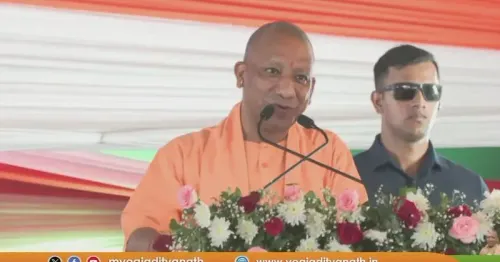
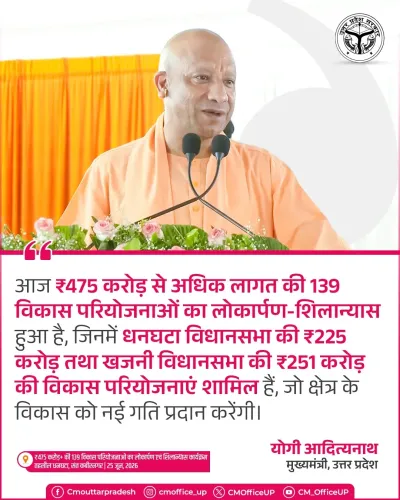
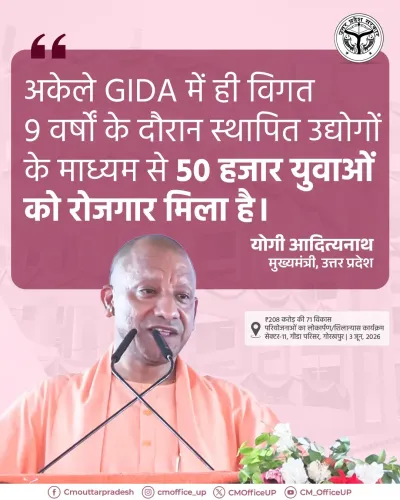
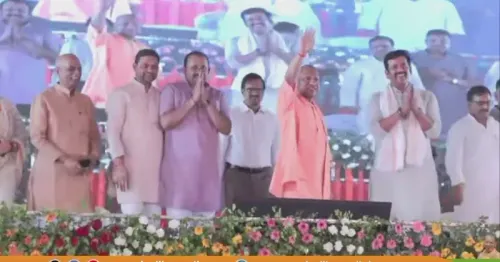
CM Yogi to Launch 71 Gorakhpur Projects Worth Rs 208 Crore
Synopsis
Uttar Pradesh Chief Minister Yogi Adityanath will inaugurate and lay the foundation for 71 development projects worth Rs 208 crore in Gorakhpur, anchored by a GIDA flatted factory complex and an EWS-LIG housing colony, with industrial plot allotments and NIELIT skill certificates distributed at the same event.
Key Takeaways
71 development projects worth Rs 208 crore to be launched in Gorakhpur on 3 June 2026 .
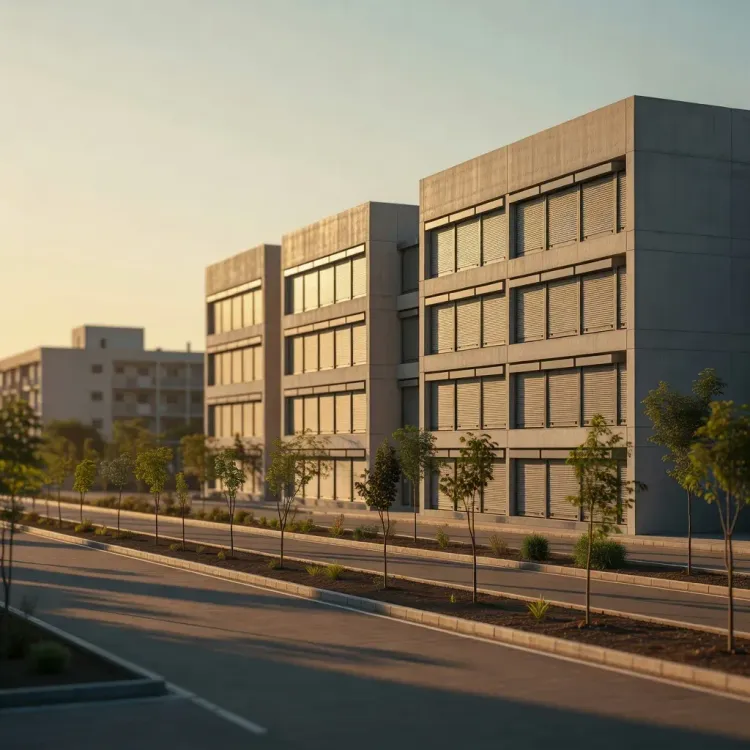
Centrepiece is a flatted factory complex in the GIDA area aimed at MSME entrepreneurs.
An EWS-LIG residential complex will be co-located, with home allotment letters distributed.
Industrial plot allotment letters will also be handed over at the ceremony.
NIELIT -trained youth will receive skill certification at the same event.
Projects align with the Atmanirbhar Uttar Pradesh framework and Purvanchal industrial push.
Uttar Pradesh Chief Minister Yogi Adityanath is set to participate in a launch and foundation-laying ceremony for 71 development projects worth ₹208 crore in Gorakhpur on 3 June 2026. The package, anchored in the Gorakhpur Industrial Development Authority (GIDA) area, includes a flatted factory complex and an EWS-LIG residential colony, alongside allotment letters for industrial plots and homes.
In his post, the Chief Minister described Gorakhpur as the 'sacred city of the great yogi Guru Shri Gorakhnath' and said the projects would 'open the doors to new opportunities for thousands of youth' and give fresh momentum to the resolve of an Atmanirbhar Uttar Pradesh (self-reliant Uttar Pradesh). He added that certificates would also be distributed to young trainees from the NIELIT skill centre at the same event.
Context
Gorakhpur, the Chief Minister's parliamentary base and the seat of the Gorakhnath Math, has emerged as the showcase district for the state government's eastern Uttar Pradesh push since 2017. GIDA, the nodal industrial agency for the region, has steadily expanded its land bank and plot allotments to attract micro, small and medium enterprises.
The flatted factory model — multi-storey industrial premises let out in compact units — is designed to lower the entry cost for first-generation MSME entrepreneurs who cannot afford standalone plots. Pairing it with an EWS-LIG housing complex on the same campus is intended to co-locate workers and workplaces.
Policy backdrop
The announcement sits within the Uttar Pradesh Industrial Investment and Employment Promotion Policy framework first notified in 2017, which prioritised industrial infrastructure in Purvanchal to counter regional backwardness. The housing element draws from the Pradhan Mantri Awas Yojana (Urban), launched in 2015, which mandates dedicated EWS and LIG components in state urban projects.
The skilling layer comes from the Skill India Mission, also from 2015, under which NIELIT — a body of the Ministry of Electronics and Information Technology — runs vocational centres linking certified trainees to local industrial demand. The Gorakhpur event bundles all three strands — industrial plots, affordable homes and skill certificates — into a single ceremony.
Stakeholders and impact
The direct beneficiaries are MSME entrepreneurs receiving industrial plot allotment letters, EWS and LIG families receiving home allotment letters, and NIELIT-trained youth receiving certificates. The Chief Minister's framing positions the projects as employment generators for 'thousands of youth' in a region that has historically seen heavy out-migration to Delhi, Mumbai and the Gulf for low-skill work.
For GIDA, the rollout adds to a pipeline of industrial estates being developed across Purvanchal districts, with Gorakhpur serving as the template. For the state administration, the bundling of industry, housing and skilling under a single ribbon-cutting reinforces the Atmanirbhar Uttar Pradesh branding that has anchored the government's economic messaging.
What's next
Attention will turn to occupancy rates inside the new flatted factory units and the pace at which allotted plots translate into operational enterprises. Subsequent phases of GIDA expansion, typically announced in state budgets, will indicate whether the Gorakhpur model is replicated at scale in neighbouring eastern districts.
If the flatted-factory-plus-housing-plus-skilling template demonstrates measurable employment outcomes, it is likely to feature more prominently in the state's pitch to investors and in the political narrative around eastern Uttar Pradesh's industrial revival.
Point of View
Affordable housing and skill certification into one campus and one ceremony. It fits the broader arc of the Uttar Pradesh government's effort to anchor eastern UP's industrial revival in its political heartland. The flatted-factory model is a quiet but significant shift, lowering entry barriers for first-time MSME entrepreneurs in a region long dependent on out-migration. The real test will be occupancy and operational uptake, not the inauguration count.
NationPress
16 Oct 2026
Frequently Asked Questions
What projects is CM Yogi launching in Gorakhpur on 3 June 2026?
CM Yogi Adityanath is launching 71 development projects worth Rs 208 crore in Gorakhpur, including a flatted factory complex and an EWS-LIG residential complex in the GIDA area, along with industrial plot and housing allotments and NIELIT skill certificates.
What is a flatted factory complex in GIDA Gorakhpur?
A flatted factory complex is a multi-storey industrial building where compact production units are allotted to MSME entrepreneurs, lowering the cost of entry compared to standalone plots. The GIDA Gorakhpur complex is being developed as part of the state's Purvanchal industrial push.
What is the total cost of the Gorakhpur GIDA projects announced by Yogi Adityanath?
The total outlay announced is Rs 208 crore, covering 71 projects that include the flatted factory complex, EWS-LIG housing and associated infrastructure in the GIDA area of Gorakhpur.
What role does NIELIT play in the Gorakhpur event?
NIELIT, a body under the Ministry of Electronics and Information Technology, runs a skill development centre in Gorakhpur. Trained youth from this centre will receive their certificates at the same ceremony, linking skilling with the new industrial and housing infrastructure.
Who benefits from the EWS-LIG housing in Gorakhpur?
The EWS-LIG housing targets Economically Weaker Section and Low Income Group families under categories defined in the Pradhan Mantri Awas Yojana (Urban) framework. Allotment letters will be distributed at the Gorakhpur ceremony.