CM Yogi: GIDA Alone Generated 50,000 Jobs for Youth in 9 Years
Synopsis
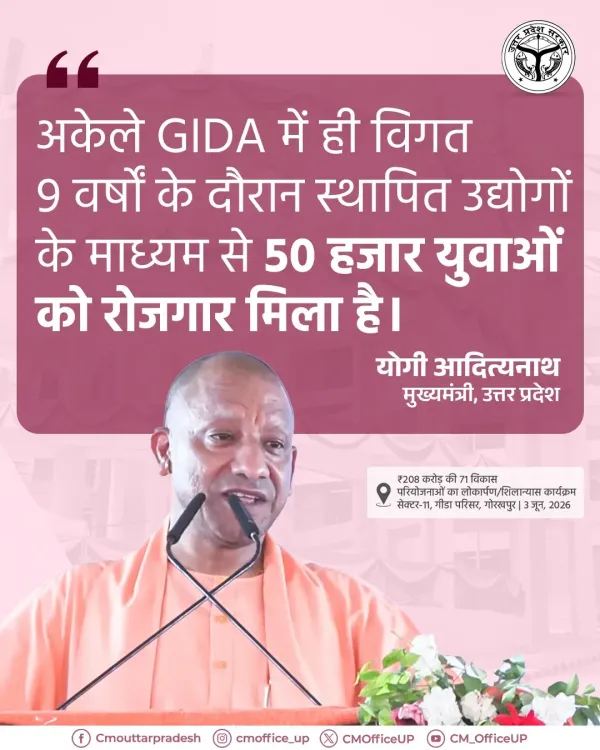
The Chief Minister's Office of Uttar Pradesh has cited Chief Minister Yogi Adityanath saying that industries established at the Gorakhpur Industrial Development Authority over the past nine years have generated employment for 50,000 youth, spotlighting the state's eastern Uttar Pradesh industrial push since 2017.
Key Takeaways
CM Yogi Adityanath claims 50,000 youth have received jobs through industries at GIDA over the past 9 years .
The statement was posted by the Chief Minister's Office of Uttar Pradesh on 3 June 2026 .
GIDA is the Gorakhpur Industrial Development Authority , the state body handling industrial land and infrastructure in the Gorakhpur region.
The nine-year frame aligns with the period since March 2017 , when Yogi Adityanath first became Chief Minister.
The claim links to the UP Industrial Investment and Employment Promotion Policy, 2017 , focused on expanding manufacturing jobs.
Eastern Uttar Pradesh has been a focal point of the state's effort to reduce regional economic imbalance.
The Chief Minister's Office of Uttar Pradesh on 3 June 2026 highlighted remarks by Chief Minister Yogi Adityanath spotlighting the employment footprint of the Gorakhpur Industrial Development Authority (GIDA), asserting that industries established there over the past nine years have generated jobs for 50,000 youth. The statement, posted from the official handle, frames GIDA as a marquee example of the state government's eastern Uttar Pradesh industrialisation push since 2017.
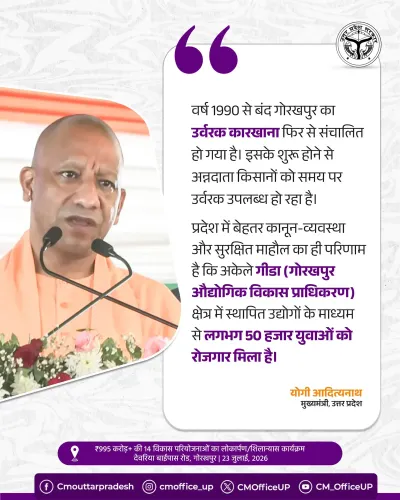
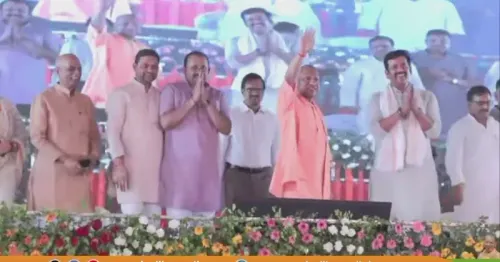
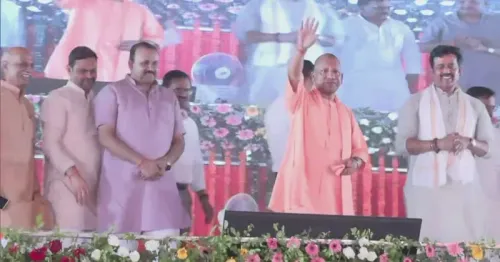
In the post, the Chief Minister is quoted as saying, in translation from Hindi, 'In GIDA alone, through industries established during the past 9 years, 50,000 youth have received employment.' The original phrasing — 'अकेले GIDA में ही विगत 9 वर्षों के दौरान स्थापित उद्योगों के माध्यम से 50 हजार युवाओं को रोजगार मिला है' — was shared alongside a single image from what appears to be a public engagement by the Chief Minister.
Context
GIDA, short for the Gorakhpur Industrial Development Authority, is a state body set up to develop industrial infrastructure and attract manufacturing units in and around Gorakhpur, the Chief Minister's home parliamentary turf. The authority allots land, builds civic infrastructure for industrial estates, and acts as a single-window facilitator for units setting up plants in the region.
The nine-year window referenced in the post corresponds with the period since March 2017, when Yogi Adityanath first assumed office as Chief Minister. Industrialisation in eastern districts — long considered laggards on manufacturing compared with western Uttar Pradesh — has been a recurring theme in the state government's messaging.
Policy backdrop
The claim sits within the framework of the Uttar Pradesh Industrial Investment and Employment Promotion Policy, 2017, which sought to expand manufacturing employment by simplifying land allotment, offering fiscal incentives, and easing approvals for new units. Subsequent investor outreach events have repeatedly featured employment generation as a headline metric.
Regional industrial development authorities such as GIDA, along with counterparts in other districts, form a key plank of the state's strategy to spread industry beyond the Noida-Ghaziabad belt. Officials have argued that reviving estates in eastern and central Uttar Pradesh is essential to reducing inter-district economic disparity.
Stakeholders and impact
The primary stakeholders cited by the Chief Minister are local youth in and around Gorakhpur, for whom in-state manufacturing employment is positioned as an alternative to migration for work to other states. Manufacturing units operating in the GIDA estate — across sectors that have historically included food processing, plastics, textiles and engineering — form the second stakeholder group.
For the state administration, citing concrete employment numbers from a single authority is a way to translate broader policy claims into a granular, location-specific data point. Independent verification of the 50,000 figure and the precise definition of an 'established industry' used in the count would typically come from labour department surveys or authority-level audits.
What's next
Attention will turn to whether the state's next annual employment survey, conducted by the Uttar Pradesh Labour Department, corroborates the GIDA-specific number. Further land allotments, new unit announcements and infrastructure expansion at GIDA in the 2026-27 cycle will indicate whether the trajectory the Chief Minister referenced can be sustained.
For policymakers tracking eastern Uttar Pradesh, the post is also a signal of how the government intends to frame its economic record going into the next political cycle — with district-level industrial authorities, rather than aggregate state figures, increasingly used to anchor the employment narrative.
Point of View
Named industrial authority rather than abstract state totals. By spotlighting GIDA, the Chief Minister's Office links the eastern Uttar Pradesh story to the 2017 industrial policy framework and to Gorakhpur, the Chief Minister's own political base. The 50,000 figure is precise enough to be politically resonant but, as with most authority-level employment claims, awaits independent corroboration. Expect similar district-anchored data points to feature heavily as the state builds its pre-election economic narrative.
NationPress
22 Sept 2026
Frequently Asked Questions
What is GIDA in Uttar Pradesh?
GIDA is the Gorakhpur Industrial Development Authority, a Uttar Pradesh government body that develops industrial infrastructure, allots land and facilitates manufacturing units in the Gorakhpur region of eastern UP.
How many jobs has GIDA created according to CM Yogi?
According to Chief Minister Yogi Adityanath, industries established at GIDA over the past nine years have generated employment for 50,000 youth, as stated by the Chief Minister's Office of Uttar Pradesh on 3 June 2026.
When did Yogi Adityanath become Chief Minister of Uttar Pradesh?
Yogi Adityanath became Chief Minister of Uttar Pradesh in March 2017 and has continued in office since, making the 'nine years' window in the post align with his tenure.
What is the UP Industrial Policy 2017?
The Uttar Pradesh Industrial Investment and Employment Promotion Policy 2017 is the state government's flagship industrial framework aimed at simplifying land allotment, offering fiscal incentives and attracting manufacturing investment to generate large-scale employment.
Why is eastern UP industrialisation a focus area?
Eastern Uttar Pradesh has historically lagged the western part of the state in manufacturing activity, and the state government has prioritised industrial estates like GIDA to reduce regional imbalance and curb out-migration of workers.